Ex-Military Air Compressors: A Technical Report on Surplus Industrial Utility
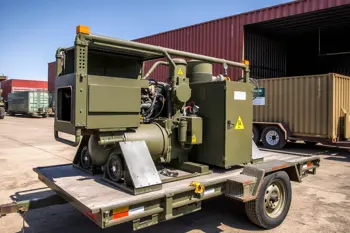
Ex-military air compressors are surplus equipment originally commissioned by the armed forces that have been subsequently retired and repurposed for various civilian and commercial applications 22. These units are highly regarded in the industrial sector due to their heavy-duty construction and ability to maintain reliable performance under extreme environmental conditions that standard commercial models may not withstand 23. This report examines the technical capabilities and lifecycle of these machines as they transition from defense operations to maintenance facilities and construction sites.
Engineering Standards and Military Specifications
The engineering behind ex-military air compressors is dictated by rigorous MIL-SPEC standards, which prioritize durability, ease of field repair, and consistent operation in theater environments. These units are often built with reinforced steel frames and oversized cooling systems to manage the heat generated during continuous duty cycles in high-temperature climates 31. Unlike standard consumer models, military-grade systems like the Oasis XD4000 are designed for demanding heavy-duty needs, providing 15 CFM at free-flow and reaching pressures of up to 200 PSI 1. Such specifications are essential for mobile service trucks and field operations where equipment failure is not an option.
Furthermore, many of these systems utilize components that allow for lower RPM operation to extend their overall service life 34. For example, larger industrial units often feature high-performance engines such as the Cummins QSB3.9 or the Caterpillar C4.4, which are engineered to run on various fuel grades found in global deployment zones 3 17. These engines provide the high torque required to drive large rotary screw elements, delivering stable air output for pneumatic tools and industrial machinery 4.
Performance Parameters and Engine Specifications
When analyzing the performance of retired military compressors, technical metrics vary significantly based on the intended original mission. Portable rotary screw units, such as those manufactured by Atlas Copco for defense use, frequently deliver approximately 185 CFM of free air delivery at a nominal working pressure of 100 PSI 4. Larger, high-pressure models can reach 395 CFM with maximum working pressures of 200 PSI, supported by turbocharged 155 horsepower engines operating at 2400 rpm 17. This level of output is critical for abrasive blasting, pipeline work, and other large-scale construction activities.
| Model Type | Air Delivery (CFM) | Pressure (PSI/Bar) | Engine Power/Brand |
|---|---|---|---|
| Military Grade Constant Duty | 15 CFM | 200 PSI | Industrial Grade |
| Towable Rotary Screw | 185 CFM | 100 PSI | 49 HP Kubota Diesel |
| Mobile Industrial Unit | 395 CFM | 200 PSI | 155 HP Caterpillar |
| Retired Field Unit | Standard Flow | 10 Bar | Cummins QSB3.9 |
Specialized Defense and Breathing Air Systems
A significant subset of ex-military air equipment includes specialized breathing air systems designed for naval operations, diving missions, and emergency response 2. These systems must meet strict safety requirements to deliver clean, contaminant-free air, often utilizing oil-free designs or complex filtration arrays to maintain purity 2. Discharge pressures for these breathing air systems can range from 100 psig for maintenance tasks to 6,000 psig for high-pressure life-support applications 2. Such equipment is typically utilized at military bases and maintenance facilities to support personnel working in enclosed or contaminated environments.
These breathing air units are available in both stationary and mobile configurations, providing a consistent air supply for shipboard life-support and rapid field deployments 2. When these units enter the surplus market, they are often sought by diving operators and safety teams due to their robust manufacturing history and compliance with defense industry reliability standards. However, the complexity of these filtered systems often requires specialized knowledge to maintain air quality standards after the units leave military oversight.
Acquisition Channels and Market Sourcing
The primary channels for acquiring ex-military air compressors are government surplus auctions and specialized military equipment resellers 24. Platforms such as GSA Auctions and GovPlanet serve as the official portals for the disposal of decommissioned federal and military property 38 44. Decommissioned units may also be found through large-scale auction houses like Ritchie Bros. Auctioneers, which regularly liquidate government and military assets including pneumatic tools and towable compressor packages 39. The market for these units is global, with equipment often appearing in regions as diverse as China, Europe, and the United States 3 18.
Buyers in the surplus market should be aware that these machines are typically sold in as-is condition. While some units, such as those listed on specialized machinery platforms, may have extremely low operational hours (some as low as 3 hours), they may have been in storage for extended periods 3. This transition from active military duty to the private sector involves several key market participants:
- Federal surplus agencies (GSA, DLA) that manage the initial disposition of assets 38 47.
- Private resellers that purchase lots of equipment to refurbish or resell individually 24.
- Industrial auction sites that facilitate the sale of towable and stationary units to contractors 41.
- Logistics providers that specialize in the transport of heavy military machinery across international borders 3.
Operational Risks and Maintenance Friction
Despite their durability, ex-military air compressors present unique operational challenges, particularly regarding fuel consumption and parts availability. Many units are powered by older diesel or gasoline engines that may be less fuel-efficient than modern commercial alternatives 30. Maintenance can also become complicated when trying to source parts for legacy military models. Components may require custom fabrication or must be sourced from specialized dealers who focus exclusively on government surplus, as standard retail stores may not stock MIL-SPEC compatible parts 35.
Additionally, the noise levels of these machines can be a concern in urban environments. While some models are engineered to stay within controlled levels, such as 76 dB(A) at a distance of 7 meters, older tactical units may be significantly louder due to their focus on performance over acoustics 17. Continuous operation also necessitates a strict adherence to oil and filter change schedules, especially for oil-lubricated units that use significant quantities of fluid (up to 48 liters in some screw compressors) to ensure proper cooling and lubrication 20.
Safety Compliance and Regulatory Standards
One of the most critical aspects of using ex-military air compressors in a commercial setting is ensuring compliance with current safety regulations. Older units may have pressure vessels or tanks that lack current ASME certification, which is a common requirement for industrial safety in many jurisdictions 37. It is often necessary for surplus units to undergo professional inspection and recertification before being put into service on a public jobsite 28. This process ensures that the integrity of the tank and the safety valves meet modern operational specifications.
Furthermore, emissions standards are a factor for diesel-powered units. While some military units meet US EPA Tier 4 Final standards and utilize Diesel Exhaust Fluid (DEF) to reduce environmental impact, older surplus models may not meet modern environmental restrictions in certain zones 17. Operators must evaluate the specific engine model and year of manufacture to determine if the unit can be legally operated in their specific location without modifications. Proper documentation and testing are essential steps in the lifecycle of any decommissioned military asset used in a civilian capacity.
Sources
- Platinum High Performance Solutions, LLC.
- Universal Air & Gas Products
- Machineryline Industrial Equipment Auctions
- Warthog Air Compressor Store
- Aircompressorsell.com Atlas Copco Technical Data
- Excel Machine Tools Piston Compressor Specifications
- AeroX Industries, LLC
- General Services Administration Surplus Guide
- Military Equipment Reliability Research
- Government Surplus Sourcing Trends
- Surplus Liquidators Technical Data
- Industrial Air System Durability Reports
- Decommissioned Asset Lifecycle Analysis
- Pneumatic Equipment Recertification Standards
- Military-to-Civilian Equipment Maintenance Challenges
- ASME Pressure Vessel Safety Protocols
- GSA Auctions Official Portal
- Ritchie Bros. Auctioneers
- IronPlanet Industrial Marketplace
- GovPlanet Military Surplus
- GovDeals DLA Disposition Services
Authored by 24Trendz team