Ex-Military Solar Panels: A Technical Review of Surplus Energy Systems
The demand for ruggedized and portable energy solutions has driven significant interest in ex-military solar panels, which are engineered to operate in the most demanding field environments. These specialized photovoltaic units are often characterized by their mission-ready design, prioritizing impact resistance and rapid deployment over traditional commercial aesthetics. Research indicates that hardware originally commissioned by the Department of Defense is built to withstand extreme conditions, including high vibration and thermal cycling, which are typical of tactical operations. As military forces modernize their energy infrastructure, a consistent supply of surplus and decommissioned equipment enters the civilian market through authorized liquidation channels.
Ruggedization Standards and Environmental Resilience
Military-grade solar panels are subjected to rigorous testing protocols to ensure operational reliability in austere environments. Specifically, many of these modules undergo MIL-STD-810-G testing, which includes assessments for water immersion, sand exposure, punctures, and radiation exposure 1. Engineering reports from U.S. manufacturers like SBM Solar indicate that these panels are often constructed using high-quality carbon fiber composites rather than traditional glass, making them both lightweight and shatter-resistant 2. Data shows that after undergoing extreme stress tests, such as being run over by military vehicles or struck by hammers, these panels can maintain over 90 percent of their original power output 1.
The technical architecture of these systems frequently incorporates bypass diodes in every section, allowing for sustained energy harvest even if parts of the panel are shaded or physically damaged 2. This differs significantly from standard commercial panels where partial shading can lead to a total loss of string efficiency. Additionally, materials used in military hardware are selected for their low-glare properties to minimize visual detection in field environments, a feature that also benefits specific civilian applications like wildlife monitoring or remote security. The durability of these units is further reinforced by their encapsulation methods, often utilizing EVA potting compounds between tempered glass or polymer covers to protect cells from environmental fouling and corrosive elements 10.
Tactical Applications in Expeditionary Operations
In modern conflict zones and expeditionary settings, portable solar technology has become a critical resource for maintaining communications and surveillance equipment. Reports from the frontline in Ukraine indicate that foldable and rollable panels, ranging from 60W to 200W, are widely deployed at the squad and platoon levels 11. These units typically weigh between 2 and 6 kilograms, allowing them to be transported in standard rucksacks for rapid deployment during mobile operations 11. The efficiency of these monocrystalline silicon cells usually falls between 20 percent and 24 percent, providing reliable power in varied light conditions 11.
| Specification Category | Military-Grade Requirement | Typical Commercial Baseline |
|---|---|---|
| Material Base | Carbon Fiber / Thin Film | Glass / Aluminum Frame |
| Flexibility | Foldable or Semi-Flexible | Rigid / Fixed |
| Impact Resistance | MIL-STD-810-G Certified | Standard Hail Rating |
| Weight (100W) | Approximately 3 to 6 lbs | Approximately 15 to 25 lbs |
Furthermore, specialized kits like the 360W mobile power solution are designed for immediate field operation, incorporating integrated NATO cable connectors and Maximum Power Point Tracking (MPPT) controllers 1. These systems support mission-critical equipment such as portable clinics, water purification units, and command facilities 9. The flexibility of these modules, such as the 110W flexible solar panel weighing only 6.1 lbs, allows for installation on irregular surfaces like tents or vehicle roofs where traditional rigid panels would be impractical 3.
Large-Scale Infrastructure at Decommissioned Military Sites
Beyond portable hardware, large-scale solar installations are frequently established on former military bases, repurposing land that was previously used for airfields or munitions storage. The Waldpolenz Solar Park in Germany is a notable example, where a 52-megawatt photovoltaic power station was constructed on a former military air base 4. This installation utilized over 550,000 thin-film modules to generate approximately 52 GWh of electricity annually, demonstrating the viability of converting high-security zones into renewable energy hubs 4. Similar initiatives are seen in Singapore, where the Sembawang Air Base recently completed a solar farm to strengthen national energy resilience 8.
Military bases like Fort Huachuca and Fort Bliss have also deployed large-scale arrays to achieve greater energy autonomy 37. These installations often result in a secondary market for equipment as systems are upgraded or bases are decommissioned. When these large-scale systems are liquidated, the components are typically evaluated based on their nameplate ratings and historical performance metrics 31. The conversion of military land for solar use often involves complex environmental assessments, as these sites must be cleared of potential hazards before commercial or utility-grade solar infrastructure can be safely installed and operated by civilian entities.
Strategic Logistical Impacts and Supply Chain Optimization
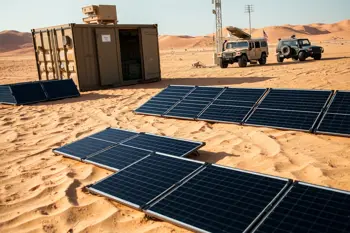
The integration of solar energy into military operations is primarily driven by the need to reduce dependence on fossil fuel convoys. The Brazilian Army has initiated tests of mobile solar modules and lithium batteries to increase energy autonomy and decrease the frequency of refueling trips, which are often vulnerable targets in active theaters 7. Reducing the fuel logistics tail not only lowers operational costs but also enhances the camouflage capabilities of troops by eliminating the acoustic and thermal signatures produced by traditional diesel generators 7. Solar container power systems, which combine foldable arrays with LiFePO4 battery storage, provide a hybrid solution that can operate in coordination with existing generators 9.
These containerized solutions, such as the HJ-FBESS, are built to ISO standards for global shipping and are IP55 rated for harsh environments 19. They offer rapid deployment capabilities, often reaching full operational status in under 48 hours 22. Research from the Royal Navy suggests that while solar power density is currently lower than diesel, a systems approach using decentralized PV clusters linked via microgrids can significantly firm up energy security in remote locations 6. This strategic shift towards renewable integration is a major driver of the surplus market, as older, less efficient units are cycled out in favor of advanced thin-film and perovskite technologies 6.
Procurement Pathways and Economic Feasibility in Surplus Markets
Acquiring ex-military solar panels is generally facilitated through government liquidation programs and specialized surplus auction platforms. The Defense Logistics Agency (DLA) Surplus Property Program and the GSA Excess Personal Property Program are the primary channels for the disposal of excess military renewable energy systems 36 38. Online platforms such as GovPlanet and IronPlanet regularly list solar components as part of lot-based equipment sales 43. Industry analysts suggest that purchasing decommissioned or surplus military panels can result in cost savings of 30 percent to 50 percent compared to new commercial-grade hardware 41.
Prospective users of this equipment must consider that most surplus panels are sold as-is and may have associated National Stock Numbers (NSN) for tracking their original procurement history 18. While the hardware is robust, the lack of traditional manufacturer warranties in the secondary market requires buyers to perform thorough inspections of nameplate ratings and physical condition. The economic feasibility of these units is highest for off-grid applications where durability is paramount, such as remote mining operations, agricultural facilities, or emergency relief sites where grid connection is unfeasible or subject to significant administrative delays 21.
Operational Constraints and Technical Friction Points
While ex-military solar panels offer superior durability, their implementation involves specific market friction points and operational challenges. A significant constraint identified in military theatres is environmental fouling, where dust, dirt, and sand accumulate on tactical arrays, drastically reducing energy harvesting efficiency 15. To combat this, newer military-grade designs incorporate retractable arrays with autonomous self-cleaning mechanisms 15. For civilian users, the maintenance demands of older surplus units may be higher than modern residential systems, particularly if the hardware has been subjected to repeated handling in high-latitude or desert environments 6.
Furthermore, the integration of ex-military equipment into civilian grids often requires certified inspection and recertification to meet local electrical code compliance 40. Standard commercial inverters may not always be directly compatible with the unique connectors or voltage outputs of specialized tactical hardware, necessitating additional conversion equipment 10. There is also the risk of physical damage during previous deployments; for instance, instances of intentional destruction of solar infrastructure have been documented in conflict zones, which could affect the integrity of refurbished units 25. Therefore, while the lifespan of high-quality solar modules can reach 25 to 30 years, the actual remaining service life of surplus military gear must be carefully assessed through performance testing 29.
Sources
- SBM Solar - Panels - Ruggedized Solar Units
- SBM Solar - Customizable Foldable Panels
- Deployed Logix - 110W Flexible Solar Panel
- Wikipedia - Waldpolenz Solar Park
- CNA Singapore - SAF Sembawang Air Base Solar Farm
- Royal Navy - Deployable Photovoltaic Arrays Feasibility Assessment
- Solar Now - Brazilian Army Renewable Energy Testing
- Channel News Asia - Singapore Military Solar Target
- LZY Container - Army Base Solar Container Systems
- JCE Group - Ex Solar Panel SPB Range
- Ukraine War Analytics - Solar Panels Frontline Use 2026
- Trowbridge Electrical - Military Grade Solar Gear
- Eclips Engineering - Container Roll-Out Solar System
- JCE Group - Ex Solar Panel SPA-230
- DFM Power - Uncompromised Solar Harvesting
- Net Traveller - Reducing Military Fuel Use
- JustEnergy - ROI Analysis for Military Solar
- ISO-Group - National Stock Number 6117-01-699-8191
- Solar Container Kit - HJ-FBESS Solar Container
- Trowbridge Electrical - Best Solar Panels for Military Use
- PV Magazine - Longi Portable Containerized Station
- JustEnergy - Rapid Deployment Lithium Storage
- ScottishPower - Ex-Military Energy Sector Opportunities
- Solar Guys Pro - 180W Walkable Solar Panel
- Times of Israel - Solar Infrastructure Damage Report
- Teemway Solar - Lightweight Flexible Solar Panels
- Sungold Solar - SGM Series Rigid Panels
- My Generator Plus - Anker SOLIX 440W Rigid Panels
- Yahoo News Canada - Solar Panel Lifespan and Replacement
- Energian - Longi 490W Explorer Panels
- U.S. Department of Defense - Renewable Energy Goals
- U.S. Department of Energy - Solar Technology Resources
- U.S. General Services Administration - Surplus Property Sales
- GovDeals - Government Surplus Auctions
- Bid4Assets - Surplus Asset Listings
- Defense Logistics Agency - Surplus Property Program
- U.S. Army - Fort Huachuca Solar Project
- General Services Administration - Federal Surplus Property Program
- Department of Defense Operational Energy - Renewables Report
- National Renewable Energy Laboratory - Solar Spec Specifications
- Solar Power & Storage Magazine - Excess Solar Technology Analysis
- U.S. Navy - Naval Base San Diego Solar Deployment
- GovPlanet - Military Surplus Auction Platform
Authored by 24Trendz team