Flight School Training: A Report on Requirements, Costs, Structure, and Career Pathways
Flight school training is the structured process of learning to pilot an aircraft, combining flight lessons with ground school and preparation for written, oral, and practical examinations. The experience can range from flexible private instruction to an intensive, regulated career program, depending on the certificate, training rule, and aviation authority involved. 1
What Flight School Training Includes
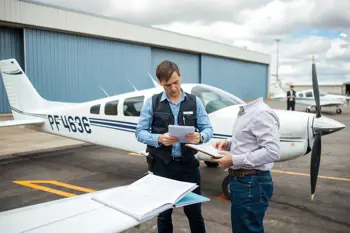
Primary and intermediate training are designed to develop basic airmanship, aircraft control, decision-making, and operational discipline. Students normally work with a Certified Flight Instructor in an aircraft or certified flight training device. Ground school explains aerodynamics, meteorology, navigation, aircraft systems, regulations, communications, and checklist use, while cockpit lessons apply that knowledge to preflight inspection, takeoffs, landings, maneuvers, cross-country operations, and emergency procedures. 1 5
- Dual instruction is conducted with a flight instructor present.
- Solo flights occur only after the instructor determines that the student is prepared and properly endorsed.
- Knowledge and practical examinations are required for pilot certification.
Private Pilot Eligibility and Hours
In the United States, an applicant generally must be at least 17 years old to receive a Private Pilot Certificate. Federal rules establish a minimum of 40 flight hours for the airplane private-pilot path, although national training averages are commonly closer to 60 to 75 hours because students progress at different rates and may need additional practice before a checkride. 3 10
| Requirement area | General expectation |
|---|---|
| Minimum age | 17 for a U.S. private pilot certificate |
| Flight experience | At least 40 hours under the stated federal minimum |
| Medical eligibility | A medical certificate is relevant before solo operations |
| Testing | Knowledge, oral, and practical examination stages |
Part 61 and Part 141 Training Models
Part 61 and Part 141 describe different regulatory structures for U.S. flight training. Part 61 generally permits a more flexible, self-paced schedule, which can suit students balancing employment or family responsibilities. Part 141 uses an approved, more structured syllabus and may suit students pursuing concentrated training with defined stage checks and lesson sequencing. The appropriate choice depends on scheduling needs, documentation, school organization, and the student’s intended certificate or career route. 4 8
- Part 61: Flexible scheduling and adaptable lesson progression.
- Part 141: FAA-approved curriculum with a more formal training framework.
- Both models require students to meet the applicable experience and examination standards.
Medical, Ground School, and Examination Duties
Medical eligibility should be considered before substantial training begins. A student pilot must meet the applicable FAA medical requirements, and the supplied research identifies a Third Class Medical Certificate as mandatory before a student can fly solo. Ground school may be delivered in a classroom or through an approved online course, but the subject matter remains central to safe operations and preparation for the FAA aeronautical knowledge examination. 3 6
- Weather study includes interpretation of aviation reports such as METARs and TAFs.
- Regulatory study covers operating rules, pilot privileges, limitations, and required procedures.
- Navigation instruction addresses charts, planning, communications, and cross-country decision-making.
- Knowledge preparation supports the written test, while flight practice supports the practical test.
Training Costs and Scheduling Realities
Reported U.S. costs for a Private Pilot License commonly range from approximately $10,000 to $20,000, depending on aircraft type, location, instructor charges, examination fees, and the number of hours required. Flight schools frequently bill aircraft use by the hour, with charges often based on a Hobbs meter or tachometer time, while instructor services may be scheduled separately. Weather, maintenance downtime, aircraft availability, and instructor turnover can extend the calendar schedule and increase total hours. 1 2 9
| Cost or scheduling factor | Why it matters |
|---|---|
| Aircraft hourly rate | Represents the primary aircraft-use component of many lessons |
| Instructor time | May be billed separately from aircraft operation |
| Extra training hours | Raise total expenditure when proficiency develops gradually |
| Maintenance and weather | Can interrupt planned lesson continuity |
From Private Pilot to Professional Training
A professional pathway usually adds instrument, commercial, and instructor training after the private certificate, with each stage requiring additional knowledge, flight experience, and practical testing. Career programs may be modular or integrated. One European training provider describes an EASA-approved integrated route from zero experience to a frozen ATPL in 18 months with 200 flight hours, while its separate Airbus A320 cadet pathway lists 20 months and 500 hours. Those figures describe particular program structures, not universal results. 5 7
- Instrument training develops operation under instrument flight rules and reduced visual reference.
- Commercial training prepares pilots for compensated flying within applicable regulations.
- Flight instructor training can provide a route for building experience while teaching.
- Airline-oriented programs may include simulator work, standard operating procedures, and airline interview preparation.
How to Assess a Flight School Objectively
Evaluation should focus on verifiable training conditions rather than promotional claims. Prospective students can ask how aircraft maintenance is documented, how often the fleet is available, how instructors are assigned, how progress is measured, and whether lesson objectives are written in a syllabus. It is also important to understand refund and cancellation terms, examination charges, aircraft insurance requirements, and the school’s process for handling weather or maintenance interruptions. 2 4
- Compare the complete hourly structure, including aircraft, instructor, simulator, examination, and administrative charges.
- Review whether instructors remain available throughout the expected training period.
- Check that aircraft records, inspection practices, and safety procedures are clearly explained.
- Distinguish official regulatory approvals from general claims about airline readiness or completion rates.
- Consider whether the schedule supports consistent training, since long gaps can affect continuity and proficiency.
Sources
- Wikipedia, Flight training: https://en.wikipedia.org/wiki/Flight_training
- Rotate, How to Choose a Flight School in 2026: https://rotatepilot.com/guides/how-to-choose-a-flight-school
- Federal Aviation Administration, Become a Pilot: https://www.faa.gov/pilots/become
- AOPA, Part 61 vs Part 141 Flight Schools: https://www.aopa.org/training-and-safety/learn-to-fly/start-flight-training/part-61-vs-part-141-flight-schools
- US Aviation Academy, Flight School for a Career: https://www.usaviationacademy.com/flight-school-for-a-career-what-it-involves-and-how-to-choose-the-right-one/
- Gleim Aviation, Ground School and Getting Ready: https://aviation.gleim.com/2026/01/20/ground-school-and-getting-ready/
- PEA, The First Week of Flight School: https://pea.com/blog/the-first-week-of-flight-school/
- Superior Flight School, Student Life During Training: https://superiorflightschool.com/blog/flight-school-student-life-a-day-in-the-life-during-training/
- Flying, Pilot License Cost Overview: https://www.flyingmag.com/how-much-does-it-cost-to-get-a-pilots-license/
- Electronic Code of Federal Regulations, 14 CFR Part 61: https://www.ecfr.gov/current/title-14/chapter-I/subchapter-D/part-61
Authored by 24Trendz team