Police auction electronics and laptops for sale: An analytical report on procurement and market realities
Public agencies, including municipal police departments and federal law enforcement, periodically liquidate seized and surplus assets to recover value for the public trust 1. These auctions represent a significant secondary market where electronics and laptops, previously managed by government entities, become available for acquisition 4. Understanding the mechanics of these sales requires distinguishing between different property streams, as the origin of an item fundamentally impacts its condition, legal status, and the expectations a buyer should maintain during the bidding process 4, 7.
Understanding the Origins of Seized and Surplus Electronics
Police auctions generally feature two distinct categories of property. The first category consists of unclaimed lost property, such as items recovered by law enforcement that remained uncollected after a mandatory legal holding period 4. The second category comprises assets seized during criminal investigations or forfeited to the state under legal frameworks, such as the Proceeds of Crime Act in the United Kingdom or similar forfeiture statutes in the United States 4. Additionally, surplus electronics-items that reached the end of an agency’s designated hardware replacement cycle-are frequently included in these inventories 7.
The distinction between these categories is critical for prospective participants. Surplus office equipment is often retired due to scheduled IT refreshes rather than device failure, which may suggest a higher likelihood of operational status compared to seized goods with unknown maintenance histories 7. Conversely, seized items such as smartphones, tablets, or gaming consoles may have limited documentation regarding their usage history or current functionality 7. Buyers should note that administrative departments may list these goods as bulk lots, complicating the evaluation of individual device performance before the conclusion of an auction 7.
Platforms and Market Participation
Law enforcement agencies utilize various digital and physical platforms to conduct these disposals. Major online marketplaces specifically designed for government surplus include GovDeals, Public Surplus, and PropertyRoom.com 11, 12, 13. Local municipalities may also opt to use platforms like Municibid or local auction houses to facilitate the liquidation of electronics 14, 15. These sites provide centralized interfaces for viewing item catalogs, monitoring bidding activity, and reviewing specific terms of sale established by the consigning agency 1, 7.
Registration on these portals typically requires verification of identity and adherence to specific bidding protocols 11. Participants are encouraged to review the auction house’s specific documentation, as rules regarding payment methods and removal windows vary significantly by jurisdiction 1, 9. For example, while some local auctions permit credit card payments, others may have strict policies regarding tender types or require payment and removal of assets within a condensed timeframe, such as on the same day as the auction event 1, 9.
Evaluating Risk and Operational Condition
A fundamental reality of government auctions is that items are almost exclusively sold on an 'as-is' basis, with no warranties regarding performance or longevity 11, 20. A pallet of office laptops might be sold as a single lot, which can include units missing chargers, devices with dead batteries, or hardware that has not been fully tested for internal component integrity 7. Prospective buyers must accept the risk that an electronic device may require repairs or may only serve as a source for spare parts 5, 7.
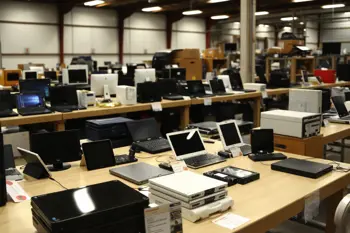
Furthermore, data privacy protocols often dictate that laptops or mobile devices seized during investigations have their hard drives wiped or physically removed prior to sale 11. Buyers should verify the status of storage media before bidding, as the absence of a functional hard drive or operating system is a common occurrence in government-disposed computer equipment 7. These factors mean that while the purchase price may differ from retail values, the total cost of ownership could increase significantly if hardware upgrades or software installations are required to make the equipment functional 5, 7.
Regulatory Oversight and Legal Transparency
The disposal of seized property is subject to strict regulatory requirements to ensure transparency and prevent conflicts of interest 4. Once property is legally forfeited or has met the requirements for disposal, it is transitioned into the public domain via auction 1, 4. This process ensures that the proceeds, which often return to public funds or support charitable initiatives, are managed in accordance with state and federal guidelines 4, 6. Buyers essentially receive 'clean title' to the goods, which is a primary legal benefit of purchasing through official law enforcement channels rather than unauthorized secondary markets 4, 6.
| Consideration | Impact on Purchase |
|---|---|
| Asset Status | Seized assets vs. surplus assets dictate documentation and history. |
| Condition | Items are 'as-is'; performance is rarely guaranteed. |
| Shipping | Responsibility usually rests with the buyer; third-party logistics may be needed. |
| Hardware | Hard drives are frequently removed for security; OS status is uncertain. |
Logistical Realities of Auction Completion
Winning a bid is only the first phase of the acquisition process. Logistical considerations, such as item removal and transportation, are frequently the responsibility of the purchaser 11. Unlike commercial retail transactions, government agencies rarely facilitate standard shipping for auction lots 9, 11. Buyers must often arrange for their own transport or coordinate with approved third-party shippers, which can add complexity and cost to the transaction 9, 11.
Failure to comply with removal deadlines can result in the forfeiture of the item or the imposition of storage fees, as local facilities have limited capacity to store auctioned property 1, 9. Prospective participants should confirm the exact pickup location and hours, as well as any requirements for pre-registration or access protocols, to ensure a seamless acquisition experience 1, 7.
Strategic Approaches to Monitoring Inventories
Because auction inventories are fluid and specific to the agency’s activity, consistent monitoring is the most effective approach for those interested in these items. Rather than relying on a single portal, many professionals monitor multiple platforms including GSA Auctions for federal items, or state-specific surplus portals managed by departments of general services 15, 17, 18. Utilizing search agents or newsletters provided by these websites can provide alerts when specific categories of electronics become available, allowing for timely analysis of the catalogue before an auction closes 2.
Ultimately, success in the police auction market requires a disciplined approach, focusing on the valuation of the specific hardware in its 'as-is' state. By accounting for potential refurbishment costs, logistics, and the lack of traditional retail guarantees, participants can make informed decisions based on the actual utility of the seized or surplus electronics on offer 7.
Sources
- San Antonio Express-News: SAPD property auction
- Lauritz.com: Police auctions
- Global Auction Guide: Government electronics
- GovAuctions.app: UK police property guides
- Holvix: Police impound laptop auctions
- Auction Finder: Police auction market insights
- Government Auctions Blog: Buyer's guide
- Tender Impulse: Auction of goods for computers
- Corude: Police impound laptops
- Powell Auction: Seizure and equipment auction
- GovDeals
- Public Surplus
- PropertyRoom
- Municibid
- GSA Auctions
- Bid4Assets
- California Department of General Services
- Texas Comptroller
- Florida Department of Management Services
- New York State Office of General Services
Authored by 24Trendz team