Natural Organic Skincare: A Comprehensive Research Analysis of Industry Standards and Market Trends
Understanding the Regulatory Landscape of Organic Beauty
The definitions surrounding natural and organic skincare are multifaceted, often requiring navigation through various third-party certifications rather than a single federal mandate. In the United States, the Food and Drug Administration (FDA) does not maintain a formal legal definition for the terms natural or organic as applied to cosmetic labeling 1. Consequently, manufacturers frequently rely on private or international certifications to validate their claims. The USDA Organic standard serves as a primary benchmark for agricultural ingredients, requiring rigorous sourcing protocols 2. Similarly, the COSMOS-standard has emerged as a globally recognized verification body for natural and organic cosmetics, ensuring that formulations meet specific environmental and safety criteria throughout the manufacturing process 5.
Brands operating within this space must balance consumer desire for purity with the technical requirements of product stability. Many independent entities, such as Evolve Organic Beauty and Tocco Di Vita, utilize certifications like B Corp or COSMOS to provide third-party validation of their practices 2, 6. Because the regulatory environment is decentralized, consumers often turn to resources like the Environmental Working Group (EWG) Skin Deep database to assess the safety and potential hazard profiles of individual chemical components in their personal care products 4.
Emerging Trends in Formulation: The Rise of Waterless Skincare
A significant shift in the natural skincare sector involves the movement toward waterless formulations, often referred to as anhydrous skincare. By removing water from the manufacturing process, brands can significantly reduce the need for synthetic preservatives, as water is the primary catalyst for microbial growth 8. This approach allows for higher concentrations of plant-derived active ingredients, such as botanical extracts and oils, which remain potent without the dilution required in traditional water-based emulsions 4, 9. Companies like Laurel Skin and Eavara have embraced this methodology, prioritizing whole-plant chemistry to support skin barrier integrity 4, 7.
The removal of water also has implications for supply chain sustainability and packaging weight. Waterless products often require smaller, more efficient packaging, which aligns with broader industry goals regarding carbon footprint reduction 7. As consumers become more informed, they are increasingly scrutinizing labels for ingredients like silicones, parabens, and synthetic musks, leading to a broader market trend of removing these components to better align with clean beauty expectations 5, 6.
The Shift Toward Traceability and Farm-to-Face Sourcing
Ingredient transparency has transitioned from a niche preference to a core consumer requirement within the global skincare market, which is projected to reach approximately $25-30 billion by 2027 1. This growth is driven by a heightened interest in the origin of raw materials, with many brands adopting a farm-to-face approach to establish trust. Annmarie Skin Care, for instance, utilizes wildcrafted herbs-hand-picked in their natural environments-to ensure that commercial farming chemicals are absent and that the botanical nutrients are preserved in their most potent state 3. This level of traceability is increasingly essential for brands seeking to demonstrate accountability in an industry frequently criticized for ambiguous marketing language 9.
| Metric/Feature | Industry Expectation |
|---|---|
| Organic Content | Typically 70-95% to meet high standards |
| Common Exclusions | Parabens, Phthalates, Synthetic Colors |
| Market Projection | $25-30 Billion by 2027 |
| Primary Goal | Skin barrier support and safety |
Evaluating Performance Metrics in Natural Cosmetics
While natural products were historically viewed as less effective than their synthetic counterparts, modern advancements in bioactives have changed this perception. Many contemporary formulations now combine traditional botanical knowledge with clinical research to prove efficacy 2, 9. Mukti Organics, for example, integrates high-performance peptides and scientifically studied actives with certified organic botanicals to address specific concerns like skin aging and barrier repair 5. The objective for these brands is to demonstrate that natural active ingredients can function in harmony with the skin’s biological processes to produce visible, measurable results 2.
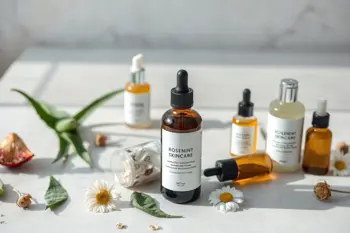
Clinical testing and dermatologist review have become standard practices for reputable brands looking to differentiate themselves in a crowded marketplace. By providing 100% transparency regarding ingredients and manufacturing processes, these companies address the skepticism often associated with natural labels 7. The emphasis is now on evidence-based skincare that relies on botanical chemistry rather than synthetic fillers or aggressive chemicals 4.
Sustainability as a Component of Product Quality
Environmental responsibility is now inextricably linked to consumer perception of quality in the skincare sector. Beyond ingredient safety, brands are under pressure to implement sustainable business models, including cruelty-free testing policies verified by organizations like Leaping Bunny 10. Furthermore, upcycled ingredients-materials derived from food industry byproducts-are being utilized to minimize waste, a practice championed by companies like Food for Skin to promote a more circular economy in beauty production 7, 9.
Packaging also plays a critical role in the environmental impact of these products. Many manufacturers are transitioning to refillable systems, as seen with brands like Kjaer Weis, which reduces the total waste generated by consumers over the lifecycle of their skincare and cosmetic routines 1. These shifts reflect a growing demand for a holistic approach to beauty where the health of the individual skin barrier is balanced with the health of the planet 2.
Risks and Considerations for Consumers
Despite the advancements in the natural skincare market, consumers must remain cognizant of potential friction points. Natural ingredients, such as essential oils and complex plant extracts, can still trigger allergic reactions or sensitivities in some individuals, despite being perceived as safer than synthetic alternatives 1, 6. Furthermore, the absence of standardized terminology means that products labeled as natural may vary significantly in their composition and potency 1. Individuals with specific skin concerns are encouraged to patch-test new products and consult with dermatologists to ensure that natural formulations are appropriate for their specific skin type and health profile 6.
Finally, the shelf life of truly organic or wildcrafted skincare may be shorter than that of conventional products due to the lack of strong synthetic preservatives. Maintaining product freshness, often by storing items in cool, dry environments or using small-batch products within a designated timeframe, is a practical reality of using these formulations 2.
Sources
- U.S. Food and Drug Administration, https://www.fda.gov/cosmetics/cosmetics-labeling-claims/organic-cosmetics
- United States Department of Agriculture, https://www.ams.usda.gov/grades-standards/organic-labelling
- Statista, https://www.statista.com/topics/6864/natural-and-organic-cosmetics-market-in-the-us/
- Environmental Working Group, https://www.ewg.org/skindeep/
- COSMOS-standard, https://www.cosmos-standard.org/
- Harvard Business Review, https://hbr.org/2021/09/the-clean-beauty-market-is-growing-but-is-it-sustainable
- Vogue Business, https://www.voguebusiness.com/beauty/the-truth-about-clean-beauty-standards
- Allure, https://www.allure.com/story/waterless-beauty-products
- Cosmetics Design, https://www.cosmeticsdesign.com/Article/2023/05/22/natural-skincare-trends-for-2023
- Leaping Bunny Program, https://www.leapingbunny.org/
Authored by 24Trendz team