Understand Hypertension Treatment Options: Evidence, Medicines, and Ongoing Care
Understand Hypertension Treatment Options by comparing the principal approaches used to lower blood pressure and reduce the risk of stroke, heart attack, kidney disease, and other complications. Current guidance combines lifestyle intervention, home monitoring, and individualized prescription treatment rather than relying on a single universal regimen.1
How hypertension is classified and treated
In the 2025 American Heart Association and American College of Cardiology framework, normal blood pressure is below 120/80 mmHg, elevated blood pressure is 120 to 129 systolic with diastolic pressure below 80, stage 1 hypertension is 130 to 139 systolic or 80 to 89 diastolic, and stage 2 hypertension is at least 140 systolic or 90 diastolic.1 A diagnosis generally depends on consistently elevated measurements rather than one isolated reading.
Treatment decisions reflect both the degree of elevation and a person’s broader cardiovascular risk. The updated guideline uses the PREVENT calculator for risk assessment, incorporating factors such as kidney function, statin use, and social drivers of health, while replacing the earlier pooled cohort equations.7 For stage 1 hypertension, medication may be considered when 10-year PREVENT risk is at least 7.5%; when risk is lower, lifestyle measures may be tried for 3 to 6 months before drug therapy is considered.1
Lifestyle measures as a foundation
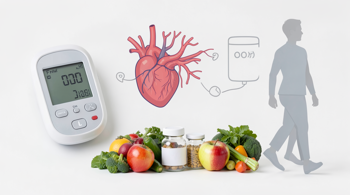
Lifestyle changes apply across blood-pressure categories. The main measures described in the research include a DASH-style eating pattern, weight management, regular physical activity, sodium reduction, limiting alcohol, avoiding tobacco, and stress management.9 DASH emphasizes fruits, vegetables, and low-fat dairy, while sodium targets may be below 2,300 mg daily, with an ideal limit of 1,500 mg for many adults.9
Physical activity guidance commonly identifies at least 150 minutes of moderate-intensity aerobic exercise per week as a useful cardiovascular-health target.9 Lifestyle intervention can be the initial strategy for some people with milder elevation, but it does not automatically replace medication when readings remain above goal or when cardiovascular risk is substantial. Maintaining these changes is also an ongoing management responsibility, because hypertension is generally a chronic condition rather than a short-term illness.
Common prescription medication classes
Four medication classes are recognized as first-line options in the current U.S. guidance: angiotensin-converting enzyme inhibitors, angiotensin-receptor blockers, calcium-channel blockers, and diuretics.5 ACE inhibitors and ARBs affect the renin-angiotensin system and help relax blood vessels. Calcium-channel blockers reduce vascular constriction, while diuretics help the body remove sodium and fluid. The choice depends on clinical context, tolerance, kidney function, other medicines, and relevant diagnoses.
Beta-blockers are antihypertensive medicines, but they are generally reserved for circumstances in which their effects provide an additional clinical reason, such as heart failure or ischemic heart disease, rather than being routine initial treatment for uncomplicated primary hypertension.8 Other categories, including centrally acting medicines, may be used in selected cases. Potential adverse effects, interactions, and monitoring requirements differ by class, so medication should not be started, stopped, or changed without professional supervision.
Matching treatment to health conditions
Comorbidities can materially change the preferred treatment strategy. The 2025 guideline includes expanded recommendations for chronic kidney disease, diabetes, pregnancy, and neurologic disorders, reflecting the need to adapt blood-pressure care to the risks of each population.7 A medication that is appropriate for one person may require caution or substitution for another because of kidney impairment, pregnancy, electrolyte concerns, heart disease, or other concurrent treatment.
Clinicians may also investigate secondary causes when hypertension is unusually severe, difficult to control, or associated with suggestive findings. The updated guidance expands screening for primary aldosteronism to all patients with stage 2 or resistant hypertension.7 Evaluation may also consider conditions such as obstructive sleep apnea and renal artery disease, which are specifically addressed in the guideline summary.1 Identifying an underlying cause can alter both medication selection and the broader care plan.
Combination therapy and monitoring
Many adults require more than one medicine to reach an individualized blood-pressure target. Harvard Health reports that most adults with hypertension by older age need at least two medications, while as many as 30% require three drugs, although the exact regimen varies by patient and guideline context.5 Combination treatment can pair complementary mechanisms, but it also increases the need to review adherence, side effects, dosing schedules, kidney function, and electrolytes.
Home blood-pressure monitoring helps compare readings taken outside the clinical environment with office measurements and can reduce uncertainty related to white-coat hypertension.3 Accurate tracking supports decisions about whether treatment is working, whether readings remain uncontrolled, and whether a medication adjustment is appropriate. Follow-up is therefore part of treatment, not an optional final step. Prescribed medicines control blood pressure while they are taken, and stopping them can allow pressure to rise again.9
Resistant hypertension and urgent situations
Resistant hypertension refers to blood pressure that remains uncontrolled despite appropriate treatment and requires structured reassessment. The 2025 guideline introduces renal denervation as an adjunctive option for selected patients with resistant hypertension, not as a general replacement for lifestyle measures or prescribed medicines.7 Specialist evaluation may review measurement technique, adherence, secondary causes, drug interactions, and the suitability of the current combination before considering procedural treatment.
Blood pressure above 180 systolic or above 120 diastolic is classified as a hypertensive crisis in the cited framework.8 A very high reading, especially when accompanied by concerning symptoms, warrants urgent medical assessment because severe hypertension can be associated with acute organ injury. Treatment thresholds and targets must also be individualized during pregnancy, around surgery, and in people with significant heart, kidney, or neurologic disease. These situations require clinician-directed decisions rather than self-adjustment of medication.
Sources
- Medscape, Hypertension, Adults: 2025 AHA/ACC Guideline Summary
- NCBI Bookshelf, NICE Guideline: Hypertension in Adults
- UpToDate, Hypertension in Adults: Initial Management
- Cleveland Clinic, High Blood Pressure and Hypertension
- Harvard Health Publishing, Taming High Blood Pressure: How Doctors Find the Right Drug Mix
- Circulation, 2025 AHA/ACC Hypertension Guideline
- Current Hypertension Reports, Updates in the 2025 AHA/ACC Hypertension Guideline
- Medscape, Hypertension Treatment and Management
- Mount Sinai, High Blood Pressure Treatment Options
Authored by 24Trendz team