The best exfoliating brush for sensitive skin
Finding the best exfoliating brush for sensitive skin is not simply a matter of picking the softest-looking option on a shelf. Sensitive skin describes a skin type with a structurally compromised or inherently thinner stratum corneum that responds disproportionately to both chemical and physical stimuli, meaning the choice of brush material and technology is a clinical consideration, not a personal preference. 1 Board-certified dermatologist Rachel Westbay, M.D., FAAD, of Marmur Medical notes that facial cleansing brushes are used with cleanser to enhance the cleansing routine by exfoliating and removing dirt, oil, makeup, and dead skin cells, but the mechanism by which they do this determines whether reactive skin benefits or suffers. 2
Why Sensitive Skin Demands a Specific Brush Category
Sensitive skin cannot tolerate the same exfoliation tools as oilier or more resilient skin types. Brushes with stiff, natural bristles can harbor bacteria and cause mechanical exfoliation damage, triggering inflammation and barrier disruption. 3 Dermatologists advise that soft-bristled brushes with fewer than 300 bristles are appropriate for sensitive skin to prevent irritation and barrier damage, while abrasive alternatives made from boar hair or rigid nylon create micro-tears that worsen reactivity over time. 4 The underlying principle is that exfoliation on sensitive skin should function as a light surface lift, not a scrubbing action, which is why material selection is the first and most consequential variable.
Beyond bristle count, the geometry of physical contact matters. Silicone-based exfoliating brushes are gentler than traditional bristle brushes and are less likely to harbor bacteria, making them particularly suitable for reactive and acne-prone sensitive skin types. 5 Non-porous silicone resists bacterial colonization, dries quickly between uses, and generates zero micro-tears on reactive skin surfaces, all properties that nylon and natural-fiber brushes cannot reliably replicate. 6
Silicone Versus Bristle: A Material Comparison
The market for sensitive-skin exfoliating brushes divides broadly into two material camps: medical-grade silicone touchpoints and traditional fiber bristles. Silicone brushes such as the FOREO Luna line use T-sonic pulsation technology, which cleanses without harsh scrubbing, and the soft silicone touchpoints are hypoallergenic and easier to clean, directly reducing the risk of bacterial buildup that fiber bristles accumulate over time. 7 The FOREO Luna Mini, for example, offers up to 8 speed settings, a waterproof design, and sonic technology recommended specifically for people with sensitive, dry, or rosacea-prone skin who want smooth exfoliation without friction. 8
Traditional bristle brushes are not categorically unsafe, but their suitability depends heavily on construction. The Kitsch Exfoliating Dry Brush for Sensitive Skin uses bristles designed to massage and exfoliate while helping to promote lymphatic drainage and detoxify the skin, with a natural cotton handle and bamboo base, and carries a consumer rating of 4.8 out of 5 from 109 verified reviews. 9 The Altesse Vitalis Body Brush, hand-crafted in France since 1875, uses therapist-approved tufting and high-quality boar bristles specifically designed for lymphatic drainage technique without irritating skin, though this type of natural bristle construction is generally recommended only for body use, not the face, in sensitive skin contexts. 10
Sonic and Electric Brushes: Technology Parameters That Matter
Electric sonic exfoliating brushes with frequencies between 200 and 300 oscillations per second are considered safe for sensitive skin when used with gentle pressure and at the device's lowest intensity setting. 11 The Halio Sensitive Facial Cleansing and Massaging Device delivers up to 10,000 sonic pulsations per minute through anti-bacterial 0.6mm silicone bristles, operates on three intensity modes, carries an IPX7 waterproof rating, and includes a two-minute smart timer to prevent over-exfoliation sessions. 12 The PMD Clean Mini Smart Facial Cleansing Device was identified by Glamour's tested panel as the most gentle option across multiple devices evaluated, with a smaller brush head that allows better access to facial contours. 13
Multiple speed settings are a non-negotiable feature for sensitive skin users. Sonic cleansing brushes with customizable intensity settings allow users to reduce vibration levels for delicate areas such as the cheeks, nose bridge, and undereye zone, where skin is thinnest and most reactive. 14 The PMD Beauty Electric Facial Cleansing Brush operates at 7,000 vibrations per minute on its dual-sided design, offering settings low enough for combination-to-sensitive skin profiles. 15 When evaluating electric brushes, IPX-7 waterproofing, timer functions, and dedicated low-intensity modes should be treated as baseline requirements rather than premium features for anyone with reactive skin.
Manual Options and Body-Specific Considerations
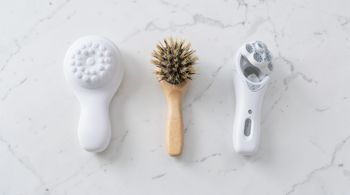
Manual brushes remain a clinically viable option for sensitive skin when bristle softness is verified and pressure is self-regulated. The EcoTools Deep Cleansing Brush is cited across multiple tested reviews as a manual option with ultra-soft natural bristles that deliver zero motor force to the skin, eliminating the risk of vibration-induced irritation entirely. 16 For body exfoliation, dry brushing with a natural-bristle tool before showering can help lift away surface dead skin cells and support lymphatic drainage, but Dr. Lena Patel, a board-certified dermatologist, emphasizes that the brush should never cause pain or visible redness, which is the threshold test for sensitive skin compatibility at every session. 17
The People Tested evaluation team spent over 500 hours evaluating 42 different exfoliating tools, confirming that regular use of dedicated exfoliating tools helps remove dead skin cells from the epidermis more effectively than scrubs alone, prevents clogged pores, reduces acne and ingrown hairs, and stimulates both cell turnover and lymphatic drainage. 18 For sensitive body skin specifically, silicone scrubbers using food-grade materials with ultra-soft bristles designed to clean without scratching represent the lowest-friction mechanical option, with users reporting no increased sensitivity even after consistent daily use. 19
Usage Frequency, Technique, and Key Risks
For sensitive skin, exfoliation should be limited to one to two times per week at most to protect the moisture barrier from cumulative physical stress. 20 Technique compounds this risk: beauty editor and aesthetician Grace Day advises avoiding pressing too hard and instead skimming the brush lightly over skin, focusing only on areas of congestion rather than treating the entire face with equal pressure. 21 Over-exfoliation, defined by persistent redness, tightness, flaking, or burning sensations after use, is a signal of barrier disruption that requires a complete pause from all mechanical exfoliation until the skin recovers.
Certain skin conditions create absolute contraindications for brush use. Dermatologists advise against using any exfoliating brush on active rosacea, eczema, or severe acne until the condition is professionally managed with appropriate treatments, as mechanical stimulation on compromised skin can significantly worsen inflammation and spread bacteria across the face. 22 Brush hygiene also presents a persistent risk: silicone heads should be rinsed after every use, while natural bristle brushes require weekly washing with mild soap and thorough air drying to prevent bacterial and mold accumulation that would otherwise transfer directly to reactive skin.
What to Look for Before Selecting a Brush
A structured evaluation framework reduces the risk of selecting an incompatible device. The following criteria reflect dermatologist guidance and tested performance data across sensitive skin categories.
| Feature | Sensitive Skin Requirement | Why It Matters |
|---|---|---|
| Material | Medical-grade or food-grade silicone | Non-porous, hypoallergenic, bacteria-resistant |
| Bristle Count | Fewer than 300 bristles for bristle-type | Lower density reduces friction and micro-tear risk |
| Intensity Settings | Minimum 3 levels, with a dedicated low mode | Allows calibrated use on reactive zones |
| Waterproof Rating | IPX-7 or equivalent | Supports safe use in shower without electrical risk |
| Timer Function | 2-minute auto-shutoff preferred | Prevents accidental over-exfoliation per session |
| Frequency (electric) | 200 to 300 oscillations per second range | Effective cleanse without excess mechanical stress |
Beyond hardware specifications, the practical maintenance routine determines long-term skin safety as much as the brush itself. A device with superior silicone construction that is never cleaned properly will introduce the same bacterial contamination risks as an inferior bristle brush. Consistent hygiene, conservative frequency, and pressure-light technique form the operational foundation upon which any brush, regardless of its category or price point, must be evaluated. 23
Sources
- nicemaybeauty.com - Best Facial Cleansing Brush for Sensitive Skin
- instyle.com - The 7 Best Facial Cleansing Brushes of 2026, Tested by InStyle
- Healthline - How to Care for Sensitive Skin with Exfoliating Brushes
- American Academy of Dermatology - How to Care for Sensitive Skin
- Allure Magazine - Best Exfoliating Brushes
- Byrdie - Best Face Brushes for Sensitive Skin
- dermondemand.com - Dermatologist-Recommended Face Cleansing Brush for Every Skin Type
- dermondemand.com - FOREO Luna Mini 2 Best for Sensitive Skin
- ulta.com - Kitsch Exfoliating Dry Brush for Sensitive Skin
- violetgrey.com - Vitalis Body Brush Sensitive Skin
- Healthline - Exfoliating Brush Safety for Sensitive Skin
- dealaqua.com - Halio Sensitive Facial Cleansing and Massaging Device Review
- glamour.com - 8 Best Facial Cleansing Brushes 2026, Approved by Dermatologists
- Cosmopolitan - Best Face Cleansing Brushes
- dermondemand.com - PMD Beauty Electric Facial Cleansing Brush
- instyle.com - EcoTools Deep Cleansing Brush Review
- oreateai.com - Dry Brushing: The Good, the Bad, and the Sensitive Skin Dilemma
- people.com - The 16 Best Body Exfoliator Tools, Tested and Reviewed
- zevessa.com - The Everyday Soft Skin Scrubber Glidesafe
- Allure - Best Facial Cleansing Brushes for Sensitive Skin
- instyle.com - How to Use a Facial Cleansing Brush
- WebMD - Skin Exfoliation Benefits and Risks
- atocha1622.com - Garnier PureActive Intensive Exfoliating Brush Review
Authored by 24Trendz team