Ex-military rugged outdoor gear inventory: A Comprehensive Technical and Market Evaluation
The Lifecycle and Procurement of Ex-Military Rugged Gear
Understanding the procurement and grading of an ex-military rugged outdoor gear inventory is critical for assessing the durability and value of tactical field items 1. The global secondary market is populated by equipment released through complex procurement systems 2. Governments allocate billions of dollars annually to defense procurement, generating excess stock that is decommissioned and sold off in large lots to specialized contractors 2. Regional distributors, such as Northern Surplus in Bemidji, Minnesota, have managed these fluctuating supplies for decades to serve outdoor enthusiasts and professionals seeking real-world utility 3.
Because these gear releases depend on military modernization cycles, inventory levels are notoriously irregular 4. Specialty suppliers like Maine Military Supply in Holden, Maine, rely on these intermittent releases to secure authentic apparel, boots, and tactical load-bearing gear 5. In the western United States, regional suppliers such as General Army Navy distribute these items across Salem and Rush Valley, Utah, matching surplus equipment to the local demands of rugged terrains like the Wasatch Front 6 7.
Tactical Load-Bearing and Storage Systems
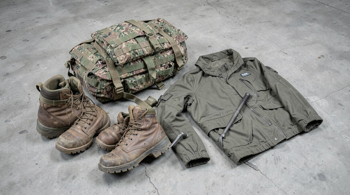
Tactical backpacks and rucksacks represent a core segment of ex-military field equipment. A primary example is the USGI MOLLE II Large Rucksack, engineered with heavy-duty 1000D Cordura nylon to withstand extreme combat environments 8. Designed with a modular lightweight load-carrying system, it distributes heavy weights ranging from 60 to 120 pounds across the hips and shoulders 8. On a smaller scale, patrol packs and medium-sized rucksacks like the US Military Surplus Medium Field Pack MOLLE II provide a lighter alternative for 24 to 48-hour operations 9.
To understand the classification of tactical transport units, the following table organizes common military carriers by their specific capacity classes and operational designs:
| Carrier Type | Capacity Range | Primary Design Features |
|---|---|---|
| Patrol & Day Packs | 5 to 20 Liters | Compact carry, quick access, used for light reconnaissance 10 |
| Medium Backpacks | 21 to 40 Liters | Weekend duration, tiered compartments, Y-strap stabilization 10 11 |
| Large Rucksacks | 41 to 65 Liters | Extended missions, external frame compatibility, Cordura nylon 10 8 |
| Expedition Packs | 66+ Liters | Long-duration tracking, maximum load-bearing suspension 10 |
Specialized Extreme-Weather Protective Wear
Protective apparel within an ex-military gear inventory must fulfill rigorous weatherproofing and flame-retardant standards. The USGI FREE EWOL Parka, constructed with flame-retardant materials, represents a technical outer layer issued to aircrews and fuel handlers to combat extreme weather conditions 12. Similarly, the US Navy Digital Type I Gore-Tex Jacket utilizes a waterproof outer shell with a storm flap and integrated hood designed for oceanic operations 13. For lower-body protection, garments like the British Army MTP Gore-Tex Trousers with a bib and brace configuration offer breathability and wind shielding using 100% PTFE membrane fabrics 14.
Specialized agencies operating in global extremes also release highly targeted gear. The United States Antarctic Program (USAP) issues distinctive "Big Red" parkas and cold-weather "bunny boots" designed to protect personnel in high-wind and sub-zero field environments 4. These garments are constructed with advanced textile technology designed by leading manufacturers like Milliken & Company to ensure maximum heat retention and environmental resilience 15. When these extreme-cold weather items enter the secondary surplus market, they provide protection for civilian survivalists and cold-weather workers 4.
Technical Specifications and Sizing Standards
Sizing systems for ex-military apparel deviate significantly from standard commercial fashion. Most military garments are structured around the U.S. Battle Dress Uniform sizing system, which measures chest size and height independently 12. This ensures a precise fit for personnel who must wear multiple layers underneath their outer garments 12. When foreign surplus is integrated into inventories, such as German Flecktarn Goretex suspenders or Romanian Army Olive Greatcoats, sizing conversions are required to translate European metric standards into domestic sizing structures 1 16 12.
The table below highlights key specifications for diverse military gear items recovered from various international defense stocks:
| Item Description | Sourced Origin | Material/Technical Specification |
|---|---|---|
| Desert DPM Combat Vest | British Military | Load-bearing modular pockets, desert camouflage 1 |
| FROG Combat Gloves | U.S. Marine Corps | Flame-resistant organizational gear specification 1 |
| M2008 Field Uniform | Turkish Armed Forces | Digital woodland pattern, ripstop fabric 17 |
| Moab 3 Tactical Boots | Police Deadstock | Waterproof side-zip utility boots with high traction 18 |
Grading Systems and Material Quality Analysis
Since the vast majority of genuine military surplus has seen active field service, rigorous physical grading is standard practice across the industry 4. Grade 1, or "Like New" items, are typically unissued or show minimal signs of storage wear, maintaining complete fabric and hardware integrity 1 4. Grade 2, or "Used" items, exhibit noticeable wear, cosmetic blemishes, or light repairs but remain fully functional in the field 1 19. This tiering allows collectors and survivalists to select gear based on whether they prioritize cosmetic perfection or cost efficiency 4.
To circumvent standard sorting constraints, many suppliers offer mixed options like mystery boxes. The Venture Surplus Mystery Box contains five to eight pounds of unsorted apparel, pouches, and field gear in varying camos like ACU or Multicam 20. Similarly, the Kruschiki Supply Company Loot Crate provides random surplus components including gas masks, helmets, and camos 21. While these mystery assortments guarantee a functional value exceeding their procurement cost, they introduce high variability regarding sizing and exact cosmetic conditions 20 21.
Regulatory Oversight, ITAR Compliance, and Market Risks
Navigating the acquisition of ex-military equipment requires strict adherence to federal and international trade laws. High-grade tactical equipment, such as the US Army Next Generation Integrated Head Protection System (NG-IHPS) ballistic helmet, is subject to International Traffic in Arms Regulations (ITAR) 22. Under these restrictions, the gear is strictly controlled and cannot be exported or carried outside the United States without official authorization 22. This compliance barrier presents a major market friction point for international buyers and collectors 22.
Beyond legal constraints, buyers face functional risks when acquiring decommissioned equipment. For example, medical loadout carriers, such as the London Bridge Trading Company 1562-A Tactical Field Care Pack or the Blackhawk STOMP 2 Medical Bag, are routinely sold with their clinical contents completely removed 19. Similarly, specialized protective items like helmets are sold with warnings recommending the complete replacement of internal pads and chin straps to ensure impact safety 22. Verifying authenticity through National Stock Numbers (NSN) remains essential to avoid non-compliant commercial replicas 19.
Sources
- ODGG LLC
- TruePrepper
- Northern Surplus
- Antarctic Surplus
- Veteran Disability Adviser
- General Army Navy Salem
- General Army Navy Rush Valley
- Fury28
- One Shear
- GoMilitar Bags
- Panoar 40L Assault Pack
- Full Metal Jacket
- Army and Outdoors US Navy Jacket
- GoArmy UK
- Milliken & Co Instagram
- Army and Outdoors Australia
- GoMilitar Turkish Camo
- KommandoStore Deadstock Footwear
- ODGG LLC Bag Page
- Venture Surplus Mystery Box
- Kruschiki Supply Co
- Venture Surplus NG-IHPS
Authored by 24Trendz team