Tailored cashmere overcoats: A Research-Based Guide to Materials, Construction, and Care
Tailored cashmere overcoats are defined by the combination of a refined, shaped silhouette and a fabric selected for insulation, softness, and visual drape. The category ranges from wool-cashmere blends to garments made entirely from cashmere, with construction standards varying from industrial production to extensive handwork. Understanding fabric composition, internal structure, fitting procedures, environmental credentials, and care requirements provides a more reliable basis for evaluating these coats than appearance alone.
What makes an overcoat tailored
A tailored overcoat generally emphasizes controlled proportions, defined shoulders, shaped seams, and a silhouette intended to sit cleanly over other clothing. Bespoke tailoring references describe full-canvas construction as a method that allows the coat to drape naturally and gradually conform to the wearer’s body. 1 Overcoat guidance also identifies fabric weight as an important balance between warmth, structure, and bulk, with tailored cashmere styles commonly discussed in the 450 to 600 grams-per-meter range. 5
- Common structural details include notched or peak lapels, vents, lined interiors, welt or flap pockets, and single- or double-breasted closures.
- Hand-stitched lapels can create a less uniform, more organic edge than machine stitching. 7
- A tailored label does not automatically indicate bespoke construction, as ready-to-wear coats may use the term for their cut alone.
Cashmere fiber, softness, and sourcing
Cashmere quality is closely associated with fiber fineness, measured in microns, because lower micron counts generally produce a softer hand-feel. 2 Industry reporting identifies Inner Mongolia as a major source of fine cashmere used in luxury outerwear, where cold conditions contribute to the development of insulating goat fibers. 3 Fiber softness, however, should not be treated as a complete quality assessment. Durability also depends on yarn preparation, fabric density, finishing, garment construction, and the wearer’s maintenance routine.
| Fabric type | Documented example | Practical implication |
|---|---|---|
| Wool and cashmere blend | Quince lists 90% RWS-certified wool and 10% cashmere. 11 | Combines cashmere softness with a predominantly wool structure. |
| Pure cashmere | Gabriela Hearst specifies 100% recycled cashmere for its Peter coat. 12 | Places greater emphasis on fiber handling and construction quality. |
| Cashmere blend | Joseph lists 80% wool and 20% cashmere. 18 | Offers a structured blend rather than a pure-cashmere fabric. |
Construction and fitting standards
Internal canvases are used in tailored coats to help the garment mold to the wearer’s torso and maintain a natural line. 10 Bespoke processes commonly involve multiple fittings, allowing adjustments to shoulder alignment, sleeve length, balance, and overall ease. Henry Poole describes a process requiring more than one fitting for refinement. 8 These methods differ from standard ready-to-wear sizing, where alterations may be limited by pocket placement, button positions, seam allowances, or the original pattern.
- Full canvas generally involves more labor and internal material than fused construction.
- Double-face cashmere requires clean finishing on both sides, making pressing and seam work particularly demanding. Gabriela Hearst describes this technique in its recycled-cashmere peacoat. 12
- Viola Milano reports 45 hours of handwork, including sleeves, stitching, buttons, and buttonholes, and states that adjustments or special orders can be made. 13
Silhouettes and documented market examples
Documented products show that “tailored cashmere overcoat” covers several distinct silhouettes rather than one standardized pattern. MAX&Co. describes a loose, straight, double-breasted coat in 70% virgin wool and 30% cashmere, while Todd Snyder specifies a single-breasted, below-knee topcoat in 78% wool, 12% nylon, and 10% cashmere. 14 15 Burberry’s category includes tailored jackets, cashmere coats, capes, car coats, and trench coats, demonstrating broad variation in length and structure. 16
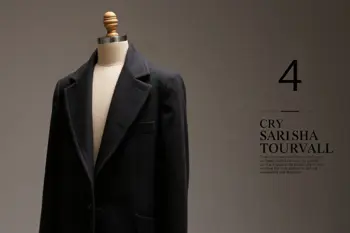
| Silhouette | Typical characteristics documented in the research |
|---|---|
| Topcoat | Single-breasted, peak-lapel design intended to work over denim, knitwear, or a suit. 15 |
| Peacoat | Double-breasted styling, broad lapels, and a shorter naval-derived profile. |
| Long overcoat | Below-knee or approximately 51-inch body length, depending on size and maker. 11 |
| Reversible coat | Double-face fabric finished cleanly on both sides, sometimes combining contrasting colors. 13 |
Risks, limitations, and verification points
Cashmere is not automatically more durable than every wool fabric, and a softer surface can be more vulnerable to abrasion, pilling, snagging, and pressure at frequently used areas. Customer evidence for the Guest In Residence Grizzly Double Breasted Coat illustrates the importance of fit evaluation: one review describes exceptionally soft warmth, while another reports that the coat was returned because it felt large and lacked shape. 17 The example also shows why fabric content, pattern balance, and actual measurements should be assessed separately.
- Check whether “cashmere” describes the entire fabric or only a percentage of a blend.
- Confirm whether the stated fit is tailored, classic, relaxed, or oversized. Joseph explicitly describes its Weston pea coat as oversized. 18
- Examine shoulder width, sleeve length, back vent behavior, pocket position, and room for intended layers.
- Review traceability claims carefully. Certifications cited across the research include the Responsible Wool Standard, Global Recycled Standard, Global Organic Textile Standard, OEKO-TEX Standard 100, and BSCI-related factory standards. 11 12
Care, longevity, and ownership realities
Professional dry cleaning and regular brushing are commonly recommended for preserving cashmere outerwear, removing surface debris, and limiting fiber matting. 4 Care labels remain authoritative because blends, linings, dyes, and interlinings can respond differently to moisture and heat. MAX&Co. specifies professional dry cleaning and prohibits washing, bleaching, tumble drying, and wet cleaning for its wool-cashmere coat. 14 A garment brush, adequate storage, protection from prolonged compression, and periodic inspection of buttons and seams are practical maintenance considerations.
Longevity also depends on use conditions and construction choices. Cashmere’s insulating properties make it suitable for structured coats in cold climates, but warmth varies with fabric weight, lining, layering, wind exposure, and garment fit. 9 Some documented coats state specific cold-weather performance, such as Quince’s claim of comfort down to 4°F or -16°C, although such claims belong to that product’s engineering and should not be generalized to every cashmere overcoat. 11 The most defensible evaluation therefore combines fiber data, construction evidence, measurements, care instructions, and realistic expectations about wear.
Sources
- Savile Row Bespoke Association, https://savilerowbespoke.com/the-process/bespoke-tailoring/
- Cashmere and Camel Hair Manufacturers Institute, https://www.ccmi.org/about-cashmere/
- Business of Fashion, https://www.businessoffashion.com/articles/luxury/the-rise-of-luxury-cashmere-sourcing/
- Gentleman’s Gazette, https://www.gentlemansgazette.com/how-to-care-for-cashmere/
- Put This On, https://putthison.com/how-to-buy-an-overcoat/
- Financial Times, How to Spend It, https://howtospendit.ft.com/mens-fashion/206589-the-best-bespoke-overcoats
- Permanent Style, https://www.permanentstyle.com/2021/11/how-to-spot-quality-in-a-coat.html
- Henry Poole & Co, https://henrypoole.com/bespoke/how-it-works/
- MR PORTER, https://www.mrporter.com/en-us/journal/fashion/how-to-buy-a-coat-that-will-last-a-lifetime-10940348
- A Suitable Wardrobe, https://asuitablewardrobe.com/the-art-of-the-overcoat/
- Quince, https://www.quince.com/women/wool-cashmere-tailored-coat?color=mocha-brown
- Gabriela Hearst, https://gabrielahearst.com/products/peter-coat-yellow-ochre-double-face-recycled-cashmere
- Viola Milano, https://www.violamilano.com/product/reversible-cashmere-storm-system-overcoat-navy-beige/
- MAX&Co., https://us.maxandco.com/p-6011036102001-mcocactus-white
- Todd Snyder, https://www.toddsnyder.com/products/sb-peak-lapel-topcoatnavy
- Burberry, https://us.burberry.com/v/designer-wool-cashmere-coats
- Guest In Residence, https://guestinresidence.com/products/grizzly-double-breasted-coat-chestnut-taupe
- Joseph, https://joseph-fashion.com/en-row/products/weston-double-face-cashmere-coat-black-jf0095950010
Authored by 24Trendz team