Sustainable cashmere overcoats for fall: Materials, certifications, and care considerations
Sustainable cashmere overcoats for fall are defined less by appearance than by fiber origin, processing, construction, and product life. Available examples range from recycled cashmere peacoats and recycled wool blends to virgin cashmere car coats, with certifications and traceability varying significantly between garments. 1
What makes a cashmere overcoat sustainable
The strongest sustainability indicators in the available product information are recycled content, recognized certification, traceable sourcing, and durable construction. Gabriela Hearst's Peter Coat is identified as 100% recycled cashmere, using post-consumer materials collected across Europe. Its Italian mill is described as solar-powered and certified to the Global Recycled Standard, Responsible Wool Standard, and Global Organic Textile Standard. 1
Other garments use a blend rather than entirely recycled cashmere. MUJI describes its Labo coat as made from recycled wool and cashmere, including leftover production fabric that is collected and respun through a traceable management system. Quince's women's slouch coat contains 90% Responsible Wool Standard certified wool and 10% cashmere, while its manufacturing plant is described as having solar and wastewater-treatment systems and Global Recycled Standard certification. 2 3
Fiber sourcing and animal-welfare claims
Virgin cashmere requires closer scrutiny because the environmental and animal-welfare record depends on husbandry, harvesting, land management, and supply-chain transparency. The Sustainable Fibre Alliance provides a framework for responsible cashmere production and animal welfare, while Textile Exchange describes the Global Recycled Standard as a mechanism for verifying recycled content and related supply-chain practices. 4 5
Some brands provide more specific origin information than others. SELVANE states that it works with traceable ranch partners across Mongolia and Inner Mongolia, primarily in Alxa, and harvests fiber between March and May during the goats' natural shedding cycle. It specifies a fineness range of 14.5 to 15.5 micrometers, fibers longer than 3.6 centimeters, and anti-pilling performance of Grade 4 to 5 under ISO 12945-2 testing. These details describe material standards, but they do not independently establish the full environmental impact of the coat. 6
Construction differences for fall weather
Double-face construction is a recurring feature in higher-end fall coats. The Peter Coat uses double-face recycled cashmere, a technique that leaves both sides cleanly finished and adds structure and warmth. Joseph's Weston coat is also double-face, although its material is listed as an 80% wool and 20% cashmere blend. The Weston has an oversized fit, double-breasted closure, exaggerated collar, welt pockets, shaped sleeves, and a hem belt buckle. 1 7
Other silhouettes prioritize softness or layering rather than tailored insulation. MUJI's collarless coat is described as lightweight and warm, with a loose fit, lined sleeves, and two large flap pockets. Lou Lou Australia's Quatro is a knee-length, open-front duster made from bamboo and cashmere knit, with a relaxed oversized shape and claims of thermal regulation and crease resistance. These designs may function differently from structured overcoats because their warmth and wind protection depend more heavily on layering and exposure. 2 8
Observed price and product positioning
The supplied market examples cover a wide price spectrum, although listed prices are product-specific observations rather than a general market average. Quince lists its women's wool-cashmere slouch coat at $200, marked against a stated traditional retail price of $350. MUJI lists its recycled wool and cashmere coat at $420, while Quince lists its men's 100% Mongolian cashmere car coat at $400. The MUJI item is marked sold out in the supplied data. 2 3 9
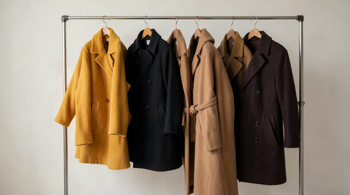
Luxury positioning is represented by Joseph's Weston at £1,205, Fabiana Filippi's soft double-chevron coat at a current listed price of $1,800, Gabriela Hearst's Peter Coat at $5,250, and its Mcaffrey Coat at $6,950. The Mcaffrey is an 88% cashmere and 12% silk long double-breasted coat made in Italy, while Fabiana Filippi's coat uses 85% virgin wool and 15% cashmere. Price alone does not prove sustainability, since material composition, labor oversight, durability, and verified sourcing must be assessed separately. 1 10 11 12
Fit, durability, and maintenance realities
Fit affects useful life because an overcoat that accommodates seasonal layers can remain practical across changing wardrobes. Quince describes its women's style as relaxed and oversized, with a 42-inch full body length in size small. Its men's car coat has a classic fit, a 37-inch body length in size medium, a single back vent, and multiple exterior and interior pockets. Gabriela Hearst provides extensive conversion tables across US, UK, Italian, French, and Japanese sizing, while SELVANE identifies its wrap coat as running large. 9 13 6
Maintenance can limit the practical sustainability of delicate outerwear. Joseph instructs owners not to wash, bleach, or tumble-dry the Weston and recommends low-temperature ironing and dry cleaning. Quince gives similar dry-clean-only guidance for the men's cashmere car coat. The need for professional cleaning, careful storage, and protection from abrasion means ownership involves ongoing care rather than a one-time material decision. Recycled content does not eliminate the risk of pilling, shrinkage, staining, or premature replacement. 7 13
How to evaluate environmental claims
Certification names should be matched to the claim being made. The Global Recycled Standard is relevant to recycled-material content and supply-chain verification, whereas the Responsible Wool Standard addresses animal welfare, land management, and social requirements for wool. Joseph states that its certification is independently backed by EcocertGreenlife, and Quince identifies Responsible Wool Standard wool, OEKO-TEX Standard 100 fabric certification, BSCI-certified factories, and a Vietnam production location. Each label covers a different issue and should not be treated as proof of universal sustainability. 5 7 9
Important limitations remain in comparing the products. Several descriptions provide fiber composition and factory information but do not disclose a complete lifecycle assessment, transport footprint, water data, repair policy, or end-of-life recycling route. Natural or recycled fibers can reduce reliance on newly produced material, but dyeing, finishing, lining, buttons, dry cleaning, and mixed-fiber construction still affect circularity. The most defensible assessment therefore separates verified facts from brand language and gives priority to specific certifications, measurable fiber details, and documented supply-chain practices. 1 2 4
Sources
- Gabriela Hearst, Peter Recycled Cashmere Peacoat
- MUJI Canada, Labo Cashmere Mix Double Breasted Coat
- Quince, Wool Cashmere Double-Breasted Slouch Coat
- Sustainable Fibre Alliance
- Textile Exchange, Global Recycled Standard
- SELVANE, Wrap Cashmere Coat
- JOSEPH, Weston Double Face Cashmere Pea Coat
- Lou Lou Australia, Quatro Cashmere and Bamboo Duster Jacket
- Quince, Men's 100% Mongolian Cashmere Overcoat
- Fabiana Filippi, Coat in Soft Double Chevron
- Gabriela Hearst, Mcaffrey Coat in Ivory Cashmere Silk
- Gabriela Hearst, Peter Coat product details
- Quince, Men's Cashmere Car Coat product details
Authored by 24Trendz team