Decommissioned defense department trucks: A report on federal surplus disposal and acquisition
The United States Department of Defense (DoD) maintains an expansive fleet of vehicles that undergo a rigorous lifecycle process, eventually leading to retirement, decommissioning, or disposal 2. When these assets reach the end of their military utility, they enter a structured disposition pipeline managed primarily by the Defense Logistics Agency (DLA) Disposition Services 1, 11. This report examines the technical and administrative procedures governing the transition of these vehicles from active tactical use to surplus status, as well as the inherent responsibilities for parties involved in the acquisition of such assets.
The Lifecycle and Disposition of Military Assets
Military equipment, ranging from tactical trucks to armored personnel carriers, follows a standard trajectory of acquisition, active service, and eventual retirement 2. Assets become surplus when they are deemed obsolete, worn out, or surplus to current mission requirements 2. The DLA manages the disposal of these assets to maintain readiness and manage the staggering scale of government property 2. Before reaching the public sector, vehicles often undergo a demilitarization (DEMIL) process, which ensures that sensitive military components are removed or disabled to comply with national security standards 20.
Public access to these vehicles is typically facilitated through authorized auction platforms, most notably GovPlanet, which serves as the official partner for DLA auctions regarding military rolling stock 12. Federal agencies may also use GSA Auctions as a secondary portal for disposing of non-tactical government vehicles 19. Prospective buyers often find that items are sold on an 'as-is' basis, necessitating a thorough understanding of the mechanical and regulatory conditions surrounding each specific bid 3, 14.
Regulatory Oversight and Contractual Obligations
The acquisition of decommissioned defense equipment is heavily regulated to prevent the misuse of sensitive technology. International Traffic in Arms Regulations (ITAR) may strictly prohibit the export of specific tactical vehicles to foreign nationals or locations outside of the United States 17. These legal frameworks are designed to protect national security, and compliance with these mandates is a prerequisite for any valid transaction 2. Buyers must ensure they have a clear understanding of the specific Federal Acquisition Regulation (FAR) provisions that apply to each individual sale, such as requirements regarding telecommunications and video surveillance services 1.
Purchasers are frequently responsible for all logistics, including removal, loading, and compliance with host nation regulations if the vehicle is located overseas 1. For example, when surplus trucks are located at international facilities like Camp Lemonnier, Djibouti, the winning bidder must navigate customs clearance and adhere to strict removal timelines, often within 21 calendar days of customs approval 1, 3. Failure to adhere to these contractual deadlines can lead to forfeiture of the opportunity or potential legal repercussions 3.
Mechanical Realities and Maintenance Expectations
Vehicles sold through DLA channels are rarely in 'turn-key' condition. Because many of these trucks have served in demanding tactical environments, they often suffer from significant maintenance issues, such as dead batteries, fluid leaks, or degraded electrical systems 3, 11. Auction descriptions provide transparency regarding these defects, but physical inspections are frequently prohibited, leaving the buyer to rely on provided photography or historical maintenance records 1, 3.
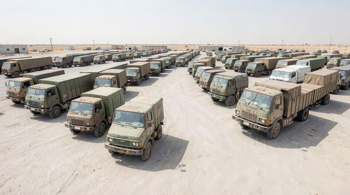
Civilian owners of these vehicles often engage in extensive restoration to return them to functional status or to replicate their original military appearance for historical preservation 8. However, potential buyers should be aware that surplus trucks, such as those in the M939 series, may lack modern, federally mandated safety features 15. These features, which include modern emissions controls and Department of Transportation (DOT) approved lighting, are essential for on-road use, and their absence may restrict the vehicle to off-road or agricultural utility in many jurisdictions 11.
The 1033 Program and Domestic Transfer
Not all decommissioned equipment enters the public commercial market. The Law Enforcement Support Office (LESO) operates the 1033 Program, which facilitates the transfer of excess Department of Defense equipment to domestic law enforcement agencies and, in some cases, fire departments 11, 13. This program allows local entities to acquire tactical vehicles that were once used by the military for support operations, providing a method for states to upgrade their equipment inventories without the high costs of commercial procurement 13.
This internal transfer process is distinct from public auctions. It follows strict eligibility criteria and federal reporting requirements to ensure that the equipment is utilized according to its intended secondary purpose 13. Because this program prioritizes government-to-government transfers, it accounts for a portion of the inventory that would otherwise be processed for public auction, impacting the total volume of vehicles available to private bidders 2.
Market Considerations for Private Acquisition
For private enthusiasts and collectors, the market for surplus military vehicles is characterized by the desire for historical authenticity and mechanical capability. Vehicles like the Humvee and the LMTV are sought after for overlanding and off-road builds due to their robust design and off-road performance 11. However, prospective buyers should recognize the complexity of registering these vehicles for public road use. State-level requirements vary significantly, and the absence of a clean, transferable title can complicate the process of obtaining legal registration for highway travel 4, 11.
| Consideration | Impact on Purchaser |
|---|---|
| Registration | Varies by state; lack of DOT features may impede road legality. |
| Condition | Vehicles are typically sold 'as-is' with potential mechanical deficits. |
| Compliance | Must adhere to ITAR and federal surplus regulations. |
| Logistics | Purchaser usually bears all costs for removal and transportation. |
Conclusion and Risk Assessment
Acquiring decommissioned Department of Defense trucks is a multifaceted endeavor that requires diligence, technical knowledge, and an understanding of federal procurement processes. The distinction between a functional asset and a project vehicle is often tied to the specific history of the unit and the quality of previous maintenance 3. Prospective participants must conduct extensive research into the governing regulations and the mechanical requirements of their chosen vehicle to manage the risks inherent in purchasing surplus military hardware 11, 18.
Sources
- Defense Logistics Agency: 31-6001 Djibouti Trucks, https://console.sweetspotgov.com/federal-contracts/e30db868-bbba-5507-ae5d-ad55d5f2d1ef
- Military Machine: What the US Military Does With Old Gear After It Is Retired, https://militarymachine.com/what-the-us-military-does-with-old-gear
- Defense Logistics Agency: 31-5006 Used Firefighting Truck Camp Lemonnier, DJI, https://console.sweetspotgov.com/federal-contracts/17c52394-b7a0-514d-a1a6-3a79ccf13dc4
- CLEATUS: Supply of Box Trucks (2–5 Ton with Box), https://www.cleat.ai/government/contracts/supply-of-box-trucks-2-5-ton-with-box-b7z7
- CLEATUS: DLA Disposition Services Turret Truck with Railing system and Order Picker, https://www.cleat.ai/government/contracts/dla-disposition-services-turret-truck-with-railing-system-and-order-picker-5lhy
- Yahoo Autos: What Does The US Military Do With Its Old Tanks And Armored Vehicles?, https://autos.yahoo.com/ownership/articles/does-us-military-old-tanks-014500178.html
- WBUR: Why it's the end of the road for the Humvee, https://www.wbur.org/onpoint/2025/09/05/military-retiring-humvee
- Bunker Talk: Army Dump Truck, https://bunkermeister.blogspot.com/2018/10/army-dump-truck.html
- The Standard Newspaper: Former “Yank Tank” restored to its military origins, https://www.waukonstandard.com/articles/2025/09/03/former-“yank-tank”-restored-its-military-origins-now-display-allamakee-county
- CLEATUS: BODY, CARGO TRUCK - Department Of Defense, https://www.cleat.ai/government/contracts/body-cargo-truck-omst
- General Research: DoD Surplus Vehicle Disposal and Regulation Analysis
- GovPlanet: About Auctions, https://www.govplanet.com/jsp/s/auction/about.jsp
- DLA LESO Program: 1033 Program Overview, https://www.dla.mil/Disposition-Services/Offers/Law-Enforcement/
- Government Liquidation: FAQ, https://www.govliquidation.com/faq.html
- Truck Paper: AM General Auction Listings, https://www.truckpaper.com/listings/trucks/auctions/list/manufacturer/am-general
- NHTSA: Importing Vehicle Advisory, https://www.nhtsa.gov/importing-vehicle/importing-advisory
- U.S. Department of State: ITAR/DDTC Regulations, https://www.pmddtc.state.gov/ddtc_public
- Steel Soldiers: Guide to Buying Surplus Military Trucks, https://www.steelsoldiers.com/threads/so-you-want-to-buy-a-surplus-military-truck.155823/
- GSA Auctions: Federal Agency Vehicle Disposals, https://gsaauctions.gov/gsaauctions/gsaauctions/
- Defense Technical Information Center: DoD Dictionary, https://discover.dtic.mil/dod-dictionary/
Authored by 24Trendz team