Attic Insulation Rolls on Sale: A Buyer's Research Guide to R-Values, Materials, and Market Realities
What Attic Insulation Rolls Are and Why R-Value Is the Central Metric
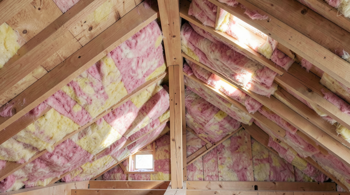
Attic insulation rolls, also called blanket insulation, consist of fine fibers matted into a flexible blanket that is either sold as long continuous rolls or pre-cut batts sized for standard joist spacing. Rolls suit long, unobstructed attic floor runs, while pre-cut batts reduce waste in framed cavities. 1 Both formats are sold in widths of 16 inches and 24 inches to align with standard ceiling joist spacing found in most North American residential construction. 2
R-value measures resistance to heat flow, and it is the single most important specification when evaluating attic insulation. The U.S. Department of Energy recommends an attic insulation level of R-38 to R-60 for most regions of the United States to maximize energy efficiency, with the precise target depending on climate zone. 3 Achieving this typically requires 12 to 16 inches of insulation depth. An R-30 batt, for instance, measures approximately 8.25 to 10 inches thick, while an R-49 product reaches 14 inches in thickness. Matching the R-value to local code requirements is not optional; under-insulating means paying for a product while achieving only a fraction of its thermal potential.
Fiberglass Rolls: The Dominant Category and Key Manufacturer Specifications
Fiberglass insulation rolls are the most widely available type for residential attic projects, sold at every major home improvement retailer in a range of widths, thicknesses, and R-values. 4 Owens Corning and Johns Manville are the primary manufacturers of residential insulation rolls found in major U.S. hardware stores. 5 Owens Corning PINK Next Gen Fiberglas rolls use advanced fiber technology that recovers instantly, cuts and splits cleanly, and features soft, shed-resistant fibers that reduce dust and cleanup during installation. The product line carries GREENGUARD Gold Certification for indoor air quality.
Johns Manville offers a comparable range under its Formaldehyde-Free designation, available in R-30 and R-38 configurations for attic applications. An R-30 unfaced batt measuring 23.625 inches wide by 48 inches long covers 86.62 square feet per package, while an R-38 unfaced version measuring 16 inches wide by 48 inches long covers 48 square feet and carries ENERGY STAR certification. 6 Knauf Insulation produces its EcoRoll and EcoBatt lines using plant-based ECOSE Technology, a formaldehyde-free binder made from corn, sand, and recycled glass, with a minimum of 50% post-consumer recycled content certified by third-party auditors. 7
Faced vs. Unfaced: Vapor Control and Application Logic
Attic insulation rolls are sold in two primary configurations: kraft-faced and unfaced. Kraft-faced rolls include a paper vapor retarder on one side, which helps manage moisture in attic environments where humidity control is a concern. Foil-faced variants offer a more robust moisture barrier and are sometimes specified for basement ceilings or crawlspace applications. Unfaced rolls carry no vapor barrier, making them the appropriate choice when layering over existing insulation, since adding a second vapor barrier can trap moisture and degrade structural elements over time. 8
Johns Manville R-30 Kraft-Faced Fiberglass Batts, for example, measure 24 inches by 48 inches with a 10.25-inch thickness and provide 88 square feet of coverage per package. The kraft facing is rated as a vapor retarder and the product carries GREENGUARD Gold and SCS recycled content certifications, along with ENERGY STAR qualification. Owens Corning R-49 Kraft-Faced batts, at 14 inches thick and 16 inches wide, are engineered specifically to meet R-49 attic code requirements in colder climate zones, with each bag covering 32 square feet using six precut pieces. 9
Radiant Barrier Rolls and Reflective Insulation: An Alternative Category
A separate but related market segment involves reflective radiant barrier rolls, which function on a fundamentally different physical principle than fiber insulation. Rather than slowing conductive heat transfer through trapped air pockets, radiant barriers reflect radiant heat away from the attic structure. Products like the Super R Plus Heavy Duty RFID radiant barrier, sold in 500 and 1,000 square foot rolls at 48 inches wide, reflect 95% of radiant heat and use a two-sided metallized film with polyethylene woven reinforcement. Tear strength testing under ASTM D2261 records 21.49 pounds of force in the length direction and 24.56 pounds in the width direction, and the product maintains laminate stability up to 180 degrees Fahrenheit. 10
Reflectix BP24025, a bubble-pack multi-layer reflective product, is frequently cited by professionals for lightweight, quick-install applications in tight attic spaces or over existing insulation. The SEALTECH 5mm reflective roll uses a 100% virgin polyethylene foam core with engineered foil layers and reflects 95% of radiant energy in an 8-inch by 75-foot format. 11 Radiant barriers are most effective in hot climates where cooling costs dominate, and they are generally used as a complement to, rather than a replacement for, fiber insulation products that address conductive and convective heat transfer.
Mineral Wool and Natural Fiber Alternatives: Performance Trade-offs
Mineral wool rolled insulation, also called rock wool or slag wool, costs approximately 15 to 30% more than comparable fiberglass products but offers measurably better fire resistance, superior acoustic performance, and improved moisture handling characteristics. 12 Its greater density allows it to be self-supporting in wall and ceiling cavities without stapling. In the UK and European markets, Knauf Loft Roll 44 is a glass mineral wool product with a thermal conductivity of 0.044 W/mK, achieving the highest fire classification rating available, Euroclass A1 non-combustible. It is manufactured with ECOSE Technology, which uses 70% less energy in production than traditional thermal binders. 13
Natural fiber alternatives represent a smaller market share but carry distinct environmental and handling advantages. Sheep wool insulation rolls, such as the SheepWool Comfort product, consist of 100% pure sheep wool formed into rolls, are non-itch, and generate practically no dust, which significantly reduces installer discomfort. Sheep wool has a thermal conductivity of approximately 0.033 W/mK in mat form and demonstrates self-extinguishing behavior. 14 These products are particularly relevant for renovation projects in environmentally sensitive structures or where occupant health considerations drive material selection.
Installation Realities, Safety Requirements, and Common Mistakes
Proper installation of attic insulation rolls requires safety equipment including a respirator mask, goggles, and long sleeves to prevent skin irritation from fiberglass particles. 15 Beyond personal protection, the most damaging installation error is compression: fiberglass insulation achieves its R-value through trapped air pockets, and compressing the material by forcing it into undersized cavities proportionally reduces thermal resistance. A product rated at R-19 that is compressed to fit a 3.5-inch cavity may perform at R-13 or lower. Gaps around electrical boxes, plumbing penetrations, and attic hatches also represent significant thermal bypass points that negate the value of correctly specified insulation.
Homeowners considering DIY attic insulation should account for the total coverage area required before selecting roll format and package size. A Johns Manville R-30 unfaced roll measuring 15 inches by 25 feet covers 31.25 square feet, while an Owens Corning R-30 unfaced batt bag covering 80 square feet at 24 inches by 48 inches represents a more efficient packaging unit for larger attic floors. Many utility companies offer rebates for homeowners who install insulation meeting specific R-value requirements, partially offsetting material costs regardless of the current retail environment. 16 Verifying local utility rebate programs before purchasing is a frequently overlooked but financially meaningful step.
R-Value Selection by Application: A Practical Reference
Selecting the wrong R-value is one of the most common and costly attic insulation errors. The table below summarizes standard R-value ranges by application type, based on manufacturer specifications and Department of Energy guidance for residential construction in the United States.
| Application | Typical Thickness | Recommended R-Value | Notes |
|---|---|---|---|
| 2x4 exterior walls | 3.5 inches | R-13 to R-15 | Standard residential framing; fiberglass or mineral wool |
| 2x6 exterior walls | 5.5 to 6.5 inches | R-19 to R-21 | Higher-performance wall assemblies |
| Attic floors and ceilings | 8.25 to 10 inches | R-30 | Common minimum for warmer U.S. climate zones |
| Attic floors in cold climates | 12 to 14 inches | R-38 to R-49 | EPA and DOE recommended range for most U.S. regions |
| Extreme cold climate attics | 16+ inches | R-49 to R-60 | Required in Climate Zones 6 and 7 per DOE guidelines |
Energy modeling consistently shows that increasing attic insulation from below-code levels to R-38 or R-49 can reduce annual heating and cooling costs by 10 to 15 percent, depending on climate and the existing insulation baseline. 17 The actual savings figure is highly site-specific and depends on air sealing quality, HVAC efficiency, and building envelope characteristics, so published averages should be treated as directional estimates rather than guarantees.
Sources
- dgfloors.com - Rolled Insulation: R-Values, Uses and Install
- aggressivepanhandler.com - Roll Insulation: Types, R-Values, and Buying Guide
- energy.gov - Attic Insulation Guidance and R-Value Recommendations by Climate Zone
- newenglandmetalroof.com - Rolls of Roof Insulation: A Comprehensive Guide
- cleangearguide.com - Best Rolled Insulation for Attic Upgrades
- tradesmanfactory.com - Johns Manville R-30 and R-38 Attic Unfaced Fiberglass Batt Insulation Specifications
- expertoolsmart.com - Knauf Insulation R-30 EcoRoll Unfaced Fiberglass Insulation Roll Specifications
- hardwaregearwarehouse.com - Knauf Insulation R-13 EcoRoll Foil-Faced Fiberglass Insulation Roll Description
- tradesmanfactory.com - Owens Corning R-49 Kraft Faced Fiberglass Insulation Batts Specifications
- barnworld.com - Super R Plus Heavy Duty RFID Radiant Barrier Insulation Specifications
- soundproofingdude.com - SEALTECH Heavy Duty 5mm Reflective Insulation Roll Overview
- aggressivepanhandler.com - Mineral Wool vs. Fiberglass Roll Insulation Cost and Performance Comparison
- nationalinsulationsupplies.com - Knauf Loft Roll 44 Product Description and ECOSE Technology
- atticstairs.ie - SheepWool Insulation Comfort Product Specifications
- energy.gov - EPA and DOE Insulation Safety and Installation Guidelines
- epa.gov - Utility Rebate Programs and Indoor Air Quality Insulation Standards
- energy.gov - Energy Savings Estimates for Attic Insulation Upgrades
Authored by 24Trendz team