Public auction seized cargo vans for sale
Public auction seized cargo vans for sale surface through a network of government-authorized channels that span federal agencies, state law enforcement, and municipal impound programs. A documented example is a 2017 White Mercedes-Benz Sprinter Worker Cargo van, upfitted with dual-sided metal storage cabinets and a rooftop air-conditioning system, that was listed for public sale by the San Bernardino County Sheriff's Department with a minimum opening bid of $10,000, pursuant to California Revenue and Taxation Code sections 6776 and 55161, to recover delinquent taxes owed to the California Department of Tax and Fee Administration (CDTFA). 1 That single listing illustrates the broader pattern: seized commercial vans enter public auction when they are attached to legal or tax enforcement actions, and the process is governed by statutory authority rather than commercial discretion.
How Seized Cargo Vans Enter the Auction Pipeline
Cargo vans reach public auction through several distinct legal pathways. Federal seizures tied to customs violations, drug investigations, or financial crimes are typically processed by the U.S. Marshals Service, which manages forfeiture and sale of assets seized during federal investigations through authorized contractors. 2 At the state and local level, police impound lots dispose of abandoned and seized vehicles on a rolling basis. The City of Dallas Auto Pound, for example, auctions all vehicles declared abandoned under Texas Transportation Code Section 683 every other Monday, with all sales final and all items sold on an as-is basis. 3 Tax authorities represent a third channel: the CDTFA-ordered San Bernardino sale followed Code of Civil Procedure sections 701.510 to 701.680, requiring the winning bidder to deposit at least $2,500 or 10 percent of the bid, whichever is greater, with the balance due within 10 days. 1
Multi-agency consolidations also occur. A July 2026 public auction notice from Davie, Florida, listed seized vehicles from four separate agencies: the Broward Sheriff's Office, Palm Beach County Sheriff's Office, City of Margate, and City of Boca Raton, all offered at a single event requiring a $1,000 certified refundable deposit and preregistration before viewing or bidding. 4 This consolidation model is common when individual agencies lack the volume or infrastructure to run standalone sales efficiently.
Primary Platforms and Auction Operators
The GSA Fleet Marketplace provides an official portal through which the U.S. government sells surplus and seized vehicles, including cargo vans, to registered public buyers. 5 GovDeals, a Liquidity Services brand, facilitates sales of government-owned and seized assets for a broad range of agencies and is among the most widely used civilian-facing platforms for this category. 6 CWS Asset Management functions as a prime contractor for the U.S. Marshals Service, handling seized vehicle assets on behalf of federal enforcement. 7 PropertyRoom.com partners with law enforcement agencies specifically to auction seized and impounded vehicle inventory at the local level. 8
Regional auction houses also handle police seizure lots on a recurring basis. Powell Auction and Realty in Knoxville, Tennessee, conducts police seizure auctions multiple times per year through online-only bidding on the HiBid platform, with a 15 percent buyer's premium and sales-tax obligations added to winning bids. 9 Kansas City's bi-weekly police impound auctions, conducted by OAI Auctions at the city tow lot on East Front Street, specify that most vehicles are not in running condition and most do not have keys, with non-payment resulting in a permanent ban and forfeiture of a $300 deposit. 10 These operational details reflect the reality that seized commercial vehicle auctions are logistically demanding events with strict enforcement of payment terms.
Registration Requirements and Bidder Eligibility
Registration requirements vary by jurisdiction and operator but share common structural elements. Most auctions require a valid government-issued photo identification and mandate that all participants be at least 18 years old. 3 Many events require a certified deposit paid before viewing is permitted; the Davie, Florida multi-agency auction required $1,000 in certified funds before a prospective buyer could even inspect the vehicles. 4 Federal auction operators such as CWS Marketing typically require account creation and manual verification before granting full registration privileges, with processing times that can extend to one business day. 7
Online-only formats have become standard for many municipal and state auctions, expanding geographic access while maintaining strict non-payment penalties. Public Surplus, which is used by municipalities including the Town of Westford, Massachusetts, processes surplus vehicle sales entirely through its online portal, with vehicles available for appointment-based viewing before the auction closes. 11 Buyers should confirm platform-specific terms, including whether credit cards, cashier's checks, wire transfers, or cash only are accepted, as these vary materially between operators.
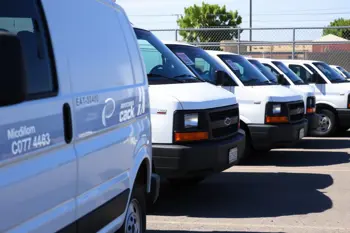
Condition Realities and Title Considerations
All seized cargo vans sold through public auction channels are offered on an as-is, where-is basis, with no warranties expressed or implied. 6 Auction operators explicitly state that condition information is limited to what appears in the listing, and buyers should treat mechanical status as unknown unless a documented inspection has been completed. Kansas City's impound auction terms state directly that bidders will not know whether a vehicle runs and drives until after purchase in most cases, and keys are absent from the majority of lots. 10 Seized cargo vans may also carry incomplete documentation, missing service histories, or complex title transfer requirements depending on the originating legal action.
Title status is a critical variable. Some seized vehicles carry clear titles, while others may carry salvage titles or titles held in escrow pending completion of forfeiture proceedings. Buyers are advised to verify the vehicle identification number (VIN) and all auction paperwork before committing to a bid, since inventory can include incomplete documentation or multi-step transfer processes. 12 Separately, Dallas impound rules specify that no auction vehicle may be driven from the lot and that a licensed wrecker must tow all purchased vehicles from the premises, adding transport cost to the total acquisition expense. 3
Cost Structure Beyond the Winning Bid
The hammer price at a seized cargo van auction is rarely the final cost. Buyers should anticipate a structured set of additional charges that materially affect the real acquisition cost of any unit.
- Buyer's premium: typically 10 to 15 percent of the winning bid, added automatically by the auction operator (Powell Auction charges 15 percent) 9
- Sales tax: assessed by state and local jurisdiction on the purchase price plus buyer's premium in most states 9
- Deposit requirements: refundable certified deposits ranging from $300 to $1,000 depending on the event, held until full payment is confirmed 4
- Transportation and towing: required when vehicles cannot be driven from the lot, which is the standard rule at municipal impound auctions 3
- Title transfer and registration fees: vary by state and are the buyer's responsibility regardless of how the vehicle was originally titled 12
- Mechanical rehabilitation: seized vans are frequently non-running, may lack keys, and have unknown service histories, making repair estimates necessary before bidding 10
Risks, Oversight, and Market Friction
Public auction channels for seized cargo vans are subject to statutory oversight through the legal codes that authorize the original seizure, but that oversight does not protect buyers from post-sale losses. All sales are final across all documented auction formats, bids cannot be retracted for any reason, and operators explicitly state that buyer mistakes regarding suitability or condition are not remedied by the agency or auction house. 10 Fraud risk exists in adjacent markets: Kenya's Ministry of Interior issued a warning about fake vehicle auction schemes alongside its legitimate GSU headquarters auction announcement, underscoring that unauthorized entities sometimes impersonate official disposal programs to collect fraudulent deposits. 13
Market friction is also present in the form of bid failure. At a sealed public auction conducted by the Bureau of Customs at the Port of Manila, multiple high-value vehicles including a 2023 Ferrari SF90 Stradale, a 2023 Rolls-Royce Phantom, and several other units drew no compliant bids during the sealed tendering phase, with high reserve expectations and niche buyer pools cited as contributing factors. 14 While that example involved luxury vehicles, the principle applies broadly: seized cargo vans with significant mechanical issues or unusual configurations may carry reserve prices that reflect agency valuation formulas rather than realistic market demand, leading to relisting cycles and extended disposition timelines. Prospective buyers benefit from approaching each listing with independent condition research and a clear ceiling bid that accounts for all post-purchase costs before participation.
Sources
- California Department of Tax and Fee Administration (CDTFA) - Notice of Sale, Public Auction (cdtfa.ca.gov)
- U.S. Marshals Service - Asset Forfeiture Program (usmarshals.gov)
- Dallas Police Department - Auto Pound Auction (dallaspolice.net)
- NoticeRegistry - Equipment and Vehicle Procurement, Davie, FL (noticeregistry.com)
- GSA Fleet Marketplace - Browse Vehicles (marketplace.gsafleet.gov)
- GovDeals - Government Surplus Auctions (govdeals.com)
- CWS Marketing - Online Government Auctions Seized and Unclaimed Assets (cwsmarketing.com)
- PropertyRoom.com - Law Enforcement Auction Partner (propertyroom.com)
- Powell Auction and Realty - Police Seizure and Equipment Auction (powellauction.com)
- Woolsey Auction / OAI Auctions - Kansas City Police Tow Lot Auction (woolseyauction.com)
- Public Surplus - Westford Police Department Surplus Vehicle Auction (publicsurplus.com)
- Wondermapped - Seized Used Vans Available at Current Market Rates (wondermapped.com)
- The Kenya Times - Ministry of Interior Announces Vehicle Auction (thekenyatimes.com)
- GetTransport Blog - BOC-Port of Manila Seized Luxury Vehicle Auction Results (blog.gettransport.com)
Authored by 24Trendz team