Orthopedic walking shoes: A clinical buying and fit analysis
Descriptions such as “orthopedic, pain-relieving walking shoes” and “built for 12-hour shifts” reflect the central claims surrounding this category. Product pages and podiatry guidance point to a more specific question: whether a shoe’s support, width, cushioning, and stability match the wearer’s foot condition, walking pattern, and daily demands. Orthopedic footwear is not a single standardized design, so comfort claims require comparison with measurable construction details and individual fit. 1
What orthopedic walking shoes are designed to address
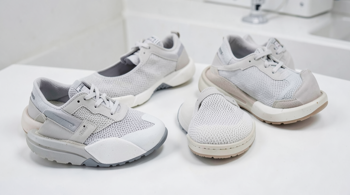
Orthopedic walking shoes generally combine cushioning, arch support, a stable heel area, adequate forefoot width, and a sole that is flexible without collapsing. Podiatry guidance identifies these features as relevant for people experiencing heel pain, arch fatigue, bunions, arthritis, flat feet, or forefoot pressure. A rocker-style sole may smooth the transition from heel to toe for some walkers, but it is not automatically appropriate for every gait or diagnosis. 1
Different models emphasize different forms of support. Orthofeet describes anatomical arch support, cushioned interiors, extra depth, and widths intended to accommodate orthotics or sensitive feet, while Vionic highlights built-in arch support, cushioning, and stability in its walking collection. These descriptions indicate design priorities rather than clinical guarantees. A shoe can reduce discomfort for one person while creating pressure or instability for another if its shape does not match the foot. 6
Fit is more important than the orthopedic label
A properly fitted walking shoe should leave approximately a thumb’s width between the longest toe and the front of the shoe. The heel should remain secure without rubbing, and the forefoot should not be compressed from the sides or top. Cleveland Clinic guidance emphasizes toe space, heel fit, cushioning, and selection based on individual foot needs, while orthopedic guidance similarly stresses adequate room and support. Fit should be assessed while standing, when the foot occupies more space than it does while seated. 12
| Fit feature | What to assess |
|---|---|
| Length | Room in front of the longest toe |
| Width | No squeezing across the forefoot or bunion area |
| Heel | Secure hold without excessive rubbing |
| Footbed | Support that can work with, or be replaced by, an orthotic when appropriate |
Width availability varies substantially. The ABEO Encore listing provides women’s sizes 5 through 11 in a medium width and describes a wider fit, adjustable lacing, a deep heel cup, and a removable BIOsystem orthotic footbed. FitVille’s Rebound NEO V6 chart lists medium, wide, extra-wide, and XX-wide measurements for selected men’s sizes. These details matter more than the word “orthopedic” when swelling, bunions, or an orthotic changes the amount of internal space required. 25
Examples of construction differences across models
The supplied product data shows a broad market rather than one uniform orthopedic standard. ABEO Encore is a lace-up women’s sneaker with arch and heel support, a deep heel cup, moisture-wicking lining, and a removable footbed. KURU Quantum 2 is a men’s slip-on with heel-hugging construction, a roomy toe box, mesh and rubber materials, an 8.5-millimeter heel-to-toe drop, and a listed men’s weight of 13.2 ounces. These specifications describe construction and intended use, not proof that either model treats a medical condition. 23
| Model example | Reported design details | Listed context |
|---|---|---|
| ABEO Encore | Removable orthotic footbed, deep heel cup, adjustable lacing | Women’s casual walking |
| KURU Quantum 2 | Slip-on design, pull tabs, roomy toe box, 8.5-millimeter drop | Travel and all-day standing |
| FitVille Rebound NEO V6 | Multiple width categories and a detailed size chart | Men’s walking and flat-foot collection |
| Orthora Ortho Balance | Breathable mesh, wide toe box, reinforced cushioning, slip-resistant description | Long shifts on hard floors |
Orthora’s Ortho Balance page describes slip resistance, reinforced cushioning, a wide anti-squeeze toe box, breathable mesh, and use during 8 to 12-hour shifts. The same page lists men’s sizes 6 through 14 and a displayed price of $99. Other supplied examples list $73 for FitVille Rebound NEO V6, $104.95 for ABEO Encore, and $149 for KURU Quantum 2. Listed prices and specifications can change, so they should be treated as page-specific information rather than a stable market standard. 4523
Matching features to common foot concerns
Plantar fasciitis often makes heel cushioning and arch comfort important, while bunions and swelling make width and toe-box shape more consequential. Arthritis may increase the value of cushioning and a smoother sole transition, whereas excessive inward rolling may lead some walkers to consider stability or motion-control construction. New Balance describes its 928v3 as a motion-control walking shoe with multiple width choices, but gait-based selection is preferable to choosing solely by product category. 115
Bunions or swollen feet: prioritize width and a nonrestrictive toe box. 1
Flat feet or excessive rolling: assess whether structured stability is comfortable and appropriate. 15
Heel discomfort: examine cushioning, heel security, and the compatibility of the footbed with an orthotic. 2
Reduced sensation: seek clinical footwear guidance rather than relying on comfort alone. 1113
Clinical safety and eligibility considerations
People with diabetes or reduced foot sensation face a higher risk of overlooking rubbing, pressure points, or skin injury. Mayo Clinic and the American Diabetes Association recommend proper footwear and regular foot inspection as part of diabetic foot care. A shoe that feels comfortable during a brief fitting can still create a problem after prolonged walking if seams, the toe box, or the heel counter apply repeated pressure. Clinical assessment is especially important when ulcers, neuropathy, deformity, or circulation concerns are present. 1113
The APMA Seal of Acceptance is a form of third-party program oversight for products evaluated for safety, quality, and effectiveness for foot health. Its presence can provide additional information, but the seal does not replace diagnosis, fitting, or monitoring. Medical-grade diabetic footwear, custom orthotics, bracing, and in-shoe modifications may be relevant in cases where ordinary retail shoes cannot accommodate a person’s structure or pressure distribution. 91
Maintenance, replacement, and market limitations
Walking shoes gradually lose functional support even when the upper still appears usable. The American Orthopaedic Foot and Ankle Society advises replacement when footwear becomes worn or no longer provides adequate support and cushioning. Visible tread wear, a compressed midsole, uneven outsole wear, or a noticeable decline in comfort are practical warning signs. Long shifts on concrete may increase the importance of checking these conditions because repeated loading exposes weaknesses that casual use may not reveal. 20
Consumer comparison also involves friction points. Product pages may show review counts, guarantees, shipping statements, stock messages, or changing prices, but those commercial details do not establish medical effectiveness. Review totals can differ between retailers for the same model, and sizing may vary by brand or width. The most defensible evaluation combines a measured fit, transparent construction information, an appropriate return or wear-testing policy, and professional advice when symptoms or medical risk make self-selection unreliable. 238
Practical evaluation framework
A structured assessment can reduce the chance of choosing footwear based only on softness or appearance. Measure both feet, fit the larger foot, wear the socks used for walking, and test the shoes late in the day if swelling is common. Examine whether the arch support feels aligned rather than intrusive, whether the heel stays in place, and whether the sole bends where the foot naturally flexes. Symptoms that worsen, persistent pain, or skin changes warrant professional evaluation rather than continued experimentation. 1012
Confirm length, width, heel security, and toe clearance while standing. 10
Check whether the insole is removable if an orthotic is required. 27
Compare stability, cushioning, and rocker geometry with the walker’s actual gait and symptoms. 117
Inspect feet after wear when sensation is reduced or diabetes is present. 1113
Sources
- Achilles Foot and Ankle Center
- ABEO Footwear
- KURU Footwear
- Orthora Footwear
- FitVille
- Orthofeet
- Aetrex
- FootSmart
- American Podiatric Medical Association
- American Academy of Orthopaedic Surgeons
- Mayo Clinic
- Cleveland Clinic
- American Diabetes Association
- Brooks Running
- New Balance
- Orthofeet Walking Shoes
- HOKA Bondi Collection
- Vionic
- Aetrex Walking Shoes
- American Orthopaedic Foot and Ankle Society
Authored by 24Trendz team