Understanding Advanced Laser Treatment Options for Varicose Veins in Adults
Facts:
- Varicose veins affect a significant portion of the adult population.
- Trends show increasing preference for minimally invasive procedure like laser treatment for vein conditions.
Exploring Modern Laser Treatment Options for Varicose Veins
For many adults suffering from the discomfort and cosmetic concerns of varicose veins, finding an effective solution is paramount. Recent advancements in medical technology have made laser vein treatment a leading choice, offering a safe and efficient path to relief. This article delves into the various sophisticated laser treatment options for varicose veins in adults, detailing how these minimally invasive procedures work to restore vein health and improve quality of life.
Understanding Varicose Veins and Their Impact
Varicose veins are a common condition where veins become enlarged, twisted, and often painful, typically appearing on the legs and feet. They develop when the small valves inside the veins weaken or become damaged, preventing blood from flowing efficiently back to the heart. This leads to blood pooling, which in turn causes the veins to bulge and become visible. While often considered a cosmetic issue, varicose veins can lead to more serious health concerns such as pain, swelling, skin discoloration, and even ulcers. Understanding the underlying causes and progression of this condition is crucial for appreciating the benefits of targeted vein treatment options like laser therapy.
The Science Behind Laser Treatment for Varicose Veins
Laser vein treatment, specifically endovenous laser ablation (EVLA), operates on the principle of delivering concentrated light energy to the affected vein. A thin laser fiber is inserted into the problematic vein, usually under local anesthesia and ultrasound guidance. The laser energy heats the lining of the vein, causing it to collapse and seal shut. Over time, the treated vein is reabsorbed by the body, and blood flow is naturally redirected to healthier veins. This minimally invasive procedure has revolutionized the approach to treating varicose veins, offering an alternative to traditional surgical stripping with fewer risks, less downtime, and superior cosmetic outcomes. The precision of the laser ensures that surrounding tissues are largely unaffected, contributing to a quicker recovery.
Types of Laser Treatment Options Available
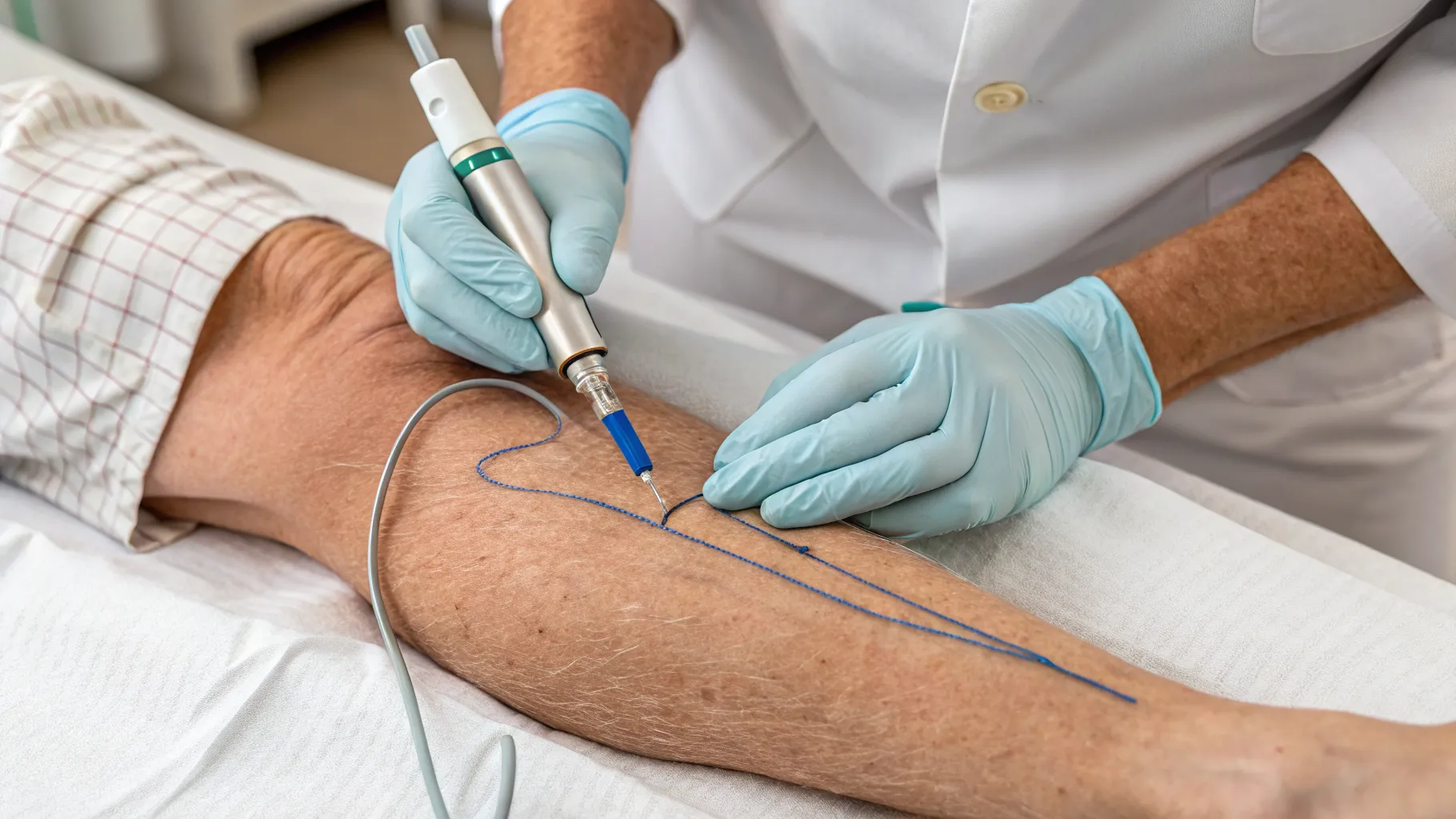
Several types of laser treatment options for varicose veins in adults are available, each tailored to different severities and types of veins. The most common and effective is endovenous laser ablation (EVLA), suitable for larger, deeper varicose veins. For smaller, more superficial spider veins and reticular veins, surface laser treatment (also known as cutaneous laser treatment) is often employed. This method uses a handheld device that delivers laser energy through the skin to heat and close off the smaller veins without direct insertion. While the underlying principle of heat-induced vein closure remains consistent, the delivery mechanism and intensity vary significantly, allowing for a comprehensive approach to vein treatment that can address a wide spectrum of venous insufficiencies.
Endovenous Laser Ablation (EVLA)
Endovenous laser ablation (EVLA) is the gold standard for treating larger saphenous veins that are the primary source of reflux contributing to varicose veins. This procedure involves making a tiny incision, typically less than 2mm, through which a thin catheter carrying the laser fiber is introduced. Ultrasound imaging guides the physician to accurately position the fiber within the vein. As the fiber is slowly withdrawn, it emits laser energy, uniformly heating and sealing the vein from within. Patients experience minimal discomfort during the procedure, which is usually performed in an outpatient setting. The effectiveness of EVLA in permanently closing varicose veins is exceptionally high, often exceeding 95% success rates, making it a highly desirable laser vein treatment.
Cutaneous Laser Treatment
Cutaneous or surface laser vein treatment is distinct from EVLA as it does not involve any incisions. Instead, a specialized laser device is applied directly to the skin's surface, emitting light that is absorbed by the blood within the superficial veins. This absorption generates heat, causing the small veins to coagulate and eventually fade away. This option is particularly effective for small spider veins and reticular veins that are too tiny for other interventional methods. While effective, multiple sessions may be required to achieve optimal results, and it is crucial to address any underlying larger vein issues (which would typically be treated with EVLA) first to prevent recurrence of the superficial veins. It represents a precise method within the array of vein treatment options for cosmetic improvement.
Comparing Laser Treatment to Other Vein Treatment Options
When considering vein treatment options for varicose veins, patients often weigh laser vein treatment against alternatives such as sclerotherapy, radiofrequency ablation, and traditional surgical vein stripping. Sclerotherapy involves injecting a solution into the vein to irritate its lining and cause it to close, often used for smaller veins. Radiofrequency ablation is similar to laser ablation but uses radiofrequency energy instead of laser light to heat and seal the vein. Traditional surgical stripping, once common, involves physically removing the vein through incisions, which is far more invasive, carries higher risks, and requires a longer recovery period. Laser treatments, particularly endovenous laser ablation, stand out due to their minimally invasive procedure nature, high success rates, reduced pain, and rapid recovery, making them a preferred choice for many seeking effective and convenient solutions for their varicose veins.
Post-Procedure Care and Recovery for Laser Vein Treatment
Effective post-procedure care is crucial for optimal outcomes after laser vein treatment. Following an endovenous laser ablation or cutaneous laser session, patients are typically advised to wear compression stockings for a specified period, usually for several days to a few weeks. These stockings help to compress the treated veins, reduce swelling, and promote healing. Walking is encouraged immediately after the procedure to stimulate blood flow and prevent complications like deep vein thrombosis. Strenuous activities and heavy lifting should be avoided for a short duration. Minor bruising, swelling, or tenderness along the treated vein are common but generally resolve quickly. Adhering to the physician's specific instructions for activity, medication, and follow-up appointments is essential for a smooth recovery and maximizing the long-term success of the laser vein treatment, ensuring the lasting relief from varicose veins.
Actionable Advice: Choosing the Right Laser Treatment for You
Consult a Specialist:
Seek advice from a board-certified vascular surgeon or phlebologist. A thorough examination, including ultrasound imaging, is essential to accurately diagnose the extent of your varicose veins and determine if laser vein treatment is appropriate.
Understand the Procedure:
Ensure you fully comprehend the specific type of laser treatment recommended, such as endovenous laser ablation or surface laser, including its benefits, risks, and expected recovery. Ask any questions you have about the minimally invasive procedure.
Discuss Expectations:
Have an open conversation with your doctor about realistic outcomes. While laser treatment options for varicose veins in adults are highly effective, complete eradication of all visible veins or resolution of all symptoms may vary per individual. Manage expectations for both cosmetic and symptomatic improvement.
Review Post-Care Instructions:
Familiarize yourself with the post-procedure care requirements, including compression stocking usage, activity restrictions, and signs to watch for. Adhering to these instructions is critical for preventing complications and ensuring the best possible results from your vein treatment.
Consider Lifestyle Changes:
While laser treatment addresses existing varicose veins, adopting healthy lifestyle habits like regular exercise, maintaining a healthy weight, and avoiding prolonged standing or sitting can help prevent the development of new veins and support overall vascular health.
Frequently Asked Questions
Is laser treatment painful for varicose veins?
Most patients report minimal pain during and after laser vein treatment. The procedure is typically performed under local anesthesia, which numbs the area. Post-procedure discomfort is usually managed with over-the-counter pain relievers and resolves within a few days. The minimally invasive procedure nature contributes to less pain compared to traditional surgery.
How long does recovery take after endovenous laser ablation?
Recovery from endovenous laser ablation is generally quick. Most individuals can resume light daily activities immediately. Strenuous exercise should be avoided for about one to two weeks. Compression stockings are usually worn for a period specified by your doctor to aid healing and reduce swelling after this effective laser vein treatment.
Are the results of laser treatment for varicose veins permanent?
Laser vein treatment, particularly endovenous laser ablation, has a very high success rate in permanently closing the treated vein. Once the vein is sealed, it typically does not reopen. However, it's possible for new varicose veins to develop in other areas over time, especially if there's an underlying predisposition. Regular follow-ups and lifestyle management can help maintain long-term results.
Is laser treatment suitable for all types of varicose veins?
While laser vein treatment is highly effective for many cases of varicose veins, its suitability depends on the size, location, and severity of the veins. Large, symptomatic saphenous veins are ideal candidates for EVLA, while smaller spider veins might be better treated with cutaneous laser or sclerotherapy. A thorough consultation with a specialist will determine the most appropriate vein treatment options for your specific condition.
What are the potential risks of laser vein treatment?
As with any medical procedure, there are potential risks, though complications from laser vein treatment are rare and generally mild. These can include temporary bruising, swelling, tenderness, numbness, or skin discoloration. More serious but rare complications could involve infection, blood clots, or thermal injury to nerves. Your doctor will discuss all potential risks during your consultation to ensure you are fully informed about this minimally invasive procedure.
References
- American Society for Dermatologic Surgery. (n.d.). Varicose Vein Treatment.
- Vein and Lymphatic Society. (n.d.). Understanding Vein Disease.
- National Heart, Lung, and Blood Institute. (n.d.). Varicose Veins.
- Journal of Vascular Surgery: Venous and Lymphatic Disorders. (Various issues). Studies on Endovenous Laser Ablation.
Authored by 24Trendz team