Stationary Smart Bikes: A Data-Driven Industry Guide for Informed Buyers
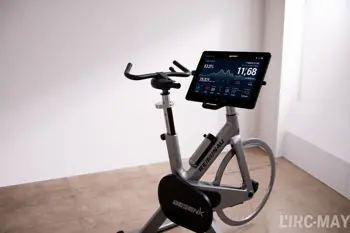
Stationary smart bikes represent a distinct category of connected fitness hardware, one that blends precision power measurement, automated resistance control, and immersive digital content into a machine designed to remain permanently in place. Unlike portable smart trainers that clamp around an outdoor bicycle, stationary smart bikes are purpose-built frames that require dedicated floor space and sustained engagement with subscription-based software ecosystems. Understanding the full technical and financial picture of this category is essential before drawing any conclusions about suitability.
How Stationary Smart Bikes Differ From Conventional Exercise Bikes
Traditional exercise bikes rely on manual resistance dials and basic LCD monitors that display speed, time, and calorie estimates with limited accuracy. Stationary smart bikes, by contrast, feature built-in power meters, automated resistance adjustment, and connectivity protocols that allow third-party applications to control the machine directly. Expert testing reported by Cycling Weekly confirms that smart bikes are far more advanced than standard exercise bikes, featuring built-in power meters, automated resistance, advanced adjustability, and a better fit, catering specifically to cycling enthusiasts with dedicated training plans. 1
The distinction also extends to structural capability. According to Cycling Weekly's comparative analysis, turbo trainer manufacturers such as Wahoo and Tacx have achieved outputs of up to 2,000 watts and gradient simulations of up to 20%, figures comparable to those found on dedicated smart bikes. 1 This performance ceiling matters for serious athletes who require precise overload stimuli. Casual users seeking basic cardio, however, may find the additional engineering unnecessary for their goals.
Core Technical Specifications Across the Market
Power accuracy is among the most scrutinized specifications in this category. The CYCPLUS T7 Smart Bike advertises power accuracy at or below 1% and operates calibration-free, while delivering a maximum output of 2,200 watts, a maximum torque of 85 Newton-meters, and gradient simulation capability of up to 20%. 2 The ZYCLE ZBike Infinity similarly claims power measurement accuracy below 1% and a maximum power of 2,000 watts, paired with a freewheel system for a natural pedal stroke and 24 customizable virtual gears. 3 These figures are representative of the upper tier of the market.
Connectivity is standardized around Bluetooth and ANT+ protocols, which allow bikes to sync with platforms such as Zwift, Rouvy, Strava, and various wearable fitness trackers. The Body Bike Smart, for example, lists ANT+ and Bluetooth as its connectivity standards, along with a self-sustaining generator power system that charges devices via USB while pedaling, eliminating the need for external power cords. 4 Across the category, these dual-protocol setups have become the baseline expectation for any machine marketed as a smart bike.
Price Tiers and What Each Range Delivers
The stationary smart bike market spans a wide price range, and the differences between tiers are substantive rather than cosmetic. Entry-level connected bikes, such as those from Sunny Health and Fitness, use magnetic resistance systems, 28.6-pound flywheels, reinforced steel frames supporting up to 330 pounds, and companion apps offering over 10,000 global routes and thousands of trainer-led workouts via Bluetooth pairing. 5 These machines occupy the lower end of the smart category and are oriented toward cardiovascular conditioning rather than precision athlete training.
Mid-market options such as the Yesoul G1M Plus introduce a 21.5-inch 1080p Full HD rotating touchscreen with 360-degree rotation, 6-watt dual speakers, and open app-mirroring via cable, without mandating a proprietary subscription. 6 At the premium tier, the Technogym Ride commands a US market price of $7,300, delivers response times enabling a transition from 0 to 1,000 watts in under 0.5 seconds, and integrates saddle, handlebar, and crankset length adjustability alongside a built-in power meter tracking cadence, symmetry, and circularity. 7 The Technogym Bike Personal, designed by Italian designer Antonio Citterio with a micro-polished steel mirror finish, is positioned even higher at $13,900, targeting lifestyle fitness installations. 8
Subscription Ecosystems and Platform Dependencies
Virtually every stationary smart bike in the connected category ties hardware performance to software subscriptions. Technogym's platform, Technogym Unlimited, is listed as required on multiple product pages, with pricing of $29 per month after an initial 30-day period in the US market. 7 Wahoo Fitness integrates its KICKR smart trainers with virtual cycling software such as Zwift for simulated outdoor riding, while Zwift itself enables multiplayer virtual riding experiences where indoor metrics are tracked and shared across participants globally. 9
Platform dependency introduces a meaningful long-term cost factor. A buyer who purchases a premium smart bike at $7,300 and subscribes to a mandatory platform at $29 per month will spend approximately $348 annually on software alone, in addition to any hardware maintenance. Some manufacturers, like Yesoul, have moved to offer open-mirroring capability specifically to reduce forced subscription dependency, a differentiator that has gained attention among cost-conscious buyers. 6 Rouvy's 2026 training guide notes that pairing hardware with a compatible indoor cycling app like Rouvy can unlock more realistic gradient simulation, smoother resistance changes, and more accurate power data, but this benefit requires an ongoing app relationship. 10
Adjustability, Ergonomics, and Multi-User Considerations
Ergonomic accommodation is a frequent differentiator among smart bikes. The CYCPLUS T7 features road bike fit geometry with six adjustment points and an ergonomic design explicitly described as suited for multi-rider fit, with a compact footprint of 0.77 square meters and tool-free setup. 2 The ZYCLE ZBike Infinity specifies a 152-millimeter Q-factor and multi-position cranks to improve efficiency and comfort across different cyclist body types. 3 Sunny Health and Fitness models in the advanced category accommodate inseams ranging from 28.3 to 39.4 inches through adjustable seat height, fore-and-aft positioning, and handlebar height settings. 5
Cycling Weekly's expert testing framework identifies comfort and multi-user accommodation as heavily influential factors in long-term satisfaction. 1 Shared household use requires bikes with broad adjustment ranges and, ideally, user profile memory capabilities in the connected app. Riders should also note that smart bikes occupy a fixed footprint permanently, unlike smart trainers that allow the frame to be stored when not in use. For households with space constraints, this represents a material practical limitation.
Risks, Limitations, and Ongoing Maintenance Realities
Ownership of a stationary smart bike involves recurring obligations beyond the initial purchase. Subscription fees for content platforms represent a predictable ongoing expense, and the value of those platforms is contingent on continued software support from the manufacturer. Hardware components, including flywheels, belt drives, and resistance mechanisms, require periodic inspection and eventual replacement. The Body Bike Smart, for instance, uses a Poly V-belt with Kevlar construction and SKF bearings, components with defined service intervals that owners must track independently. 4
Power meter calibration drift, connectivity interruptions during high-cadence efforts, and compatibility changes between hardware firmware and third-party apps are documented friction points within the smart bike community. Rouvy's buyer guidance explicitly advises evaluating available space, storage possibilities, and training goals before purchasing, noting that the compact nature of alternative trainer setups can limit peak performance even as they offer portability. 10 Buyers should also verify that their preferred training platform supports the specific Bluetooth or ANT+ profile broadcast by a given bike before committing, as compatibility lists vary and are subject to change following software updates from either the hardware or platform side. 9
Sources
- Cycling Weekly - Best Indoor Smart Bikes 2026 (cyclingweekly.com)
- CYCPLUS - T7 Smart Bike Product Page (cycplus.com)
- ZYCLE - ZBike Infinity Product Page (zycle.eu)
- Athletix / Body Bike Smart - Indoor Exercise Bike Specifications (athletix.ae)
- Sunny Health and Fitness - Advanced Indoor Smart Magnetic Cycling Exercise Bike SF-B124068 (sunnyhealthfitness.com)
- Yesoul Fitness - G1M Plus 21.5-inch Smart Bike Product Page (yesoulfitness.com)
- Technogym - Technogym Ride Smart Bike, United States (technogym.com)
- Technogym - Bike Personal Designer Exercise Bike, United States (technogym.com)
- Wahoo Fitness / Zwift - Smart Trainer and Platform Integration Documentation (wahoofitness.com / zwift.com)
- Rouvy - 12 Best Indoor Trainers and Smart Bikes in 2026 (rouvy.com)
Authored by 24Trendz team