Hyperbaric Oxygen Chambers on Sale: A Technical Guide to Home and Clinical Systems
Hyperbaric oxygen therapy (HBOT) has transitionally moved from specialized clinical environments into the broader health and wellness market, with a wide range of hyperbaric oxygen chambers on sale for both professional and residential deployment 1. When examining the marketplace, buyers encounter two primary structural categories: soft-sided portable chambers and hard-sided clinical-grade vessels 1. Navigating this hardware acquisition requires a clear understanding of the atmospheric pressures generated, material certifications, and the logistical realities of high-oxygen containment systems.
Understanding the distinction between portable units and rigid clinical systems is critical for compliance and safety. Portable soft-sided models typically operate at a maximum of 1.3 to 1.5 atmospheres absolute (ATA), which is generally categorized as mild HBOT 1. In contrast, clinical-grade hard-shell chambers are constructed from heavy-duty stainless steel, aluminum, or acrylic, and are engineered to reach 2.0 ATA or higher, which is the operational pressure required to support standard medical therapeutic protocols 1.
Structural Classifications of Hyperbaric Chambers
Hyperbaric chambers are fundamentally divided by their construction materials and pressure limits. Portable chambers, such as the OXYREVO Apex32, utilize pressure-resistant polyurethane or thermoplastic polyurethane (TPU) and are supported by external frames 2 3. These systems offer a flexible entry point for private residential setups due to lower shipping weights and simplified assembly, though they are strictly capped at lower pressures 1.
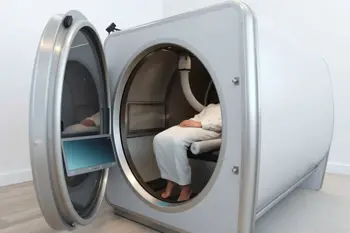
Hard-shell monoplace or multiplace units are constructed from marine-grade stainless steel or aerospace-grade aluminum, paired with heavy-duty polycarbonate viewports 4 5. These rigid structures are built to withstand heavy pressurization cycles up to 2.0 ATA 4 5. The table below outlines the core differences between standard configurations available in the market.
| Chamber Model | Chamber Type | Max Pressure (ATA) | Primary Material | Average Weight |
|---|---|---|---|---|
| OXYREVO Apex32 | Portable Soft-Shell | 1.5 ATA | TPU / Polyurethane | Under 100 lbs |
| Oxyair OLV-YTD02 | Hard-Shell Lying | 2.0 ATA | Stainless Steel | Approx. 600 lbs |
| Oxify Nova Duo | 2-Person Hard-Shell | 2.0 ATA | Stainless Steel / Polycarbonate | 957 lbs |
| OxyPro Ultra 4300 | Multi-place Sitting | 2.0 ATA | Stainless Steel / Polycarbonate | Over 1,000 lbs |
The Pricing Landscape of New and Used Systems
Acquiring a hyperbaric chamber involves significant capital investment. Entry-level portable soft-sided chambers designed for home use typically retail in the range of $4,000 to $15,000, depending on their dimensions and internal framing systems 1. For example, basic 1.4 to 1.5 ATA portable models like the OXYREVO Elite32 are priced between $7,499 and $8,999 depending on auxiliary air-conditioning or filtration add-ons 6.
Professional-grade hard-shell units demand a substantially higher premium due to the engineering tolerances required for 2.0 ATA operation. Lying-type monoplace chambers like the Oxyair OLV-YTD02 start near $25,299 7, while premium single-patient horizontal cabins like the OxyPro Platinum can cost up to $58,900 8. Multiplace chambers engineered for shared clinical use, such as the Oxify Nova Duo or the OxyPro Ultra 6500, range from $64,900 to $78,900 5 9 10. Pre-owned or refurbished units on the secondary market can occasionally provide savings of 30% to 50% compared to new retail units 1 11.
Regulatory Standards and FDA Clearances
In the United States, the Food and Drug Administration (FDA) regulates hyperbaric oxygen chambers as Class II medical devices 1 12. This designation means that any chamber marketed for medical therapeutic purposes must obtain 510(k) clearance 12. This process ensures that the device has been evaluated for safety features, emergency depressurization valves, and structural integrity 12. Many soft-shell chambers designed for residential wellness are marketed under general wellness exemptions, which restrict them from making specific clinical medical claims 12.
Buyers must distinguish between "FDA-registered" and "FDA-cleared" labels. Registration is simply an administrative notification of a facility’s operations, whereas FDA clearance represents a rigorous review of the device's technical specifications 12. Major medical-grade manufacturers, such as Perry Baromedical and Sechrist, maintain active clearances under product code CBF, which represents the standard for clinical environments 12.
Technical Configurations and Oxygen Delivery
Modern hyperbaric setups rely on an integrated ecosystem of auxiliary machinery. To deliver high-purity oxygen under pressure, a complete system typically includes an oil-free air compressor, a high-capacity oxygen concentrator, and an environmental cooling unit or chiller 4 13. Air compressors must deliver high flow rates, often exceeding 120 liters per minute, to maintain pressure and refresh internal air volume 8.
Oxygen concentrators utilized in clinical or high-pressure systems must supply high flow rates of 10 to 20 liters per minute, achieving an oxygen purity level between 90% and 97% 4 5 8. Many hard-shell chambers feature a Built-In Breathing System (BIBS) 13. This specialized mask setup ensures that pure oxygen is inhaled directly by the user while exhaled air is vented completely outside the chamber, preventing hazardous oxygen accumulation in the cabin 13.
Logistical and Installation Requirements
Installing a high-pressure hyperbaric chamber, particularly a hard-shell steel or aluminum unit, presents notable logistical hurdles. These vessels are heavy, with monoplace hard chambers weighing between 500 and 900 pounds, and multi-place units often exceeding 1,500 pounds 5 8 10. Delivery is typically curbside in heavy wooden crates, which often requires a forklift or specialized rigging teams to move the units into their final location 14.
Electrical requirements are also substantial. While basic units can run on standard household outlets, comprehensive hard-shell systems with integrated chillers, high-volume compressors, and dual oxygen concentrators can draw upwards of 3,800 watts, necessitating dedicated 120V/20A or 220V circuits 4. Furthermore, professional installations should comply with local building and safety codes, such as NFPA 99 guidelines for medical gas systems, ensuring adequate ventilation to prevent ambient oxygen enrichment 1.
Ongoing Maintenance and Operational Costs
Operational realities extend beyond the initial purchase price of the hardware. Ongoing maintenance is mandatory to ensure safety and system longevity. Dual carbon and intake air filters must be checked and replaced periodically to prevent compressor contamination 4. Regular calibration of the internal pressure gauges and testing of manual emergency release valves are critical safety protocols 12 13.
In addition to physical hardware upkeep, commercial operators must account for staff training, clinical certification, and liability insurance. For personal home installations, buyers should consult their physicians, as high-pressure medical-grade systems (operating above 1.3 ATA) legally require a medical prescription for purchase in the United States 1 12.
Sources
- U.S. Food and Drug Administration (FDA Consumer Updates)
- Morelli Medical Product Registry
- HaoHealthy Wellness Collection
- Oxify Engineering Specifications
- Longevity Lab Supply Co. Catalog
- Mediriser Medical Equipment
- Morelli Medical Oxyair Specifications
- Oxycell Product Documentation
- Recovery For Athletes Inventory
- Oxycell OxyPro Ultra Specifications
- Hyperbaric World Inventory
- HBOT Finder FDA database
- Airvida Chambers Technical Specifications
- Fast Recovery Wellness Shipping Guidelines
Authored by 24Trendz team