Wheelchair Ramps for Home on Sale
Optimizing residential entryways for mobility devices requires a thorough understanding of structural engineering, material durability, and slope mechanics. Industry market trends indicate a growing demand for pre-manufactured accessibility solutions as households seek alternatives to costly, custom-built wooden structures 4. Selecting appropriate wheelchair ramps for home on sale involves analyzing specific variables such as total vertical rise, weight thresholds, and installation permanence to ensure user safety and regulatory compliance.
Classification of Residential Wheelchair Ramps
Home accessibility systems are categorized based on their structural design, portability, and intended installation duration. Understanding these categories is essential for matching a residential environment with the correct equipment. Standard classifications include:
- Threshold Ramps: Engineered for minor height transitions at doorways, sliding doors, or single steps. These units are typically constructed from dense rubber or lightweight aluminum, accommodating rises up to 4 inches 15.
- Portable Folding Ramps: Often featuring a bi-fold or multi-fold suitcase-style design, these ramps are equipped with carrying handles 7. They are highly suited for temporary use, travel, or negotiating vehicle trunks 16.
- Telescopic Ramps: Composed of dual independent rails that extend and retract to adjust to varying step heights, offering high portability for narrow pathways 19.
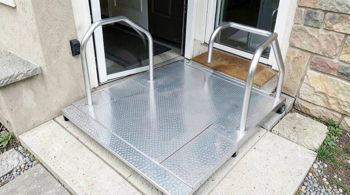
- Modular Access Systems: Semi-permanent structures assembled from pre-engineered sections, including platforms, straight ramps, and handrail kits 4. These are designed to navigate larger vertical rises without requiring permanent concrete anchoring 4.
Material Composition and Engineering Performance
The choice of material directly affects a ramp's load-bearing performance, weather resistance, and long-term maintenance requirements. Aluminum remains the industry standard due to its high strength-to-weight ratio and natural resistance to corrosion 4. Unlike wood, which requires regular sealing and is susceptible to rot, anodized aluminum maintains structural integrity without seasonal upkeep 16. For shorter transitions, heavy-duty recycled rubber and engineered polypropylene plastics are commonly utilized due to their impact absorption and slip-resistant properties 15.
Regardless of material, slip-resistant surface textures are critical for safety under wet or icy conditions. Standard engineering features include extruded high-traction surfaces, honeycomb drainage patterns, or applied high-grit frosted non-slip coatings 15, 19. These textures prevent wheel slippage and ensure a secure footway for assisting caregivers.
Load Capacity and Weight Threshold Metrics
Structural integrity is defined by a ramp's maximum load rating. Residential ramps must support not only the weight of the wheelchair or mobility scooter but also the occupant and any assisting caregiver. Standard duty ratings are detailed below:
| Ramp Category | Common Materials | Typical Load Capacity | Example Configurations |
|---|---|---|---|
| Modular Threshold Ramps | Polypropylene / Rubber | 2,200 to 3,000 lbs 5, 15 | 3-inch Rise Detachable Entry 5 |
| Portable Folding Ramps | Aluminum Alloy | 600 to 800 lbs 1, 14 | 4.5-foot Suitcase Folding 1 |
| Telescopic Channel Ramps | Anodized Aluminum | 600 lbs 19 | 3-stage Adjustable Rails 19 |
| Modular Entry Systems | Heavy-Duty Aluminum | 800 to 1,000 lbs 10, 11 | Pathway Systems with Handrails 4 |
Slope Calculations and Safety Standards
To prevent tipping or loss of control, wheelchair ramps must adhere to safe slope guidelines. The Americans with Disabilities Act recommends a 1:12 slope ratio for public access, which translates to 12 inches of horizontal ramp run for every 1 inch of vertical rise. While residential installations sometimes allow for steeper angles depending on the physical capabilities of the user or caregiver, specific slope ranges are recommended for different vertical rises:
For instance, a 2-foot ramp is generally recommended for maximum vertical rises of 4 to 6 inches, whereas a 5-foot ramp is designed for rises of 8 to 10 inches 14. Exceeding these recommendations increases the risk of accidents. Additionally, structural safety is enhanced by incorporating 3-inch protective side curbs to prevent wheels from slipping off the ramp edges 11, alongside transition plates that adjust to uneven terrain 10.
Safety Features and Regulatory Considerations
When selecting a ramp, several built-in safety mechanisms should be analyzed to mitigate risk. For longer ramps, integrated handrail systems are not merely aesthetic upgrades but clinical necessities for individuals with limited balance or those utilizing manual chairs 12. Picket handrail systems provide continuous support and prevent falls along the side boundaries of the ramp platform 12.
Furthermore, local municipal building codes may regulate the installation of semi-permanent residential structures. Homeowners should verify whether their chosen configuration requires a permit or must strictly adhere to ADA guidelines, particularly if the ramp is positioned in a front yard visible to public walkways. Consulting with local occupational therapists or accessibility specialists can ensure the selected length and orientation match the user's specific clinical needs.
Market Dynamics and Acquisition Strategies
Acquisition costs for residential ramps vary widely depending on length, material, and structural complexity. Portable aluminum folding models typically range from $100 to $500, whereas comprehensive modular systems spanning multiple stairs can cost between $1,000 and $5,000. For temporary recovery needs, such as post-surgical rehabilitation, local equipment providers often offer rental programs as a cost-effective alternative to purchasing permanent hardware.
Financial coverage for home modifications is subject to policy limitations. Traditional Medicare generally classifies residential ramps as convenience items rather than durable medical equipment, meaning they are rarely covered. However, private long-term care insurance policies, Medicaid Home and Community-Based Services waivers, local non-profit organizations, and veterans' assistance programs frequently provide grants or subsidies to offset the cost of home modifications.
Sources
- Walmart - Portable Folding Aluminum Wheelchair Ramp (Model 17797360807)
- Rehabmart - Aluminum Ramp System by Rampit USA
- Walmart - TROPOW Portable Wheelchair Ramp (Model 15127556043)
- EZ-ACCESS - PATHWAY 3G Modular Access System Kit
- Walmart - Aiqeek Modular Threshold Ramps (Model 7986622733)
- Walmart - Portable Folding Aluminum Wheelchair Ramp 3FT (Model 17744571966)
- Independent Living Superstore - VEVOR Portable Folding Aluminum Wheelchair Ramp 4FT
- Garvee - Adjustable Aluminum Wheelchair Ramp 6FT
- Living Caring - Heavy-Duty Aluminum Foldable Wheelchair Ramp with Handrails
- AskSAMIE - 7FT Suitcase Ramp Specification Guide
- AskSAMIE - 10FT Wheelchair Access Ramp Specifications
- Medical Department Store - EZ-ACCESS GATEWAY 3G Ramp with Handrails
- Independent Living Superstore - SKYSHALO Rubber Threshold Ramp
- Ruedamann Ramp - Folding Wheelchair Ramp Size and Usage Height Guide
- AgeVibrant - Best Threshold Ramps for Wheelchairs Guide
- Tervise Abi - DF/SF and SR Portable Wheelchair Ramps
- EzyAccess Solution - Ramp with Side Wings 900mm
- Stela Mobility - Foldable Suitcase Ramp with Wheelchair Step
- WHLICKS - Elite 3-Stage Telescopic Wheelchair Ramp Guide
- Mobility City - Wheelchair Ramps in Bedford, TX
- Atlantic Healthcare Products - Wheelchair Ramp Buyer's Guide
- Mobility City - Wheelchair Ramp Rental in Lawrenceville, GA
Authored by 24Trendz team