Modern Jumpsuit Trends for Wedding Ceremonies: A 2026 Style Analysis
Modern jumpsuit trends for wedding ceremonies reflect a broader movement toward bridal clothing that feels personal, mobile, and distinct from a traditional ballgown. Current coverage identifies jumpsuits, tailored suits, separates, and skirt suits as increasingly visible choices for civil ceremonies, receptions, city-hall appointments, destination weddings, and intimate celebrations. 1
Why Jumpsuits Are Entering Ceremony Wardrobes
The movement toward jumpsuits is connected to changing expectations around wedding attire. Fashion coverage describes couples placing greater emphasis on personality and individual choice, which has widened the range of acceptable bridal formats. For brides whose wardrobes already favor tailored, minimal, or contemporary clothing, a jumpsuit can maintain stylistic continuity while still using bridal details such as ivory coloring, refined fabrication, lace, or sculptural accessories. 1
Practicality is another defining factor. Wedding jumpsuits provide trouser-based mobility, which can be useful during outdoor ceremonies, destination events, courthouse appointments, and dance-focused receptions. Easy Weddings characterizes them as dance-floor friendly and suitable for brides seeking movement and confidence, while coverage of micro-weddings, elopements, and vow renewals links those formats with increased interest in nontraditional attire. 62
Silhouettes Defining the Current Market
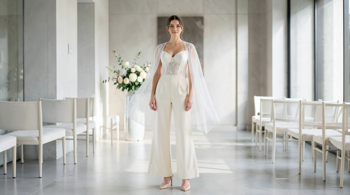
Minimalist wide-leg silhouettes are among the clearest recurring directions. Clean lines, tailored trousers, square necklines, fitted bodices, and structured waists create a polished outline without relying on a voluminous skirt. Halter-neck designs offer another streamlined option, drawing attention to the shoulders and collarbone before transitioning into tailored pants. These shapes are particularly associated with city weddings, evening ceremonies, and modern architectural settings. 6
Designers are also working with contrast between structure and exposure. Plunging necklines, low backs, open backs, one-shoulder construction, and sculpted corsetry introduce visual drama while retaining the continuous line of a jumpsuit. A flowing, backless version can suit a beach ceremony, whereas a sharply fitted version communicates a more formal or urban aesthetic. The choice of proportion therefore affects both ceremony formality and overall movement. 67
Fabrics, Surface Detail, and Construction
Heavy crepe, silk satin, and floral-embellished tulle are identified as important fabric categories for bridal jumpsuits. Crepe can support a clean, structured outline, while satin introduces a reflective finish and fluid drape. Embellished tulle contributes softness and surface interest without requiring a traditional gown silhouette. Recent bridal collections also reference fine lace, stretch fabrics, knitted looks, and flowing materials as ways to balance refinement with ease of movement. 86
Construction details increasingly carry the ceremonial impact once associated with trains and layered skirts. Refined corsetry, architectural lines, sculpted bodices, and carefully shaped waistlines can create definition through the torso. Some designs use lace panels, cut-outs, or asymmetric sections to interrupt a simple outline. The resulting aesthetic ranges from restrained minimalism to couture-inspired drama, while remaining within the practical framework of a one-piece garment. 73
Detachable Features and Two-Part Wedding Dressing
Removable elements have become a significant design strategy because they allow a single base garment to serve different stages of the wedding day. Detachable tulle trains, capes, overskirts, and sleeves can add ceremony formality before being removed for the reception. This approach creates a visible change in proportion without requiring a completely separate outfit, making the jumpsuit adaptable across entrances, photographs, dining, and dancing. 3
Versatility also extends across the wedding weekend. Cosmopolitan describes jumpsuits being used for ceremonies, rehearsal dinners, after-parties, and next-morning gatherings, with accessories changing the visual character of the same garment. A crisp white wide-leg design can read as formal during the ceremony, while embellishment or a changed outer layer can create a more celebratory reception appearance. The usefulness depends on fit, fabric resilience, and the ease of removing attached components. 3
Influences From Tailoring and Fashion History
Modern bridal jumpsuits exist within a longer history of women’s tailoring. Bianca Jagger’s 1971 wedding ensemble, centered on an Yves Saint Laurent Le Smoking jacket, a bias-cut skirt, and a wide-brimmed hat, remains a major reference for bridal suiting. The look challenged expectations about what a bride could wear and established tailoring, minimalism, and visual confidence as compatible with wedding ceremony dressing. 58
Recent celebrity styling has renewed that reference point. Reports on Dua Lipa’s 2026 civil ceremony describe a custom Schiaparelli ivory or pale blue skirt suit with a nipped-in blazer, gold bijoux buttons, asymmetric skirt, white gloves, wide-brimmed hat, pumps, and Bulgari jewelry. Although the ensemble was a skirt suit rather than a jumpsuit, its reception demonstrates how tailored bridal dressing is influencing the wider category of contemporary ceremony attire. 45
Styling, Setting, and Practical Limitations
Accessories determine how a jumpsuit is interpreted. Statement belts, pearl-encrusted veils, architectural heels, gloves, hats, jewelry, capes, and trains can add recognizable bridal signifiers to a streamlined base. A halter or square neckline may require careful veil placement, while wide-leg trousers can interact strongly with footwear and floor length. Styling should therefore account for the ceremony setting, photography conditions, temperature, and the amount of walking required. 46
Practical advantages do not remove potential friction points. One-piece garments can complicate restroom access, tailoring, and alterations, particularly when corsetry, fitted waists, or detachable components are involved. Fabric weight, lining, stretch, and trouser length affect comfort and movement, while dramatic trains, capes, hats, or embellished surfaces may require additional handling during transport. These considerations make fitting, construction quality, and venue conditions as important as the visual trend itself. 18
Sources
- Fashion Bomb Daily, “Modern Bridal Jumpsuits and Suits for the Bride Who Wants Something Different”
- The Age, “Bridal suits: Why Dua Lipa and modern brides are choosing tailored looks over traditional gowns”
- Cosmopolitan UK, “15 best bridal jumpsuits for modern brides in 2026”
- ELLE Australia, “The Bridal Suit Is Trending Thanks To Dua Lipa, Here’s How To Wear It”
- WWD, “How Dua Lipa Reinvented the Bridal Suit for Her London Wedding”
- Easy Weddings, “Nailing Your Look: Wedding Dress Jumpsuits”
- Afterparty Bride, “The Bridal Jumpsuit: Power, Elegance, Modern Romance”
- Vogue, “Dua Lipa’s Wedding Skirt Suit Pays Homage to the Original Cool Girl Bride”
Authored by 24Trendz team