Custom Meal Prep Delivery: A Consumer's Guide to How the Market Works, What It Costs, and What to Expect
What Custom Meal Prep Delivery Actually Means
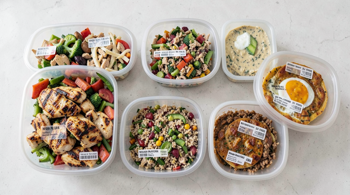
Custom meal prep delivery refers to services where meals are planned, portioned, and often fully cooked before reaching a consumer's door. Unlike standard meal kits that require 30 or more minutes of cooking and cleanup, custom prep services typically deliver heat-and-eat containers labeled with nutritional data, storage instructions, and ingredient lists. The degree of customization varies significantly: some services allow consumers to build meals from scratch with individual protein, carbohydrate, and vegetable selections, while others offer rotating menus filtered by dietary category. MealPro, for example, describes a model where every dish is made fresh when ordered, with chefs cooking directly to customer customizations so that what arrives is uniquely configured to each order. 1
The broader category also includes in-home chef services, where a licensed cook arrives at a client's residence, shops for groceries, prepares a full week of meals in the client's own kitchen, and departs after cleaning up. Services like Eats by Nicole in Los Angeles operate this way, starting from approximately $350 per week, with a chef assigned to build a fully custom menu each cycle. 2 Well Prepped Life, operating in the San Francisco Bay Area, follows a similar model with ServSafe-certified chefs and pricing beginning at $180 per week plus grocery costs billed at cost with no markup. 3 These in-home formats represent the upper tier of customization but carry higher baseline costs than centralized kitchen delivery models.
Pricing Structures Across the Market
Meal prices across the custom prep delivery landscape generally range from approximately $8 to $15 per meal for centralized kitchen services, with weekly subscription plans spanning roughly $50 to $200 depending on portion size, ingredient sourcing, and customization depth. 4 Dero Meal Prep, based in Sparks, Nevada and delivering within a 70-mile radius, structures its subscription options at $75 per week for a 5-meal plan ($15 per meal), $142 per week for a 10-meal plan ($14.20 per meal), and $333 per week for a 25-meal plan ($13.32 per meal) with free delivery included at the highest tier. 5 China's Creations in Huntsville, Alabama prices an 8-meal plan at $124 and a 15-meal plan at $232.50, with add-on options for extra protein or a no-carb configuration carrying modest per-meal surcharges. 6
At the premium organic end, Z.E.N. Foods in Southern California prices its plans from $33.45 per day for weight loss and healthy lifestyle configurations, rising to $71 per day for muscle-building plans and $96 per day for its Spa Detox tier combining meals and cold-pressed juices. 7 Nationwide platforms like Clean Eatz Kitchen list individual meals starting at $8.99, with volume ordering structures of 10, 20, or 30 meals providing incremental savings of up to 20 percent. 8 Consumers should also account for delivery fees, which vary widely: some services offer free shipping above order thresholds, while others charge $5 to $10 per delivery regardless of order size.
Dietary Customization Frameworks Supported
The range of dietary frameworks supported across established services is broad, though specific availability depends on the provider and region. Most centralized kitchen services accommodate some combination of keto, paleo, vegan, vegetarian, gluten-free, low-carb, high-protein, and calorie-controlled configurations. 9 MealPro organizes its offerings into distinct menu tracks including Signature Meals, Fitness Meals, Medical Meals, Custom Meals, and Lifestyle Diets covering carnivore, vegan, and vegetarian frameworks, allowing customers to mix and match across categories within a single order. 1 Z.E.N. Foods offers six structured plan types covering weight loss (1,200 to 1,500 calories daily), healthy lifestyle, muscle building (approximately 140 grams of protein per day targeting 2,000 to 2,500 calories), paleo, juice cleanse, and spa detox, with dietitian-designed macro ratios built into each tier. 7
Allergy accommodation is a more variable feature. Some services build allergy profiles into every order, while others operate from fixed rotating menus with limited substitution. Pomodoro Cuisine explicitly states that plans are built around allergies, dislikes, dietary styles, and portion sizes, and that customers can expect nutrition and macro information upon request. 10 Athletes and fitness-focused consumers are served by specialized options: Fresh In Your Fridge structures its athlete meal prep service with holistic chef matching, menus delivered 72 hours before the service day, and organic produce sourced to reduce waste, with pantry staples already stocked in the service kitchen. 11 Tandoco in Minneapolis prints exact macros on every product label and integrates wearable sync functionality to align meals with fitness tracking data. 12
Geographic Coverage and Delivery Logistics
Coverage geography is a significant variable when evaluating custom meal prep delivery options. Nationwide services such as Factor, Clean Eatz Kitchen, and MegaFit Meals ship to all or most US states using frozen or refrigerated cold-chain packaging. Clean Eatz Kitchen, for example, ships to El Paso via UPS Ground, with meals arriving frozen on dry ice in insulated packaging engineered to maintain food-safe temperatures even in desert heat conditions, and a six-month freezer shelf life from delivery. 8 MegaFit Meals describes a 10-year operational history with nationwide delivery and no subscription requirement, using grass-fed meats and macro-balanced preparations marketed to performance-focused consumers. 13
Regional and hyper-local services operate on tighter geographic footprints with stricter order cutoffs tied to a single weekly production and delivery cycle. Dero Meal Prep covers a 70-mile radius from its Sparks, Nevada kitchen, with a Tuesday 11:59 PM Pacific Time cutoff for the following Sunday delivery. 5 Partum Events in Rhode Island delivers between the Newport area and Providence corridor on a Monday-through-Thursday schedule, sourcing ingredients from whatever suppliers the client specifies, including preferred grocery stores, seafood markets, or local farm stands. 14 MyoMeals in Chicago delivers to homes, gym partners, sports teams, businesses, and conference centers, with more than 1,000 Chicago-area customers reported as regular users. 15 Local services generally offer fresher delivery windows but serve only those within a defined radius.
Regulatory Framework and Food Safety Considerations
Custom meal prep delivery businesses operating in the United States are generally required to comply with food safety regulations applicable to food processors and restaurants, including sanitation standards, temperature control requirements, and labeling rules enforced at the state and federal level. The US Food and Drug Administration's Food Safety Modernization Act establishes preventive controls for facilities producing prepared food products that cross state lines. 16 Consumers evaluating services should confirm whether a provider operates from a licensed commercial kitchen and whether its personnel hold food handler certifications relevant to the jurisdiction.
Cold-chain integrity is a practical food safety concern specific to this category. Most meals are best consumed within 5 to 7 days when refrigerated, and freezer-friendly options extend this window when clearly labeled. 10 Services shipping nationally use insulated packaging with ice packs or dry ice to maintain safe temperatures during transit, but consumers who are not home at delivery should verify that packaging holds temperature adequately. In-home chef services carry a different profile: a ServSafe-certified chef cooking directly in a client's kitchen operates under the food safety framework tied to that individual's professional certification rather than a licensed facility. Well Prepped Life explicitly notes ServSafe certification as a service standard for its Bay Area in-home model. 3
Limitations, Friction Points, and What to Evaluate
Several structural limitations affect the custom meal prep delivery category as a whole. Subscription auto-renewal is a common model, and consumers who miss cancellation or pause windows may receive and be billed for orders they did not intend to place. Order cutoffs for weekly production cycles are non-negotiable for most local services, with late submissions rolled to the following week rather than expedited. Menu rotation frequency affects long-term adherence: services with bi-weekly rotations, such as Foodie Fit in Las Vegas which rotates its 30-plus-item menu every two weeks, carry a risk of palate fatigue for consumers who order frequently. 17
Ingredient sourcing transparency varies. Some services name their farm suppliers and publish sourcing pages; others describe quality broadly without specifics. MealPro states it sources directly from growers using its own refrigerated trucks to control quality and reduce supply chain intermediaries. 1 Consumers with specific ingredient concerns, such as grass-fed beef, organic produce, or allergen-free processing environments, should request documentation rather than relying on marketing language. Geographic restrictions also affect value: a premium nationwide service charging $15 per meal plus shipping may represent less value than a local chef-prepared service at a comparable per-meal rate that delivers fresher product with a shorter supply chain. The US meal prep delivery market has grown at an estimated 12 to 15 percent annually, suggesting continued expansion of options, but also increased variance in service quality across providers. 4
Sources
- MealPro - mealpro.net
- Eats by Nicole - eatsbynicole.com
- Well Prepped Life - wellpreppedlife.com
- General LLM Research Data - Custom Meal Prep Delivery Market Overview
- Dero Meal Prep - deromealprep.com
- China's Creations - chinascreationsprep.com
- Z.E.N. Foods - zenfoods.com
- Clean Eatz Kitchen - cleaneatzkitchen.com
- General LLM Research Data - Dietary Framework Support
- Pomodoro Cuisine - pomodorocuisine.com
- Fresh In Your Fridge - freshinyourfridge.com
- Tandoco - tandoco.com
- MegaFit Meals - megafitmeals.com
- Partum Events - partumevents.com
- MyoMeals - myomealsprep.com
- U.S. Food and Drug Administration - fda.gov/food/food-safety-modernization-act-fsma
- Foodie Fit - foodiefit.com
Authored by 24Trendz team