Best orthopedic walking shoes designed for senior comfort: A Biomechanical Analysis
Understanding Age-Related Biomechanical Changes in Senior Feet
As the human body ages, foot anatomy undergoes significant transformation. A key change is the progressive thinning of natural heel fat padding, which reduces shock absorption 1. Concurrently, arches can flatten, and conditions such as osteoarthritis, bunions, neuropathy, and hammertoes become increasingly prevalent 1, 2. These physiological shifts mean that footwear worn in middle age may no longer provide the necessary protection required for older adults 2.
Furthermore, foot discomfort can directly influence walking habits and overall mobility in older populations. Statistics reveal that approximately one in four older adults experiences a fall each year, with improper footwear standing out as a significant environmental hazard 2. Clinical studies published in the Journal of the American Geriatrics Society indicate that mobility and stability outcomes are directly correlated with shoe construction 3. Selecting specialized footwear is a critical component of active senior care and fall prevention 4, 2.
Essential Structural Features of Orthopedic Footwear
To address these changes, senior walking shoes require specific design characteristics. A wide and deep toe box is essential to accommodate common conditions like bunions or daily swelling without causing friction or painful pressure points 5, 4. Additionally, removable insoles allow seniors to swap factory-installed foam with customized orthotics or medical-grade inserts tailored to their unique foot shapes 4, 6. Both the Mayo Clinic and the AAOS emphasize that adequate arch support reduces joint strain 7, 8.
Rearfoot stability is another foundational element of senior-specific footwear. A firm heel counter stabilizes the heel and prevents lateral wiggling or rolling of the ankle 4, 2. To facilitate a safer gait, many orthopedic designs also incorporate rocker-bottom outsoles 9. These curved soles encourage a smooth heel-to-toe transition, reducing the force required from the forefoot to push off 10, 9. Finally, non-slip rubber outsoles with defined tread patterns are imperative for maintaining traction on slick indoor flooring 11, 4, 2.
Comparative Evaluation of Leading Senior Walking Shoes
In standardized product evaluations, several models consistently emerge as top performing options. For women, testing highlighted the Skechers Go Walk Arch Fit 2.0 as an exceptional overall option, noting its lightweight, slip-on build and robust cushioning 5. For men, the Orthofeet Yari Hands-Free sneaker is frequently selected due to its multi-layer cushioning system and roomy toe box 5. Both models demonstrate how modern designs integrate athletic aesthetics with true orthopedic function 5.
For seniors requiring heightened motion control, the Brooks Addiction Walker 2 and the New Balance 928v3 are favored by clinical experts 11, 4. The New Balance model features a structural rollbar system and specialized cushioning that manages rearfoot rotation 4. Concurrently, for maximum shock absorption, the Hoka Bondi series, specifically the Bondi 8 and Bondi 9 models, offers substantial ethyl vinyl acetate foam midsoles 11, 12. Podiatrists recommend these thick foam soles for seniors dealing with joint osteoarthritis 11, 12.
Hands-Free and Adaptive Entry Mechanisms
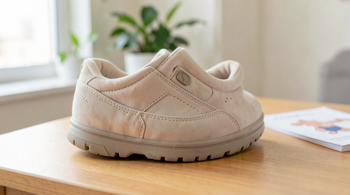
Bending to tie laces is a major barrier for seniors suffering from arthritis or limited mobility 1, 10. To mitigate this struggle, manufacturers have developed innovative hands-free slip-on technologies. The Orthofeet Kita features a bounce-back heel counter for standing entry 10. The Ortho Glide utilizes lightweight mesh to facilitate entry while maintaining secure containment 13.
Adaptive models utilize alternative closures to balance entry ease with adjustable security. The Nike Revolution 7 EasyOn and Kizik Sydney utilize targeted elastic mechanisms to simplify entry 5. Meanwhile, models like the Brooks Addiction Walker V-Strap 2 feature dual Velcro straps that provide customizable tightness 5. When evaluating these styles, it is important to select designs that do not allow the heel to slip, as heel slippage degrades stability and increases stumbling risks 14, 2.
Addressable Foot Conditions: From Plantar Fasciitis to Neuropathy
Orthopedic footwear is specifically engineered to alleviate the symptoms of localized foot pathologies. For plantar fasciitis, a condition characterized by intense heel pain, shoes with structured arch support and a lateral wedge, such as the PowerStep Pinnacle Maxx insole, are often prescribed to prevent overpronation 12. This alignment prevents the plantar fascia ligament from overstretching 12, 7. By correcting biomechanical alignment, these designs allow seniors to walk longer distances without subsequent inflammatory pain 12, 15.
For seniors managing diabetic foot concerns or peripheral neuropathy, the criteria for footwear become even more stringent. Diabetic neuropathy causes a loss of sensation, making feet highly susceptible to unnoticed blisters 1, 16. In these cases, shoes like the Drew Contest Men's Orthopedic shoe offer a double-depth design with a non-binding upper and a seamless interior lining 17. The extra depth prevents downward pressure on the toes, while the soft lining minimizes friction, ensuring that sensitive skin remains protected 1, 17.
Clinical Recommendations and Regulatory Frameworks
The clinical validity of senior footwear is verified by medical organizations. The American Podiatric Medical Association provides a Seal of Acceptance to products that demonstrate measurable benefits to foot health 10, 18. Leading orthopedic shoes, including several Orthofeet and Drew models, carry this seal or possess FDA approval under code HCPCS A5500 10, 17, 18. This official recognition underscores the distinction between generic fashion sneakers and medically beneficial footwear 17, 6.
However, seniors should understand that off-the-shelf shoes may not always resolve deep-seated mobility issues on their own. While high-quality walking shoes provide an excellent foundation, a comprehensive podiatric consultation is invaluable for those with severe deformities 19, 1. Professional clinics, such as the Achilles Foot and Ankle Center, routinely combine supportive shoes with custom-molded orthotics to correct specific gait abnormalities 1. Utilizing a personalized clinical approach ensures that the footwear works in harmony with the senior's individual musculoskeletal requirements 1, 8.
Key Metrics and Classifications of Orthopedic Shoes
Selecting the correct footwear category relies entirely on individual physical demands 19, 4. Through careful analysis of structural properties, seniors can maintain their walking routines safely and comfortably 2. The following table outlines the key operational parameters that define effective orthopedic footwear for senior comfort and stability:
| Shoe Category | Primary Structural Feature | Biomechanical Benefit | Target User Demographic |
|---|---|---|---|
| Stability Walkers | Rollbar / Medial Post / GuideRails | Controls rearfoot rotation and overpronation | Seniors with flat feet or balance instability |
| Max-Cushioning | High-density EVA or proprietary foam | Absorbs ground impact, protecting knee joints | Seniors with osteoarthritis or joint stiffness |
| Hands-Free Slip-Ons | Bounce-back heel / Elastic collar | Eliminates bending to tie traditional laces | Seniors with arthritis or limited mobility |
| Therapeutic Depth | Double-depth footbeds / Seamless lining | Prevents pressure on toes and minimizes friction | Seniors with diabetes or neuropathy |
Sources
- Achilles Foot and Ankle Center
- Caring Senior Service
- Journal of the American Geriatrics Society
- Shoe Finale
- People
- U.S. Food & Drug Administration (FDA)
- Mayo Clinic
- American Academy of Orthopaedic Surgeons (AAOS)
- Healthline
- People
- The Walker Advisor
- Michigan Foot Doctors
- Omega Walk
- Senior Couch
- StepTheTop Shop
- Senior Info 4 You
- Ortho Shoes Corporation
- American Podiatric Medical Association (APMA)
- RunRepeat
Authored by 24Trendz team