Warning Signs of Hypertension: Clinical Symptoms, Silent Risks, and When to Seek Care
Warning Signs of Hypertension: Clinical Symptoms, Silent Risks, and When to Seek Care
Warning signs of hypertension can be easy to miss because high blood pressure usually has no noticeable symptoms. Severe headaches, vision changes, chest pain, breathing difficulty, confusion, and other symptoms may indicate dangerously high pressure or organ involvement, but symptoms alone cannot diagnose hypertension.
Why hypertension is often called silent
Hypertension is defined by persistently elevated blood pressure rather than by how a person feels. The World Health Organization describes hypertension as pressure of 140/90 mmHg or higher and states that diagnosis requires readings at or above that level on two different days. In the United States, the CDC identifies consistently elevated readings at or above 130/80 mmHg as high blood pressure under commonly used clinical guidelines. 1 4
An estimated 1.4 billion adults aged 30 to 79 worldwide had hypertension in 2024, representing 33% of that age group. About 600 million affected adults, or 44%, were unaware that they had the condition, while approximately 320 million, or 23%, had blood pressure under control. These figures explain why screening remains important even when no warning signs are present. 1
Symptoms that may occur during severe elevation
Very high blood pressure can sometimes be associated with an intense or persistent headache, dizziness, fatigue, nausea, or a pounding sensation in the chest, neck, head, or ears. Morning headaches have been described in connection with rapid increases or severe levels, although headache location and timing are not specific enough to establish hypertension on their own. 3 6 10
Other possible symptoms include blurred or double vision, spots in the visual field, nosebleeds, and shortness of breath. Such symptoms may reflect severe pressure or damage affecting blood vessels and organs, but they can also have many other causes. Treating any symptom as proof of hypertension can delay evaluation for a different medical problem. 2 5 7
Warning signs involving the heart, brain, and eyes
Chest pain, difficulty breathing, irregular heartbeats, or a strong pounding sensation can be concerning because uncontrolled hypertension places additional strain on the heart and arteries. Persistent high pressure can increase the risk of heart attack, heart failure, stroke, and other cardiovascular complications, even when symptoms have not previously occurred. 2 4
Confusion, difficulty speaking, sudden weakness, or major changes in vision are neurological and visual warning signs that require urgent medical assessment, particularly when they appear suddenly. Extreme blood pressure elevation may be accompanied by neurological involvement or end-organ damage. These symptoms should not be monitored at home as a substitute for professional evaluation. 7 8
Kidney-related indicators and long-term damage
Blood in the urine has been identified as a possible sign associated with severe or advanced hypertension. The kidneys are among the organs that can be damaged by prolonged high pressure, and kidney disease can also contribute to elevated blood pressure. A urine change is not specific to hypertension, so clinical testing is needed to determine the cause. 2 1
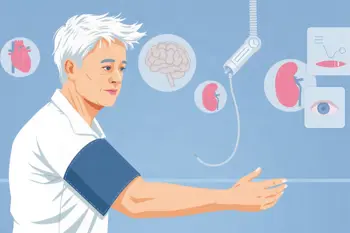
Hypertension can silently damage the brain, eyes, heart, kidneys, and arteries over time. Cleveland Clinic and Harvard Health describe untreated high blood pressure as a contributor to heart attack, stroke, dementia, kidney disease, kidney failure, and retinal or other eye problems. The absence of symptoms does not indicate that blood pressure is safe or that organ effects are absent. 2 3
How blood pressure is actually detected
A blood pressure cuff is the only reliable way to determine whether pressure is elevated in someone without symptoms. Blood pressure includes a systolic number, recorded when the heart contracts, and a diastolic number, recorded while the heart rests between beats. Readings vary during the day and from one day to another, which is why diagnosis is based on repeated measurements rather than a single sensation or isolated result. 1 4
Common risk factors include older age, genetics, excess weight, physical inactivity, a high-salt diet, and excessive alcohol intake. Smoking, diabetes, kidney disease, and family history can also increase concern. Lifestyle changes such as greater physical activity, a healthier diet, reduced salt, quitting tobacco, and less alcohol may help lower pressure, although some people require prescribed medicine. 1 5
When symptoms require urgent attention
Severe headache, chest pain, shortness of breath, confusion, difficulty speaking, sudden visual changes, or neurological symptoms occurring with a very high reading may signal a hypertensive emergency. A hypertensive crisis can involve damage to the heart, brain, kidneys, or eyes, so urgent medical assessment is appropriate rather than waiting for symptoms to resolve. 5 7 8
Symptoms should not be used to decide whether prescribed blood pressure treatment is needed or whether medicine can be stopped. High blood pressure commonly produces no symptoms, and treatment may include lifestyle measures, medication, or both. Ongoing monitoring and clinical follow-up are important because the condition can remain clinically silent while increasing the risk of premature death and major organ complications. 1 2 4
Sources
- World Health Organization, Hypertension
- Cleveland Clinic, High Blood Pressure (Hypertension): Symptoms & Causes
- Harvard Health Publishing, High Blood Pressure (Hypertension)
- Centers for Disease Control and Prevention, About High Blood Pressure
- Mayo Clinic, High Blood Pressure: Symptoms and Causes
- National Council on Aging, 9 Surprisingly Subtle Symptoms of High Blood Pressure
- National Library of Medicine, Neurological Symptoms in Severe Hypertension
- American Heart Association, Health Threats From High Blood Pressure
- WebMD, Hypertensive Crisis
- Johns Hopkins Medicine, High Blood Pressure
Authored by 24Trendz team