Natural Remedies Featuring Ginger for Everyday Wellness: Evidence, Uses, and Safety Review
Natural remedies featuring ginger for everyday wellness commonly involve fresh root, dried powder, tea, or culinary use. Research most consistently supports ginger for nausea and digestive discomfort, while evidence for pain, inflammation, and metabolic effects depends on the condition, preparation, and dose studied. 1
What Ginger Contains and How It Is Used
Ginger, or Zingiber officinale, is a tropical plant whose rhizome is used as a spice and traditional remedy. Its characteristic heat comes partly from gingerols and related compounds, while drying or heating changes the chemical profile and increases compounds such as shogaols. Fresh and dried ginger can both be used in cooking or beverages, although their flavor and concentration differ. 2
Ginger is available as fresh root, ground spice, tea, juice, oil, capsule, or extract. Food and tea generally provide less concentrated exposure than supplements, making the form relevant when considering potential effects or side effects. The evidence for one preparation cannot automatically be applied to every other form, particularly when clinical studies use specified supplement doses. 3
Nausea and Vomiting
Nausea relief is the most established everyday use associated with ginger. Johns Hopkins Medicine explains that gingerol may improve gastrointestinal motility, helping food move out of the stomach more efficiently. This mechanism may reduce queasiness in several settings, including pregnancy-related nausea, chemotherapy-associated symptoms, and some postoperative discomfort. The strength of evidence varies by cause, and ginger is not a universal treatment for vomiting. 4
During pregnancy, the American College of Obstetricians and Gynecologists identifies ginger as one nonpharmaceutical option that may help some people with nausea and vomiting. The NHS similarly includes ginger-containing foods or drinks among self-care measures, but recommends medical assessment when vomiting prevents normal intake of food or fluids. Persistent symptoms require clinical attention rather than reliance on a home remedy. 5
Digestive Comfort and Gut Motility
Ginger may support digestion by influencing gastric motility, the movement of food from the stomach into the small intestine. More efficient emptying can potentially ease feelings of fullness, heaviness, bloating, or occasional indigestion in some people. These effects do not establish ginger as a treatment for every gastrointestinal disorder, and research remains more specific than broad wellness claims often suggest. 6
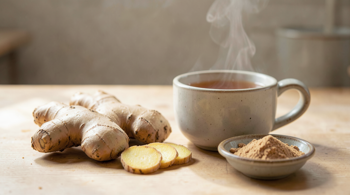
For everyday use, sliced or grated fresh ginger can be steeped in hot water to make tea, while powdered ginger can be incorporated into meals or beverages. Lemon or a small amount of honey may be added for taste. Ginger tea is naturally without caffeine when made only from ginger, but the digestive evidence for tea itself may not be identical to evidence from standardized preparations. 1
Pain, Menstrual Symptoms, and Inflammation
Studies have examined ginger for menstrual cramps, muscle soreness, and osteoarthritis symptoms. The National Center for Complementary and Integrative Health describes the evidence as condition-dependent, with promising findings for some pain outcomes but limitations in study quality and consistency. Benefits reported in supplement studies should not be assumed to occur from the small culinary amounts typically used in meals. 7
Gingerols, shogaols, zingerone, and related substances have antioxidant or anti-inflammatory activity in laboratory and clinical research. However, biological activity does not mean ginger can replace prescribed anti-inflammatory treatment or reverse an underlying disease. A neutral interpretation is that ginger may provide modest symptom support for some people, while the appropriate dose, duration, and preparation remain important variables. 8
Practical Ways to Include Ginger
Fresh ginger can be peeled, thinly sliced, grated, or minced for soups, stir-fries, sauces, and other dishes. Tea can be prepared by steeping the root in hot water, while dried ginger works in baking, cooked foods, and selected beverages. These approaches integrate ginger as a food rather than treating it as a concentrated medicine, which may be more suitable for general wellness use. 1
Commercial tea bags commonly contain dried ginger, sometimes combined with other ingredients, and are convenient to store and brew. Fresh ginger generally has a sharper flavor, while dried ginger may taste milder or more concentrated depending on preparation. Reading ingredient labels matters when a tea, drink, or supplement contains added herbs, sweeteners, or active ingredients beyond ginger. 3
Risks, Interactions, and Medical Boundaries
Ginger is commonly tolerated as a food, but concentrated use may cause heartburn, abdominal discomfort, diarrhea, or irritation of the mouth and throat. Memorial Sloan Kettering Cancer Center notes that ginger may affect platelet function and blood sugar, making consultation especially relevant for people using anticoagulant, antiplatelet, or diabetes medicines. Possible effects on blood pressure medicines also warrant professional review. 9
Dietary supplements are regulated as a category of food in the United States and generally are not approved by the FDA for safety and effectiveness before marketing. Product quality, labeling accuracy, and dose can therefore vary. Severe nausea, dehydration, bleeding, persistent vomiting, or symptoms caused by an underlying illness require medical evaluation. Ginger should complement, not replace, appropriate medical care. 10
How to Interpret the Evidence
A systematic review indexed in PubMed found possible benefit from ginger for nausea and vomiting but also emphasized limitations involving study quality and consistency. This distinction is important: evidence may support ginger for a particular symptom without proving that it prevents illness, improves general immunity, or works equally well for every person. 2
Pregnancy, chronic disease, medication use, and supplement concentration all change the safety discussion. Culinary ginger and occasional tea are different from capsules or extracts designed to deliver higher amounts. People considering regular concentrated use should discuss the plan with a healthcare professional, particularly when bleeding risk, glucose control, or significant gastrointestinal symptoms are involved. 6
Sources
- Johns Hopkins Medicine, Ginger Benefits
- National Center for Complementary and Integrative Health, Ginger
- MedlinePlus, Ginger
- Johns Hopkins Medicine, Ginger Benefits, nausea and gastrointestinal motility discussion
- American College of Obstetricians and Gynecologists, Morning Sickness: Nausea and Vomiting of Pregnancy, and NHS guidance
- Remedy Healer, Ginger Benefits and Uses, digestive evidence overview
- National Center for Complementary and Integrative Health, Ginger, pain and condition-specific evidence
- Cleveland Clinic, Ginger Benefits
- Memorial Sloan Kettering Cancer Center, Ginger
- U.S. Food and Drug Administration, Dietary Supplements
Authored by 24Trendz team