Warning signs of pancreatic failure: A clinical analysis of digestive and metabolic dysfunction
Pancreatic health is foundational to both metabolic regulation and digestive efficiency, acting as a silent, critical engine within the human body. When this organ ceases to function at optimal capacity, the resulting symptoms are frequently subtle and easily mistaken for minor digestive ailments 5. Recognizing the clinical patterns associated with pancreatic insufficiency or failure is vital for timely medical consultation and management, as early identification often dictates the breadth of available therapeutic options 3, 9. By analyzing persistent bodily changes, individuals can better differentiate between routine indigestion and indicators of serious organ dysfunction.
The Physiological Basis of Pancreatic Insufficiency
The pancreas serves two primary roles: exocrine and endocrine. The exocrine function involves the production of digestive enzymes, including lipase, protease, and amylase, which are essential for breaking down fats, proteins, and carbohydrates in the small intestine 1, 4. When the pancreas fails to deliver these enzymes, a state known as exocrine pancreatic insufficiency (EPI) occurs, leading to significant maldigestion 2. Lipase inactivation typically appears early in the disease process, making fat malabsorption a hallmark sign of underlying pancreatic distress 2.
Simultaneously, the endocrine function involves the secretion of hormones like insulin and glucagon, which maintain homeostatic blood glucose levels 4, 8. Dysfunction in this area can manifest as sudden blood sugar fluctuations or new-onset diabetes in adults, which serves as a critical systemic warning sign 3, 8. Because these roles are intertwined, a failure in one domain often initiates a cascade of nutritional, metabolic, and physical challenges that impact the entire body’s homeostasis 4.
Clinical Manifestations in Stool and Digestion
Changes in bowel habits are often the most objective indicators of pancreatic failure. Steatorrhea, characterized by stools that are pale, greasy, oily, or persistently floating, occurs when the body cannot properly digest and absorb dietary fats 1, 5. This malabsorption does not just lead to stool changes; it also results in a deficit of fat-soluble vitamins, which may cause secondary health complications such as reduced bone mineral density or muscle wasting, medically referred to as sarcopenia 2.
| Symptom Category | Clinical Observation | Mechanism of Action |
|---|---|---|
| Stool Consistency | Steatorrhea (oily/floating) | Lipase deficiency causing fat malabsorption |
| Abdominal Comfort | Persistent pain/bloating | Enzymatic buildup or localized inflammation |
| Weight Dynamics | Unexplained weight loss | Caloric malabsorption due to poor digestion |
Beyond the consistency of waste, patients frequently report chronic bloating and abdominal discomfort following meals 1. These sensations are often misidentified as routine gastric distress but may reflect the inability of the digestive tract to process consumed proteins and carbohydrates effectively 3. If such symptoms persist alongside unintended weight loss-defined as a loss of over 5% of total body weight within a few months-clinical investigation is warranted to assess enzymatic capacity 7.
Radiating Pain Patterns
Pain associated with the pancreas is distinct in its presentation and location. It is frequently described as a dull, persistent ache in the upper abdomen that radiates toward the back, specifically between the shoulder blades 3, 7. This sensation is often exacerbated by lying flat and may provide temporary relief when the individual leans forward 7. Because the pancreas is positioned deep behind the stomach, near the spine, the pain is often misattributed to muscle strain or poor posture rather than organ-based inflammation 5, 7.
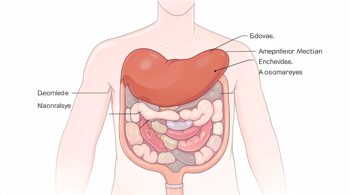
The intensity and frequency of this pain can vary depending on whether the underlying issue is acute pancreatitis, chronic inflammation, or a neoplastic growth 3. While common pain relief methods are often the first line of response for patients, the persistent nature of this mid-back ache serves as a significant clinical red flag. Consistent patterns of this pain should be documented, including how they relate to food intake, to provide a clear history for healthcare providers during an examination 7.
Systemic Indicators: Jaundice and Metabolic Shifts
Jaundice, the yellowing of the skin and the whites of the eyes, is a visible indicator of bile duct obstruction, often linked to pancreatic conditions 9. As the pancreas or nearby biliary structures become compromised, bilirubin builds up in the blood, leading to this discoloration 8. This process is frequently accompanied by dark-colored, tea-like urine and pale or clay-colored stools, both of which are high-priority symptoms requiring immediate clinical evaluation 8, 10.
Metabolic disturbances also serve as indicators of pancreatic failure. The onset of unexplained, difficult-to-control blood sugar levels is a well-documented phenomenon in patients with pancreatic dysfunction 3, 8. When the pancreas cannot effectively produce insulin, the body loses its ability to manage glucose, resulting in systemic fatigue, weakness, and generalized malaise 8, 9. These symptoms reflect the body’s systemic failure to derive energy from food intake due to both enzymatic and hormonal depletion 4.
Diagnostic Considerations and Medical Oversight
Diagnostic protocols for pancreatic failure are multifaceted, relying on a combination of patient history, physical examination, and advanced testing. Physicians typically utilize blood tests to measure pancreatic enzymes and glucose levels, stool studies to detect fat malabsorption, and imaging techniques such as CT scans or MRIs to visualize the structural integrity of the organ 1, 8. Because early-stage symptoms are often vague, these diagnostic tools are essential for differentiating between transient digestive issues and chronic pancreatic disease 5, 9.
Ongoing maintenance for those diagnosed with pancreatic insufficiency often involves pancreatic enzyme replacement therapy, nutritional counseling to address vitamin deficiencies, and the management of underlying causes such as chronic pancreatitis or systemic metabolic conditions 1, 4. It is imperative for patients to avoid self-management tactics that mask symptoms, such as relying solely on over-the-counter anti-acids, as these may delay the identification of progressive dysfunction 3.
When to Seek Emergency Attention
While many signs of pancreatic failure develop gradually, certain symptoms necessitate immediate medical attention. Severe, sudden-onset abdominal pain, persistent vomiting, high fever, or signs of acute dehydration are considered emergencies 3, 4. These can indicate acute pancreatitis or a total obstruction, both of which carry significant risk if not addressed promptly 8. In such cases, standard diagnostic procedures are bypassed in favor of stabilizing the patient and mitigating the inflammatory response through intensive care protocols 8.
Risk factors such as alcohol consumption, history of gallstones, cigarette smoking, and genetic predispositions should be discussed openly with medical professionals, as these elements often contribute to the progression of pancreatic disorders 3, 4. Proactive monitoring of personal health patterns-specifically regarding digestive regularity and glucose management-remains the most effective strategy for individuals concerned about their pancreatic health 3.
Sources
- Acibadem Hospitals Group: Pancreatic Insufficiency: Symptoms, Causes, Treatment
- StatPearls: Exocrine Pancreatic Insufficiency
- Acibadem Health Point: 7 Symptoms Of Pancreas Problems
- Acibadem Hospitals Group: Pancreas: Function, Diseases And Care
- Prevention: 5 Subtle Signs of Pancreas Problems Doctors Say You Should Know
- The Times of India: 5 warning signs your pancreas isn't working properly
- Times Life: 8 Warning Signs of Pancreatic Problems That Most Indians Miss
- Liv Hospital: 7 Warning Signs of Pancreatic Disorders You Shouldn't Ignore
- UserNotices: How to tell if your pancreas is failing
- Cleveland Clinic: Signs of Pancreatic Cancer You Should Know
Authored by 24Trendz team