Warning signs of aneurysm: Clinical patterns and emergency recognition
Warning signs of aneurysm depend largely on whether the weakened blood vessel is in the brain, chest, abdomen, or another part of the circulation. Many aneurysms cause no symptoms and are discovered during imaging for an unrelated concern, while rupture can produce sudden, life-threatening symptoms. 1
Why aneurysms may be difficult to recognize
An aneurysm is a weakened area in an artery wall that bulges outward as blood pressure pushes against it. Small brain aneurysms and many aortic aneurysms can remain symptom-free, so the absence of discomfort does not establish that an aneurysm is absent. Brain aneurysms are often found incidentally during imaging performed for another medical issue, including evaluations involving dizziness or memory concerns. 2
Symptoms become more likely when an aneurysm grows, presses on nearby nerves or organs, leaks, or ruptures. The clinical pattern is therefore influenced by location and size. A general aneurysm warning profile can include severe pain, weakness, bleeding, fainting, or a pulsating abdominal sensation, but these signs can also have other causes and require medical assessment rather than self-diagnosis. 3
Brain aneurysm warning signs before rupture
Most brain aneurysms do not cause noticeable symptoms until they become large or begin affecting surrounding tissue. Pressure from a larger aneurysm may cause pain above or behind the eye, numbness or weakness on one side of the face, facial paralysis, a drooping eyelid, an enlarged pupil, or changes in vision such as double vision. Dizziness, balance problems, difficulty concentrating, speech difficulty, and short-term memory problems are also reported warning patterns. 1
Persistent or worsening headaches, pain around an eye, or neurological symptoms that do not resolve warrant prompt clinical evaluation. These symptoms do not prove that an aneurysm is present, because headache, visual disturbance, and weakness have multiple possible explanations. However, a new combination of eye symptoms and facial or speech changes is clinically important because a growing aneurysm may be pressing on nerves or brain structures. 2
The hallmark of a ruptured brain aneurysm
A ruptured brain aneurysm typically causes a sudden, severe headache, often described as a thunderclap headache or the worst headache of a person’s life. The pain may reach maximum intensity abruptly and can be accompanied by nausea, vomiting, a stiff neck, sensitivity to light, double vision, seizures, confusion, loss of consciousness, or cardiac arrest. A rupture causes bleeding in or around the brain and is a medical emergency. 2
Emergency warning signs can also resemble a stroke: one-sided facial drooping, weakness or numbness in one arm or one side of the body, slurred or confused speech, difficulty finding words, blurred vision, or loss of sight. Anyone who suddenly develops this pattern, particularly with an extremely painful headache that does not go away, requires emergency services rather than self-transport. 1
Aortic aneurysm symptoms by location
Abdominal aortic aneurysms frequently remain silent, but symptoms can include persistent, deep, aching pain in the abdomen or on the side of the abdomen. A pulsating sensation near the navel, similar to a heartbeat, is another reported physical sign. Sudden severe abdominal or back pain, lightheadedness, dizziness, fainting, a rapid heartbeat, or low blood pressure may indicate rupture or another acute aortic complication. 4
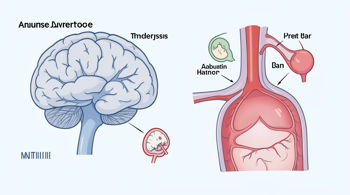
Thoracic aortic aneurysms may produce pain in the chest, back, neck, or jaw. Sharp or tearing chest or back pain, especially pain extending toward the area between the shoulder blades, is a serious warning pattern. If the enlarged aorta presses on nearby structures, hoarseness or difficulty swallowing may occur. Sudden intense pain with fainting, dizziness, or circulatory symptoms requires emergency evaluation because aortic rupture or dissection can cause severe internal bleeding. 5
Risk factors and the limits of symptoms
Smoking and high blood pressure are identified as major risk factors for developing brain aneurysms. Other factors associated with increased vigilance include older age, family history, cocaine use, atherosclerosis, and certain inherited conditions. Women are more likely than men to develop brain aneurysms, and about 20% of people with one brain aneurysm may have at least one additional aneurysm. 6
Risk factors do not diagnose an aneurysm, and having none does not eliminate the possibility. Conversely, most aneurysms do not rupture, and many small, stable brain aneurysms are monitored rather than treated immediately. Screening or imaging decisions depend on individual risk, symptoms, family history, and clinical judgment. Blood pressure control, avoiding smoking, and appropriate follow-up are described as ways to reduce risk and support monitoring. 6
How clinicians investigate suspected aneurysms
When a brain aneurysm is suspected, clinicians may use computed tomography, magnetic resonance imaging, CT angiography, or cerebral angiography to examine the brain and its blood vessels. A sudden severe headache with neurological symptoms generally prompts urgent assessment because imaging can help identify bleeding or a vascular abnormality. Diagnosis and treatment decisions require specialist interpretation rather than conclusions based solely on symptoms. 7
Aortic aneurysms may be detected through screening or imaging before symptoms develop. Ultrasound, CT, MRI, and angiography are among the imaging approaches used to assess aneurysms, depending on location and the clinical situation. Treatment can involve observation, blood pressure management, surgery, or minimally invasive vascular procedures. The decision is shaped by aneurysm size, location, shape, growth, rupture risk, and overall health. 3
When symptoms require emergency attention
Sudden severe headache, new facial drooping, one-sided weakness, speech difficulty, loss of vision, seizure, fainting, or altered consciousness should be treated as emergency symptoms because they may reflect brain bleeding or stroke. Sudden severe chest, back, or abdominal pain with dizziness, fainting, rapid heartbeat, or low blood pressure may indicate a ruptured or dissecting aortic aneurysm. These symptoms require emergency services and should not be managed through routine appointment scheduling. 1
Less dramatic but persistent symptoms also deserve clinical review, particularly recurrent or worsening headaches, pain above or around an eye, ongoing visual changes, unexplained neurological symptoms, abdominal pulsation, or continuing chest, back, or abdominal pain. Because aneurysms can be silent and symptoms are not specific, assessment may include a medical history, examination, blood pressure review, and appropriately selected imaging. 4
Sources
- 1. NHS, Brain aneurysm: https://www.nhs.uk/conditions/brain-aneurysm/
- 2. National Institute of Neurological Disorders and Stroke, Cerebral Aneurysms: https://www.ninds.nih.gov/health-information/disorders/cerebral-aneurysms
- 3. Penn Medicine, Brain Aneurysm: https://www.pennmedicine.org/conditions/brain-aneurysm
- 4. Penn Medicine, Aneurysm: https://www.pennmedicine.org/conditions/aneurysm
- 5. Scripps Health, Aortic Aneurysms Symptoms, Causes and Treatment: https://www.scripps.org/news_items/7687-what-are-the-warning-signs-and-symptoms-of-an-aortic-aneurysm
- 6. American Medical Association, What doctors want patients to know about brain aneurysms: https://www.ama-assn.org/public-health/chronic-diseases/what-doctors-want-patients-know-about-brain-aneurysms
- 7. Acibadem Hospitals Group, Brain Aneurysm Symptoms: https://acibademinternational.com/health-library/brain-aneurysm-symptoms-when-headache-needs-urgent-evaluation/
Authored by 24Trendz team