Warning signs of a heart attack that can occur without severe chest pain: A clinical review of atypical symptoms
When medical professionals discuss cardiac events, the conventional image often involves sudden, crushing chest pain. However, clinical research indicates that many heart attacks do not present with this classic symptom, leading to delayed recognition and treatment 1, 4. Understanding that a myocardial infarction can manifest through seemingly unrelated or subtle physical sensations is critical for timely access to emergency care 2, 9. A significant percentage of these events, often referred to as silent heart attacks or silent myocardial infarctions, present with symptoms that may be easily dismissed as fatigue, indigestion, or general malaise 5, 6.
The Prevalence of Atypical Cardiac Presentations
Data suggests that approximately 45% of all heart attacks may involve symptoms that are too subtle for the average person to recognize immediately 5, 6. Because the heart is not always receiving adequate oxygen-rich blood, the resulting distress signal may originate from areas outside the primary cardiac region 1. These silent events still cause genuine damage to the heart muscle, meaning that the absence of severe pain does not correlate with a lack of clinical severity 6. Recognizing these subtle signals is particularly important for individuals with underlying risk factors such as diabetes, older age, or a history of previous cardiac issues 6, 8.
Subtle Physical Manifestations Beyond Chest Pain
When chest discomfort is absent or mild, other physiological changes frequently emerge. These indicators often include persistent or sudden unusual fatigue, which may occur even without physical exertion 2, 9. Patients may also experience shortness of breath, a sensation that often accompanies other silent symptoms even when the respiratory system is not the primary site of the injury 2, 4. Additionally, the body may respond to the stress of an blocked coronary artery by triggering cold, clammy skin or profuse sweating, which are frequently reported alongside nausea or a general sense of being unwell 2, 5.
Gastrointestinal and Upper Body Discomfort
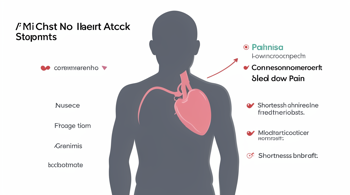
Many individuals mistakenly attribute heart-related distress to digestive issues, given that nausea, vomiting, and indigestion-like sensations are common atypical symptoms 3, 5. This discomfort is often described as pressure or aching in the upper abdomen, which is easily confused with heartburn or a simple stomach upset 5, 6. Furthermore, referred pain can travel to areas far from the heart, including the jaw, neck, back, shoulders, or one or both arms 3, 4. This radiating sensation can occur independently of any localized chest pressure, making it difficult for the patient to immediately identify the source of the distress 3, 9.
Neurological and Systemic Warning Signals
Systemic symptoms such as dizziness, lightheadedness, or a feeling of fainting can be indicative of reduced cardiac output during a heart attack 3, 5. In some cases, patients may experience an unexplained sense of anxiety or confusion, which may be the result of the body’s systemic response to inadequate blood flow 5. Research indicates that chronic conditions like diabetes can lead to autonomic nerve damage, which often blunts the body's natural pain response to a myocardial infarction, making these systemic symptoms the only noticeable warning signs 8.
| Symptom Category | Common Atypical Indicators |
|---|---|
| Gastrointestinal | Nausea, vomiting, indigestion, upper-abdominal pressure |
| Neurological | Dizziness, lightheadedness, fainting, confusion |
| Physical | Unusual fatigue, cold/clammy sweating, shortness of breath |
| Radiating Pain | Jaw, neck, back, shoulder, or arm discomfort |
The Importance of Rapid Intervention
The time between the onset of symptoms and professional medical evaluation is a primary determinant of patient outcomes 9. Because these atypical symptoms often wax and wane, it is easy for patients to assume the issue has resolved itself and delay seeking help 2. Clinical guidelines emphasize that for any suspected cardiac event, individuals should contact emergency services immediately rather than driving themselves to a medical facility 1, 5. Emergency medical personnel are equipped to perform evaluations and begin stabilizing procedures en route to the hospital, which significantly reduces the risk of long-term cardiac damage 12.
Risk Profiles and Long-Term Considerations
While anyone can experience a heart attack, the clinical literature highlights that women, in particular, are more likely to report atypical symptoms that deviate from the classic presentation of crushing chest pressure 5, 7. Managing risk factors such as high blood pressure, high cholesterol, and smoking is a fundamental component of cardiovascular health, as these factors contribute to the plaque buildup that causes arterial blockages 7. A history of previous heart attacks also increases the likelihood of future events presenting with non-standard warning signs, necessitating an increased level of vigilance for individuals who have already been treated for cardiovascular disease 6, 8.
Sources
- Cleveland Clinic: Heart Attack: Symptoms, Causes & Treatment
- Cleveland Clinic: Early Signs of a Heart Attack
- Heart Foundation: 5 warning signs of a heart attack that you may not know
- Cleveland Clinic: What a Heart Attack Can Feel Like
- AdventHealth: Silent Heart Attacks: What to Know and When to Get Care
- Franciscan Health: Symptoms Of A Silent Heart Attack
- Johns Hopkins Medicine: Heart Attacks in Women
- Prevention.com: 6 Silent Heart Attack Symptoms Cardiologists Want You to Know
- Medical Channel Asia: Not Chest Pain? It Could Still Be a Heart Attack
- AP News: Women's heart attack symptoms are different from men's
- American Heart Association: Warning Signs of a Heart Attack
- American College of Emergency Physicians: Know When to Go
Authored by 24Trendz team