Everything About Thyroid Treatment Options: A Clinical Guide to Diagnosis and Care
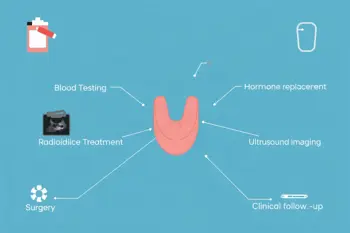
Everything about thyroid treatment options begins with identifying the specific disorder rather than choosing a medicine from symptoms alone. Blood tests, physical examination, imaging, and sometimes biopsy help distinguish an underactive thyroid, overactive thyroid, nodule, goiter, thyroiditis, or cancer. Treatment is then tailored to hormone results, symptoms, age, pregnancy plans, overall health, and the underlying cause. 1
Diagnosis Determines the Treatment Path
Thyroid evaluation commonly includes thyroid-stimulating hormone, or TSH, and free thyroxine, or free T4, with additional testing selected according to the clinical situation. Examination can identify enlargement or neck swelling, while ultrasound may assess nodules. Suspicious tissue can require a needle biopsy. These steps matter because a nodule may need observation rather than immediate treatment, whereas a hormone-producing nodule or cancer requires a different plan. 1
Symptoms provide context but do not establish the diagnosis by themselves. Hypothyroidism may involve fatigue, cold intolerance, weight changes, dry skin, constipation, or subtle changes in older adults. Hyperthyroidism may cause palpitations, weight loss, heat intolerance, anxiety, tremor, and fatigue. Similar symptoms can occur in other conditions, so treatment decisions should follow laboratory evaluation and professional assessment. 23
Hypothyroidism: Hormone Replacement
Hypothyroidism is usually treated with thyroid hormone replacement, most commonly synthetic thyroxine, also called levothyroxine or T4. The medicine replaces hormone that the thyroid does not produce adequately and is often required after autoimmune thyroid disease, radioactive iodine treatment, thyroid surgery, or thyroid removal for cancer. Many patients with permanent loss of thyroid function need ongoing therapy, with the dose adjusted to laboratory results and individual circumstances. 25
Replacement therapy is not a one-time intervention. TSH and free T4 monitoring helps determine whether the dose is appropriate, and requirements can change with pregnancy, aging, illness, medicines, or changes in thyroid function. Excess replacement can produce medically significant overactive-thyroid effects, while insufficient replacement leaves hypothyroidism undertreated. Liothyronine, a synthetic T3, or combined T3 and T4 therapy may be discussed in selected cases, but combination treatment remains clinically debated. 510
Hyperthyroidism: Medicines, Radioiodine, and Surgery
Hyperthyroidism results from excess thyroid hormone activity and may be caused by Graves disease, multinodular goiter, a toxic autonomous nodule, or thyroiditis. Antithyroid medicines, including methimazole, reduce hormone production and are commonly used in Graves disease. Propylthiouracil is an alternative in particular circumstances, including primarily the first trimester of pregnancy. These medicines require clinician-directed monitoring because the preferred approach depends on cause, pregnancy, eye disease, goiter size, and overall health. 34
Beta-blockers may control rapid heartbeat, tremor, and related symptoms, but they do not reduce thyroid hormone production. Radioactive iodine is a more definitive option that targets and destroys overactive thyroid tissue, although it can eventually result in hypothyroidism requiring replacement therapy. Thyroidectomy may be considered for a large goiter, suspicious disease, cancer, medication intolerance, or circumstances in which a definitive procedure is appropriate. 39
Nodules, Goiter, and Thyroiditis
Thyroid nodules do not automatically require medicine or surgery. Their management depends on ultrasound characteristics, hormone results, size, symptoms, and biopsy findings. Some nodules are monitored with examinations, blood tests, or repeat imaging. A nodule that produces excess hormone may be assessed differently from a nonfunctioning nodule, while suspicious findings can lead to needle biopsy or surgery. New neck swelling, swallowing difficulty, or breathing difficulty warrants prompt medical assessment. 1
A goiter may reflect autoimmune disease, iodine-related disease, nodular change, or hormone excess, so treatment is directed at its cause rather than enlargement alone. Thyroiditis can release stored hormone temporarily and may not respond to antithyroid medicines in the same way as Graves disease. Observation is therefore sometimes appropriate, while pressure symptoms, suspicious tissue, or significant functional abnormalities can alter the balance toward an intervention. 13
Thyroid Cancer Treatment Options
Thyroid cancer care depends on cancer type, stage, spread, overall health, and patient preferences. Small papillary cancers may sometimes be managed with active surveillance using blood tests and ultrasound, rather than immediate surgery. When treatment is required, thyroidectomy is a central option, and some patients receive more than one treatment. A multidisciplinary team can include endocrinologists, oncologists, endocrine surgeons, radiologists, and pathologists. 7
Additional cancer-directed treatments can include radioactive iodine, external radiation, chemotherapy, targeted therapy, immunotherapy, and hormone therapy. Advanced or recurrent disease may require systemic treatment delivered orally, by infusion, or by injection. The choice is based on tumor biology and stage rather than on symptoms alone. Surgery also creates maintenance considerations because removal of the thyroid generally requires hormone replacement and long-term laboratory follow-up. 87
Follow-Up, Risks, and Long-Term Management
Follow-up is part of every major thyroid treatment pathway. Blood tests are used to monitor replacement therapy, antithyroid medication, and thyroid status after radioiodine or surgery. Clinical review is particularly important when pregnancy is planned or underway, after a procedure, during aging, or when symptoms change. Palpitations, severe symptoms, rapidly enlarging neck swelling, and trouble breathing or swallowing require prompt clinical evaluation. 110
Each option has trade-offs. Medicines require adherence, laboratory surveillance, and review of adverse effects. Radioiodine can lead to permanent hypothyroidism and may be unsuitable in certain pregnancy circumstances. Thyroidectomy carries procedural risks, including potential recurrent laryngeal nerve injury, and creates possible lifelong hormone-replacement needs. The appropriate choice therefore depends on eligibility, risks, treatment goals, clinical oversight, and willingness to maintain long-term monitoring rather than on a single universally preferred therapy. 911
Sources
- Acibadem Hospitals Group, “Thyroid Treatment Options for Common Conditions”
- MSD Manual Professional Edition, “Hypothyroidism”
- Merck Manual Professional Edition, “Hyperthyroidism”
- NCBI Bookshelf Endotext, “Diagnosis and Treatment of Graves’ Disease”
- Healthline, “What to Know About Thyroid Hormone Replacement Treatment”
- Merck Manual Consumer Version, “Overview of the Thyroid Gland”
- Penn Medicine, “Thyroid Cancer Treatment”
- Memorial Sloan Kettering Cancer Center, “Treatments for Thyroid and Recurrent Thyroid Cancer”
- Acibadem Health Point, “Hyperthyroidism Treatment Choices”
- Acibadem Hospitals Group, “Hypothyroidism Treatments: Symptoms, Causes, and Treatment Options”
- UCLA Health, “Thyroid Nodules”
Authored by 24Trendz team