Assessing your options for chronic sciatica: A Clinical Guide to Diagnosis, Treatment Pathways, and Long-Term Relief
What Chronic Sciatica Actually Is and Why It Persists
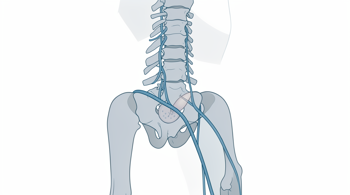
Sciatica is not a standalone diagnosis but a symptom pattern describing pain that radiates along the course of the sciatic nerve, typically originating in the lower lumbar or sacral spine and traveling through the buttock, thigh, calf, and into the foot. 1 Chronic sciatica is specifically defined as nerve pain that persists for 12 weeks or longer, or that keeps recurring despite rest and basic care. 2 According to recent orthopedic research, chronic sciatica affects approximately 20 to 30 percent of all sciatica patients, distinguishing it clinically from the acute and subacute phases that resolve more readily. 3
The reason sciatica becomes chronic is often more complex than a single compressed nerve. Persistent inflammation, ongoing mechanical compression, and a process called nerve sensitization can all sustain symptoms long after the original injury might have partially healed. 4 In sensitized nervous systems, ordinary movements can continue to trigger pain signals even without new tissue damage, which is why chronic sciatica requires a fundamentally different treatment strategy than acute episodes. Common structural causes include lumbar disc herniation at levels L4/L5 or L5/S1, spinal stenosis, foraminal narrowing, bone spurs, spondylolisthesis, and less frequently, piriformis-related irritation or sacroiliac joint dysfunction. 5
Diagnosing the Underlying Cause Before Choosing a Treatment
Effective management of chronic sciatica begins with identifying the precise structural reason behind nerve compression. A physical examination typically assesses muscle strength, reflexes, and leg-raise responses. If symptoms persist beyond six to eight weeks, imaging studies become essential. MRI is considered the gold standard for identifying herniated discs, degenerative disc disease, spinal stenosis, and nerve root compression. 6 CT scans, sometimes performed with a contrast dye injected into the spinal canal (CT myelogram), can reveal bony changes and nerve visibility in greater detail, while X-rays show mechanical alignment issues affecting the nerve exit points. 7
Electromyography (EMG) offers an additional diagnostic layer by measuring the electrical impulses produced by nerves and muscle responses, helping clinicians confirm the severity of any nerve root injury. 8 The straight leg raise test remains the most commonly used physical test to confirm sciatica in clinical settings. Conditions that can mimic sciatica include piriformis syndrome, hip pathology, peripheral neuropathy, and facet joint pain, all of which follow different treatment pathways, reinforcing why accurate diagnosis must precede treatment selection. 9 Red-flag symptoms requiring urgent evaluation include loss of bladder or bowel control, saddle area numbness, and weakness progressing rapidly in both legs, which may indicate cauda equina syndrome, a surgical emergency. 10
Conservative and Non-Surgical Treatment Options
Clinical guidelines consistently recommend beginning with non-surgical care for most chronic sciatica cases, provided no red-flag neurological symptoms are present. Physical therapy occupies a central role, with evidence supporting programs that combine core strengthening, posture correction, nerve glide exercises, and the McKenzie extension method. 11 A 2025 systematic review with network meta-analysis, published in The Journal of Pain and analyzing 50 randomized controlled trials covering 4,920 participants, found that spinal manipulative therapy produced the largest short-term reductions in leg pain intensity versus placebo, with a mean difference of 61.01 on a 100-point scale, followed closely by exercise combined with neural mobilization at a mean difference of 60.01. 12
Medications serve a supporting role rather than a curative one in chronic sciatica management. Anti-inflammatory drugs, corticosteroids, antidepressants, anti-seizure medications, and in carefully monitored cases, opioids may be prescribed depending on pain type and severity. 13 Epidural steroid injections target inflammation directly around the affected nerve root and are supported by a 2025 meta-analysis of 72 randomized controlled trials covering 7,701 patients, which confirmed that transforaminal epidural steroid injections provide meaningful relief for sciatica from disc herniation, with effects lasting up to 12 months in many patients. 14 The same network meta-analysis found that epidural steroid plus ketamine injections produced the most significant long-term reductions in physical function impairment, with a mean difference of 15.51 at long-term follow-up. 15
Comparing Key Non-Surgical Approaches: A Framework
Patients and clinicians assessing options for chronic sciatica benefit from understanding how major non-surgical approaches compare in terms of mechanism, evidence quality, and appropriate patient profiles. Physical therapy demonstrates the strongest long-term evidence base, particularly for disc-related sciatica, deconditioning, and recurrent episodes. Chiropractic spinal manipulation can produce faster initial pain relief in mechanical sciatica cases involving facet or sacroiliac joint dysfunction, though research indicates its effect converges with active exercise by the 12-week mark. 16 Non-surgical spinal decompression is increasingly recognized for addressing the structural disc compression underlying chronic symptoms, functioning differently from medication or exercise-only programs. 17
| Approach | Primary Mechanism | Best Evidence For | Limitations |
|---|---|---|---|
| Physical Therapy | Active rehab, neuromuscular re-education | Disc-related sciatica, recurrent episodes | Requires patient adherence over weeks to months |
| Epidural Steroid Injections | Reduces nerve root inflammation directly | Acute flares, disc herniation-related sciatica | Temporary relief; repeated injections carry risks |
| Spinal Manipulation | Mechanical joint mobilization | Facet or SI joint-related mechanical sciatica | Not recommended with neurological signs or disc herniation |
| Oral Medications | Systemic pain and inflammation control | Short-term symptom management | Does not address structural root cause |
| Nerve Blocks / Pulsed Radiofrequency | Interrupts pain signaling at nerve level | Post-injection-failure, persistent nerve pain | Specialist-level procedure; variable duration |
When conservative measures have been exhausted without adequate relief, options such as nerve root pulsed radiofrequency, peripheral nerve stimulation, and spinal cord stimulation represent intermediate interventional pathways that sit between injection therapy and surgery. 18 These are administered by pain specialists and are distinct from surgical correction of the underlying structural problem.
When Surgery Becomes a Clinically Appropriate Option
While approximately 40 percent of adults will experience sciatica during their lifetime, only an estimated 5 to 10 percent ultimately require surgical intervention. 19 Clinical criteria for surgical consideration generally include structural problems confirmed on imaging, symptoms lasting beyond the standard six to twelve week trial of conservative therapy, or neurological deterioration such as progressive leg weakness, foot drop, or compromise of bladder and bowel function. 20 A treatment that controls pain effectively for a patient with an inflamed disc will accomplish very little for someone with severe canal stenosis, which underlines why surgical planning must be diagnosis-specific rather than symptom-driven.
The most common procedures include microdiscectomy for herniated disc-related nerve compression and laminectomy or laminotomy for stenosis-related cases. Modern minimally invasive techniques reduce operative disruption to surrounding tissue and are associated with faster functional recovery compared to traditional open approaches. 21 MRI remains the essential pre-surgical imaging tool, and surgeons typically confirm that the level and type of compression seen on imaging correlates directly with the patient's clinical symptom pattern before proceeding. Surgery is not a universal solution for chronic sciatica, and a proportion of patients experience residual symptoms post-operatively, particularly those with long-standing nerve sensitization or significant deconditioning.
Building a Long-Term Management Plan: Risks, Realities, and Realistic Timelines
Chronic sciatica management is rarely resolved by a single intervention. A multimodal plan that combines targeted physical therapy, appropriate medication support, sleep management, activity pacing, and weight management consistently outperforms single-track approaches in clinical practice. 22 Recovery timelines vary substantially. Acute sciatica resolves in under six weeks for most patients; chronic sciatica involving sensitized nerves or structural compression may require months of structured rehabilitation before meaningful functional gains are consolidated. Evidence confidence for most non-surgical interventions in chronic sciatica is rated as very low to moderate in systematic reviews, meaning patients should maintain realistic expectations about the certainty of any predicted outcome. 23
Key risks associated with under-treatment include progressive neurological deficit and permanent loss of function if significant nerve compression is left unaddressed. Risks associated with over-treatment include repeated corticosteroid injections carrying cumulative side-effect burdens, unnecessary surgical exposure in patients who might still respond to conservative care, and the psychological impact of repeated failed treatments on pain system sensitization. 24 Consulting a pain specialist when symptoms persist beyond four to six weeks with neurological involvement, or when conservative care has failed, is widely supported as the appropriate clinical step, with early specialist involvement often removing the need for surgery altogether. 25 Patients should work with their clinical team to reassess the treatment plan at defined intervals rather than continuing indefinitely with an approach that is not producing measurable functional improvement.
Sources
- Cleveland Clinic - Sciatica: What It Is, Causes, Symptoms, Treatment and Pain Relief (my.clevelandclinic.org)
- Microspine PLC - Best Options for Chronic Sciatica (microspinemd.com)
- Prodigy Chiro Care - Chronic vs Acute Sciatica: Different Approaches for Different Stages (prodigychirocare.com)
- MAPS Centers for Pain Control - Chronic Sciatica: Why Pain Persists and How Long-Term Relief Is Possible (mwpain.com)
- Dr. Arun Rajeswaran - Sciatica Treatment: What Works, What Not and When Surgery Helps (drarunrajeswaran.com)
- Goodman Campbell Brain and Spine - What Questions Should You Answer Before Considering Sciatica Surgery (goodmancampbell.com)
- Mayo Clinic - Sciatica Diagnosis and Treatment (mayoclinic.org)
- Mayo Clinic - Sciatica Diagnosis and Treatment: Electromyography (mayoclinic.org)
- NeuroSpine Plus - Sciatica Diagnosis and Treatment: Causes, Symptoms and Relief (neurospineplus.com)
- Grewal Orthopedic and Spine - Do I Have Sciatica (grewalspine.com)
- Sciatica.pro - Managing Chronic Sciatica Without Surgery: A Multimodal Plan (sciatica.pro)
- Nutrition Evidence Database - Effectiveness of Non-Surgical Interventions for Patients with Chronic Sciatica: A Systematic Review with Network Meta-Analysis, The Journal of Pain 2025 (nutrition-evidence.com)
- Sciatica.pro - Sciatica Medications Guide: OTC vs Prescription (sciatica.pro)
- SEVA Healthcare - Sciatica Doctor in Dallas-Fort Worth: When Conservative Care Stops Working (sevahealthcare.com)
- Nutrition Evidence Database - Effectiveness of Non-Surgical Interventions Network Meta-Analysis: Long-Term Outcomes (nutrition-evidence.com)
- Protocol Archive - Physical Therapy vs Chiropractic for Sciatica: Which Should You See (protocolarchive.com)
- ANSSI Wellness - Medication vs Physiotherapy vs Non-Surgical Decompression: Comparing Sciatica Treatments (anssiwellness.com)
- SEVA Healthcare - Advanced Interventional Options for Persistent Sciatica (sevahealthcare.com)
- Minimally Invasive Neurosurgery of Texas - When is Surgery Needed for Sciatica: A 2026 Patient Guide (minimallyinvasiveneurosurgerytexas.com)
- Goodman Campbell Brain and Spine - What Is the Most Successful Treatment for Sciatica (goodmancampbell.com)
- DISC MD Group - When to Consider Sciatica Surgery and What Type (discmdgroup.com)
- Sciatica.pro - Chronic Sciatica Management: Long-Term Relief Guide (sciatica.pro)
- Nutrition Evidence Database - Evidence Confidence Ratings in Chronic Sciatica Network Meta-Analysis (nutrition-evidence.com)
- Sciatica.pro - Conservative Care vs Injections vs Surgery for Sciatica (sciatica.pro)
- Singapore Paincare - When to See a Pain Specialist for Sciatica (sgpaincare.com)
Authored by 24Trendz team