Top rehabilitation hospitals in the US by state: A structural overview of national care benchmarks
Inpatient rehabilitation facilities (IRFs) serve as essential components of the American healthcare landscape, providing intensive, multidisciplinary care for patients recovering from stroke, traumatic brain injury, spinal cord injury, and complex orthopedic procedures 49. With over 1,200 Medicare-certified facilities across the United States, patients and healthcare providers often rely on standardized rankings and quality metrics to identify institutions that meet high benchmarks for clinical outcomes and staff-to-patient ratios 49. Understanding the distribution and evaluation of these hospitals is critical for those navigating the recovery process after serious illness or injury 2.
National Distribution and Regional Density
The availability of inpatient rehabilitation varies significantly by geography, with certain states maintaining a higher density of certified providers. Nationally, Texas leads the country with 154 IRFs, followed by Florida with 85 facilities and California with 83 9. Other states with high concentrations of these centers include Pennsylvania, Louisiana, Ohio, and Illinois 9. This distribution reflects regional demand and the infrastructure necessary to support intensive rehabilitation programs that require 24/7 physician oversight 4.
For evaluation purposes, major ranking organizations such as Newsweek and U.S. News & World Report often organize facilities by state or region 28. In states with a lower density of specialized IRFs, facilities are frequently grouped into broader geographic zones, such as the Northeast, Midwest, West, and South, to allow for comparative analysis of service quality and patient care standards 8. This segmentation ensures that patients have access to performance data regardless of their location 2.
Methodology Behind Rehabilitation Rankings
The identification of high-performing rehabilitation hospitals typically involves a multi-pillar approach that combines objective data with expert peer review. Ranking entities generally consider clinical metrics published by the Centers for Medicare & Medicaid Services (CMS), such as readmission rates and successful discharge-to-home statistics 3810. Furthermore, survey-based data from healthcare professionals, including physiatrists, physical therapists, and hospital administrators, provide qualitative insights into the clinical reputation and operational excellence of specific institutions 23.
These evaluations focus on specialized programs for complex conditions, such as neurological disorders, cancer rehabilitation, and catastrophic injury care 1410. Hospitals that demonstrate superior performance in these domains are often granted national or state-level recognitions. It is noted that the methodology for these rankings evolves periodically to emphasize outcomes like patient volumes, complexity of care provided, and the effective avoidance of 30-day readmissions 10.
Core Characteristics of Leading Rehabilitation Hospitals
Top-tier rehabilitation hospitals are characterized by their interdisciplinary team approach, which typically includes physiatrists, nurses, physical therapists, occupational therapists, and speech-language pathologists 49. To be classified as an IRF, a facility must generally provide at least three hours of intensive therapy per day, five days a week 4. Institutions that maintain these high standards are often recognized as national destinations for complex cases, such as those treated at the Shepherd Center in Georgia or Craig Hospital in Colorado 714.
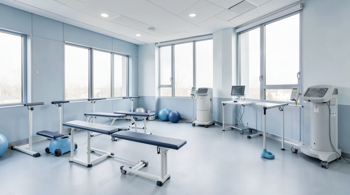
Clinical excellence at these facilities is often supported by integrated research initiatives and advanced medical technology that facilitate measurable functional improvement 41215. The most highly regarded centers, such as Shirley Ryan AbilityLab in Chicago, have demonstrated long-term consistency in high-ranking performance, often serving as benchmarks for clinical care standards in the industry 12.
Ownership Models and Provider Networks
The management structure of inpatient rehabilitation hospitals ranges from non-profit and government-operated institutions to for-profit hospital systems 9. Research indicates that there are approximately 575 non-profit facilities and 539 for-profit facilities, with the remainder operated by government entities or physician groups 9. Large networks such as Select Medical and Encompass Health operate numerous locations across the United States, contributing a significant percentage of the available inpatient capacity 513.
These national networks are frequently recognized in state and regional rankings due to their ability to standardize care protocols and invest in specialized clinical equipment 5. While large chains operate a vast number of facilities, independent non-profit centers-often affiliated with academic medical centers-frequently lead in clinical research and high-acuity care rankings 51315.
Assessing Quality and Accessibility
Patients seeking rehabilitation services are often encouraged to consult available quality maps and performance datasets to understand the landscape of local providers 6. Tools that track driving time to high-rated facilities can be particularly useful for ensuring timely access to care, as proximity is a key factor in long-term rehabilitation success 6. Furthermore, evaluating a facility based on its specific certification and history of performance helps families discern the capabilities of local centers versus specialized national centers 69.
The regulatory oversight provided by CMS, which traces facility ownership and certification status, serves as a primary layer of accountability for these hospitals 39. This oversight ensures that facilities meeting the threshold for intensive rehabilitation remain transparent regarding their operational status and quality data metrics 49.
Future Trends in Rehabilitation Services
The physical rehabilitation sector is expected to expand, with projections suggesting a 14 percent increase in the employment of physical therapists by 2033 2. This growth is driven by an aging population and the increasing recognition of intensive, inpatient care in the recovery process for chronic diseases and trauma 2. As the industry scales, the focus on digitized patient records, standardized clinical benchmarks, and integrated multidisciplinary teams remains central to the mission of top-ranked rehabilitation centers 29.
Continued emphasis on patient-centered care and family support services distinguishes the leading rehabilitation hospitals, ensuring that recovery involves not only the restoration of physical function but also the transition back into home life 2710.
Sources
- Newsweek: America's Best Physical Rehabilitation Centers 2025
- Newsweek: America's Best Physical Rehabilitation Centers 2026 Survey
- Statista: America's Best Physical Rehabilitation Centers 2025 Methodology
- Our Health Network: Understanding Inpatient Rehabilitation Facilities
- PR Newswire: Select Medical Rehabilitation Hospitals Recognitions
- Plain Proof: Driving time and resident maps for inpatient rehab providers
- Shepherd Center: U.S. News & World Report 2026-2027 Rankings
- Newsweek: Tennessee State Ranking for Rehab Centers
- Fonteum: Inpatient Rehabilitation Facilities and CMS Certification Data
- Brooks Rehabilitation: U.S. News & World Report Recognitions
- U.S. News & World Report: Rehabilitation Best Hospitals Benchmarks
- Shirley Ryan AbilityLab: Institutional Rankings
- Encompass Health: National Network Overview
- Craig Hospital: Neuro-rehabilitation Specialization
- NYU Langone Health: Rusk Rehabilitation Programs
Authored by 24Trendz team