Warning signs of stroke: A clinical guide to recognizing symptoms and responding safely
Why sudden symptoms matter
A stroke occurs when blood flow to part of the brain is interrupted by a blockage or bleeding, depriving brain tissue of oxygen. The National Institute of Neurological Disorders and Stroke states that the defining recognition feature is sudden symptom onset, because the body is signaling that the brain may not be receiving enough oxygen. Brain injury can develop quickly, so unfamiliar neurological changes should be treated as a medical emergency rather than attributed to fatigue, aging, intoxication, or a temporary illness. 1
Symptoms can vary according to the brain region affected, and they may occur without pain. A person may remain awake while experiencing a sudden change in movement, sensation, speech, vision, coordination, or thinking. Johns Hopkins Medicine lists one-sided facial, arm, or leg weakness, communication problems, visual changes, dizziness, walking difficulty, fainting, seizures, and severe unexplained headaches among possible symptoms. The presence of one sign is sufficient to seek emergency assessment. 3
Using the F.A.S.T. recognition method
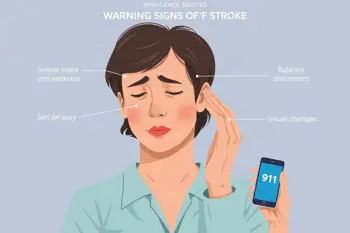
F.A.S.T. is a practical screening method for the most recognizable stroke signs. “F” refers to face drooping: asking the person to smile may reveal that one side of the face does not move normally. “A” refers to arm weakness: asking the person to raise both arms may show one arm drifting downward. “S” refers to speech difficulty, including slurring, unusual wording, or inability to repeat a simple phrase. “T” means contacting emergency services when any sign appears. 1
The F.A.S.T. test is not a diagnostic examination and does not identify every stroke. It is a bystander tool for recognizing a pattern that requires professional evaluation. Speech changes may involve difficulty producing words, understanding language, or making otherwise familiar statements. Arm weakness may affect one side, and facial asymmetry may be subtle. A normal result on one part of the test does not exclude stroke when other sudden neurological symptoms are present. 2
Additional warning signs beyond F.A.S.T.
Stroke symptoms may include sudden trouble seeing in one or both eyes, blurred or dim vision, or loss of vision. Sudden dizziness, loss of balance, poor coordination, difficulty walking, or problems with movement can also occur. Johns Hopkins Medicine identifies fainting, loss of consciousness, and seizures as possible associated signs, while severe headaches without a known cause are particularly concerning when they begin suddenly. These symptoms can occur alone or alongside facial, arm, or speech changes. 3
Balance and vision symptoms are important because a person may not look as though they are having a stroke. Someone who suddenly stumbles, cannot coordinate movements, develops double vision, or becomes unable to see clearly may still require emergency assessment even when the face and speech appear normal. Penn Medicine describes brain damage as potentially developing within minutes and emphasizes that drooping face, arm weakness, and difficulty speaking warrant emergency care. 4
What to do when symptoms appear
Call 911 or the local emergency number when a possible stroke sign appears. Note the time the person was last known to be well or the time symptoms were first noticed, because clinicians use that information when determining treatment options. The National Institute of Neurological Disorders and Stroke advises against having the person drive themselves or being transported by private vehicle. Ambulance personnel can begin assessment during transport and take the patient to emergency care. 1
Do not wait to see whether symptoms disappear, and do not assume that a person who feels better no longer needs medical attention. Stroke type must be determined by medical assessment and brain imaging before treatment is selected, because a blocked artery and a brain hemorrhage require different approaches. Mayo Clinic describes prompt treatment as a way to reduce brain damage and the likelihood of death or disability. Emergency evaluation remains appropriate even when symptoms are mild. 2
Transient ischemic attacks and temporary symptoms
A transient ischemic attack, or TIA, can cause the same kinds of symptoms as a stroke, including weakness, speech difficulty, visual changes, dizziness, or balance problems. The symptoms may resolve after minutes or hours, but temporary improvement does not make the event harmless. Johns Hopkins Medicine characterizes TIA as a medical emergency because it carries a high short-term risk of a subsequent permanent stroke and requires urgent evaluation. 3
A person who experienced a short-lived episode may not know whether the cause was a TIA, a completed stroke, or another medical condition. That distinction cannot be established reliably from appearance alone after symptoms have resolved. UCI Health describes temporary stroke-like symptoms as a warning requiring urgent medical evaluation. Recording what happened, when it began, how long it lasted, and which body functions changed can provide useful information for the treating team. 6
Treatment timing and special circumstances
The treatment window depends on the stroke type, clinical findings, imaging results, and the time symptoms began. The National Institute of Neurological Disorders and Stroke reports that some of the best treatments for ischemic stroke can be used within four and a half hours of the first symptoms. It also notes that some patients may benefit from treatment up to 24 hours after a stroke, making early hospital evaluation important even when the usual timing is uncertain. 1
People who wake with possible stroke symptoms should still seek emergency care, even if the exact onset time is unknown. The time last known to be well may help clinicians assess eligibility for treatment. Stroke can affect anyone, although Mayo Clinic identifies factors associated with higher risk, including older age, family history, smoking, high blood pressure, high cholesterol, poorly controlled diabetes, heavy alcohol use, physical inactivity, sleep apnea, and certain heart conditions. Risk factors do not determine whether symptoms are genuine. 2
Sources
- National Institute of Neurological Disorders and Stroke, Signs and Symptoms: https://www.ninds.nih.gov/health-information/stroke/signs-and-symptoms
- Mayo Clinic, Stroke: Symptoms and causes: https://www.mayoclinic.org/diseases-conditions/stroke/symptoms-causes/syc-20350113
- Johns Hopkins Medicine, Stroke: https://www.hopkinsmedicine.org/health/conditions-and-diseases/stroke
- Penn Medicine, Stroke: https://www.pennmedicine.org/conditions/stroke
- Harvard Health, Stroke overview: https://www.health.harvard.edu/diseases-and-conditions/stroke-overview-a-to-z
- UCI Health, Do you know the signs of stroke?: https://www.ucihealth.org/blog/2026/05/know-the-signs-of-stroke
Authored by 24Trendz team