Identifying the warning signs of endometriosis: A clinical guide to symptoms and evaluation
Severe period pain is not always normal, particularly when cramps interfere with school, work, sleep, or ordinary activities. Identifying the warning signs of endometriosis requires looking beyond menstrual pain to recurring symptoms involving the pelvis, bowel, bladder, sexual health, bleeding patterns, and fertility.
What endometriosis is and why symptoms vary
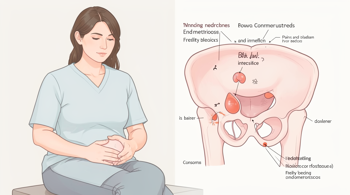
Endometriosis occurs when tissue similar to the lining of the uterus grows outside the uterine cavity, most often on pelvic organs such as the ovaries, fallopian tubes, pelvic lining, uterosacral ligaments, and the area behind the uterus. Less common sites include the bowel, bladder, ureters, vagina, cervix, surgical scars, and, rarely, organs outside the pelvis. These implants can respond to hormonal changes, causing inflammation, bleeding, scarring, and adhesions. 1
Symptoms depend partly on where lesions develop, but disease severity and symptom severity do not always match. Some people have extensive disease with limited symptoms, while others experience substantial pain with less extensive findings. Merck Manual identifies a classic symptom triad of painful periods, pain during sex, and infertility, while painful urination and painful bowel movements can also occur. 1
Severe or disabling menstrual pain
The most recognizable warning sign is menstrual pain that is substantially worse than expected or progressively worsening over time. Endometriosis-related cramps may begin before bleeding, continue for several days, radiate to the lower back or legs, or feel stabbing, aching, or intensely pressurized. Pain that repeatedly forces a person to miss school, work, social activities, or sleep warrants medical assessment rather than being dismissed as ordinary menstrual discomfort. 2
Painful periods alone do not establish an endometriosis diagnosis, because several gynecologic conditions can cause cramping. However, recurring pain that does not respond adequately to usual measures, disrupts normal functioning, or becomes more severe across cycles is a clinically important pattern. Cleveland Clinic describes very painful periods as the main symptom observed in many patients, while also noting that pain can occur between periods. 2
Pelvic pain outside menstruation
Endometriosis may cause chronic or intermittent pelvic pain that continues after menstrual bleeding ends. The discomfort can be felt in the lower abdomen, pelvis, lower back, or deep pelvic floor and may present as aching, pressure, cramping, or sharp pain. A cyclical pattern is common, but symptoms do not always follow a predictable schedule, so pain between periods should not automatically be considered unrelated. 9
Persistent pelvic pain can affect movement, concentration, sleep, relationships, and daily responsibilities. It can also overlap with symptoms of irritable bowel syndrome, ovarian cysts, pelvic inflammatory disease, and other disorders, which contributes to diagnostic uncertainty. Updated ACOG guidance emphasizes evaluating adolescents and reproductive-aged adults when symptom patterns suggest endometriosis, rather than relying only on whether pain is visible on initial testing. 3
Pain during sex, urination, or bowel movements
Deep pain during or after vaginal intercourse is a recognized warning sign, especially when it recurs or becomes more pronounced around menstruation. The location of endometrial-like implants can influence which activities cause pain. Sexual pain may occur alongside pelvic floor spasms, persistent pelvic aching, or tenderness, although its presence does not by itself confirm endometriosis. 2
Pain during bowel movements or urination is another important pattern, particularly when it worsens during a period. Bowel-related symptoms may include painful defecation, constipation, diarrhea, nausea, or discomfort associated with deep pelvic pressure. Urinary pain may occur when lesions affect tissues near the bladder or ureters. The NHS lists pain when urinating or defecating, painful periods, pelvic pain, and pain during or after sex among symptoms requiring consideration. 5
Bleeding, bloating, and digestive symptoms
Heavy menstrual bleeding or bleeding between periods can occur with endometriosis, although abnormal bleeding also has many other possible causes. A symptom history should record how long bleeding lasts, whether it is unusually heavy, whether spotting occurs between periods, and whether bleeding changes alongside pelvic pain. These details help clinicians distinguish a recurring pattern from an isolated menstrual variation. 6
Digestive symptoms may include severe bloating, constipation, diarrhea, nausea, or bowel discomfort, often becoming more noticeable around menstruation. Cleveland Clinic reports that severe bloating can be especially prominent during periods, while other sources describe gastrointestinal symptoms as part of the broader presentation. Digestive complaints should not automatically be attributed to endometriosis because they can resemble common gastrointestinal disorders, but cyclical recurrence is relevant information for evaluation. 2
Difficulty becoming pregnant
Infertility or difficulty becoming pregnant can be associated with endometriosis. Lesions, inflammation, scarring, adhesions, or ovarian involvement may affect reproductive organs and their function. Merck Manual includes infertility in the classic symptom pattern, while the World Health Organization lists infertility among possible effects of the disease. Fertility difficulty may occur with or without severe pain, so the absence of disabling cramps does not exclude endometriosis. 4
Fertility concerns are particularly important when they occur alongside painful periods, chronic pelvic pain, painful sex, or bowel and bladder symptoms. A fertility problem does not prove that endometriosis is present, since many conditions can affect conception. It does, however, add clinical context that should be included in a complete medical history and discussed with an appropriate healthcare professional. 1
When symptoms merit clinical evaluation
Medical evaluation is appropriate when pelvic pain is new, persistent, worsening, or disruptive; when pain occurs during sex, urination, or bowel movements; when bleeding is unusually heavy or occurs between periods; or when conception is difficult. A symptom diary can document cycle dates, pain location, severity, bleeding, bowel and bladder symptoms, medications, missed activities, and symptom changes. Such records can help describe patterns that are difficult to recall during an appointment. 7
Diagnosis is often based on symptoms and physical findings, with transvaginal ultrasound or magnetic resonance imaging sometimes supporting the assessment. Direct visualization, usually through laparoscopy, can help plan treatment but is not always required before treatment begins. Because symptoms overlap with other physical and mental health conditions, a persistent pattern deserves careful assessment even when an initial examination or scan does not provide a definitive explanation. 1
Important limits of symptom checking
No single symptom proves endometriosis, and some people have few or no symptoms. Conversely, severe pain does not reliably indicate the stage or physical extent of disease. A clinical assessment may consider menstrual history, pain patterns, fertility goals, bowel and bladder symptoms, examination findings, and imaging together rather than using pain intensity as the sole measure. 1
Endometriosis can be mistaken for irritable bowel syndrome, ovarian cysts, pelvic inflammatory disease, or other causes of pelvic pain. Medical News Today reports that diagnostic delays and misdiagnosis have been persistent concerns because symptoms vary and overlap with other conditions. Recognizing warning signs is therefore not a substitute for diagnosis, but it can help identify when recurring or disruptive symptoms require a more focused conversation with a healthcare professional. 10
Sources
- Merck Manual Professional Edition, Endometriosis
- Cleveland Clinic, What Does Endometriosis Feel Like?
- American College of Obstetricians and Gynecologists, Diagnosis of Endometriosis
- World Health Organization, Endometriosis Fact Sheet
- National Health Service, Endometriosis Symptoms
- Mayo Clinic, Endometriosis Symptoms and Causes
- Acibadem Hospitals Group, Endometriosis Symptoms Explained
- TODAY, Endometriosis Symptoms a Doctor Monitors
- nib, Endometriosis 101: Signs and Symptoms
- Medical News Today, New ACOG Guidelines and Endometriosis Diagnosis
Authored by 24Trendz team