Common symptoms of seasonal allergies vs colds: An analytical guide to identifying respiratory distress
The Challenge of Distinguishing Respiratory Symptoms
Identifying whether respiratory distress stems from seasonal allergies or a common cold is a frequent diagnostic challenge, particularly as weather patterns and environmental conditions fluctuate 6. Both conditions share a clinical presentation that includes sneezing, congestion, and nasal irritation, leading many individuals to inadvertently misidentify their illness 6. Understanding these nuances is not merely a matter of convenience; it is a fundamental health skill that dictates appropriate care approaches, as the underlying causes and treatment paths for viral infections and immune-mediated responses are entirely distinct 6. Effective identification requires a structured comparison of onset, symptom progression, and associated systemic indicators 7.
Physiological Origins: Viral Infections Versus Immune Responses
The primary distinction between the two conditions lies in their etiology. A common cold is a viral infection that invades the upper respiratory tract, triggering an inflammatory immune response as the body works to neutralize the pathogen 7. Conversely, seasonal allergies are not infectious; they represent an overactive immune response to harmless environmental triggers such as pollen, dust mites, or pet dander 7. Because allergies are immune-mediated, they do not involve the systemic viral load that characterizes a cold, which explains why certain hallmark symptoms of infections are entirely absent in allergy sufferers 7.
Comparative Analysis of Symptom Presentation
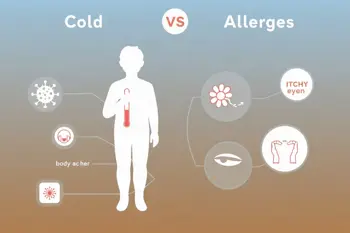
While both conditions frequently involve sneezing and nasal congestion, the qualitative nature of these symptoms often differs. Allergy-related sneezing often manifests in rapid-fire, repetitive bursts, whereas sneezing due to a cold tends to be sporadic 10. Furthermore, ocular symptoms serve as a primary differentiator: itchy, watery eyes are a hallmark of seasonal allergies but are rarely observed in individuals suffering from a common cold 1. When assessing nasal discharge, a clear and thin consistency is frequently associated with allergic rhinitis, while a cold often produces thicker mucus that may change color as the infection progresses 5.
| Feature | Common Cold | Seasonal Allergies |
|---|---|---|
| Primary Cause | Viral Infection | Immune Reaction |
| Onset | Gradual | Immediate (post-exposure) |
| Itchy/Watery Eyes | Rare | Very Common |
| Fever/Body Aches | Occasional | Never |
| Sore Throat | Primary Symptom | Due to post-nasal drip |
| Duration | 7 to 10 Days | Duration of exposure |
Systemic Indicators: Fever and Fatigue
Systemic symptoms provide significant diagnostic clues. A common cold is frequently accompanied by low-grade fevers and generalized body aches, indicators of an active viral struggle within the body 3. In contrast, seasonal allergies do not cause fever or systemic muscle aches 8. Fatigue is another shared symptom, but its origin varies: a cold causes fatigue due to the body fighting an infection, while allergy sufferers often experience exhaustion as a secondary effect of poor sleep quality resulting from severe congestion and nasal blockage 8.
Chronology and Duration of Symptoms
The timeline of symptom development is a reliable indicator for distinguishing these conditions. Cold symptoms typically follow a predictable, gradual trajectory, developing over the course of a few days and generally resolving within a seven-to-ten-day period 7. Allergies, however, do not follow a fixed schedule; symptoms often appear immediately upon exposure to an environmental trigger and will persist for as long as that allergen remains present in the individual's environment 4. If an individual notices that their symptoms improve significantly when staying indoors or away from specific outdoor environments, this provides further evidence of an allergic trigger 9.
Clinical Management and Treatment Differences
Because the mechanisms of the two conditions are distinct, treatment protocols must also differ. Antihistamines are effectively employed to mitigate the immune-driven histamine response associated with allergies, yet these medications provide no therapeutic benefit for a viral cold 8. Colds are generally self-limiting, with management centered on rest, hydration, and over-the-counter symptom relief 8. Given that respiratory illnesses may present outside of expected seasonal patterns, professional medical consultation remains necessary when symptoms do not improve, worsen after a week, or involve significant sinus pain or high fever 8.
Sources
- Texas Health Resources, https://www.texashealth.org/
- Essentia Health, https://www.essentiahealth.org/
- WebMD, https://www.webmd.com/allergies/winter-allergies
- Healthline, https://www.healthline.com/health/allergies/allergies-vs-cold
- American College of Allergy, Asthma, and Immunology, https://acaai.org/allergies/symptoms/cold-or-allergy
- Times of India, https://timesofindia.indiatimes.com/health/cold-allergies-or-flu-doctors-explain-how-indias-changing-weather-is-making-respiratory-illnesses-harder-to-identify/articleshow/132931024.cms
- Penn Medicine, https://www.pennmedicine.org/updates/blogs/health-and-wellness/2019/march/allergies-vs-cold
- Sparta Community Hospital, https://www.spartahospital.com/latest-news/cold-flu-or-just-allergies/
- Centers for Disease Control and Prevention, https://www.cdc.gov/antibiotic-use/colds.html
- Asthma and Allergy Foundation of America, https://www.aafa.org/allergies-or-cold-symptoms/
Authored by 24Trendz team