Natural remedies for dark spots on skin: An objective analysis of efficacy and clinical considerations
Dark spots, clinically categorized as hyperpigmentation, are a widespread dermatological concern resulting from localized overproduction of melanin 1. These spots, which may manifest as post-inflammatory hyperpigmentation (PIH), sun-induced solar lentigines, or hormone-driven melasma, often trigger interest in accessible, natural management strategies 2, 5. Addressing these concerns requires an understanding of how specific compounds influence melanin pathways, as well as an appreciation for the limitations of home-based care compared to professional clinical interventions 4, 6.
The Biological Mechanisms of Hyperpigmentation
Hyperpigmentation occurs when melanocytes-specialized cells in the basal layer of the epidermis-are stimulated to produce excessive amounts of pigment 2, 8. This process is often an adaptive, protective response to environmental or physiological stressors, including ultraviolet (UV) radiation, skin inflammation from acne, or fluctuations in endocrine hormones such as those associated with pregnancy 2, 7. When these melanocytes are triggered, they deposit higher concentrations of melanin into surrounding skin cells, creating visible discoloration 7, 8.
Dermatological literature distinguishes between various forms of hyperpigmentation, as the origin of the spot dictates the success of potential treatments 5. For instance, post-inflammatory hyperpigmentation occurs following trauma or inflammation, such as acne lesions or insect bites, whereas sunspots are the result of cumulative UV exposure 2, 5. Because melasma is typically rooted in hormonal shifts, it is considered deeper and more resistant to superficial topical applications than minor, surface-level sun damage 4, 5.
Evidence-Based Natural Ingredients
Scientific inquiry has identified several botanical and natural compounds that function as depigmenting agents by modulating the melanin pathway 3, 9. A 2018 systematic review published in the Journal of Clinical and Aesthetic Dermatology evaluated 13 natural compounds, highlighting that substances such as azelaic acid, niacinamide, and ascorbic acid (vitamin C) demonstrate verifiable efficacy with fewer side effects than synthetic alternatives like hydroquinone 3. These ingredients operate by inhibiting tyrosinase, the enzyme responsible for melanin synthesis, or by blocking the transfer of melanosomes to the skin surface 3, 9.
Common natural agents and their purported mechanisms include:
- Vitamin C (Ascorbic Acid): Acts as a potent antioxidant that inhibits tyrosinase activity and promotes skin brightening 3, 9.
- Niacinamide (Vitamin B3): Effective at reducing the transfer of melanosomes to keratinocytes without causing irritation 9.
- Licorice Root Extract: Contains glabridin, which assists in dispersing melanin and preventing the formation of new pigmented clusters 3, 9.
- Aloe Vera: Contains aloin, a natural compound that serves as a mild depigmenting agent through consistent application 4, 9.
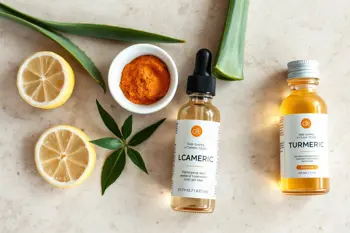
- Turmeric: Utilizes curcumin to inhibit the tyrosinase enzyme, thereby modulating melanin production at the source 3, 9.
The Role of Gentle Exfoliation and Cell Turnover
Exfoliation serves as a secondary approach to managing dark spots by encouraging the shedding of older, hyperpigmented skin cells and promoting the replacement of the epidermis with fresher tissue 6, 9. However, dermatologists emphasize that the goal is to enhance turnover without compromising the skin barrier 6, 7. Over-exfoliation can cause micro-tears and inflammation, which paradoxically exacerbate hyperpigmentation by triggering the skin's inflammatory response, leading to further melanin production 6.
For those utilizing at-home exfoliation, clinicians often suggest mild options such as mandelic or lactic acids, which are better tolerated by sensitive skin types than harsher physical scrubs 6. Furthermore, natural humectants like raw honey may provide gentle exfoliating properties that aid in evening out skin tone when used in a controlled, non-irritating manner 9. Consistent, moderate application is essential, as the results from natural cell-turnover agents are typically gradual and rarely occur overnight 4, 5.
Essential Preventive Measures: The Role of Sun Protection
Regardless of the treatment method selected, dermatologists and medical researchers agree that consistent sun protection is the most critical component of any hyperpigmentation management routine 4, 9. Because UV exposure acts as a primary stimulant for melanocytes, failure to use broad-spectrum sunscreen can effectively reverse the progress of any fading regimen 2, 8. A broad-spectrum SPF 30 or higher is generally recommended to provide the necessary barrier against UVA and UVB rays 4, 9.
Prevention extends beyond sunscreen to include lifestyle habits that minimize inflammation, as chronic irritation or frequent touching of the skin can exacerbate post-inflammatory marks 2, 7. By protecting the skin barrier and maintaining a stable, low-inflammation environment, individuals can prevent the formation of new spots while allowing treatments to address existing discoloration 1, 7.
When Home Remedies Are Insufficient
It is important for individuals to recognize that home-based interventions possess inherent limitations, particularly regarding the depth and chronicity of the pigment 4. While natural remedies may be effective for superficial discolorations, stubborn or deep-seated conditions such as advanced melasma or significant solar lentigines often require professional, clinical intervention 4, 6. Dermatologists may recommend treatments such as professional-grade chemical peels, Q-switched lasers, or LED therapy for cases where topical agents alone provide insufficient results 4, 6.
Patients are advised to consult a qualified dermatologist if dark spots do not respond to consistent home-based care after several months, or if they notice changes in the shape, size, or color of a spot, which could indicate a more serious medical condition 4, 5. A medical evaluation is necessary to rule out underlying pathologies, ensuring that the pigmentation is purely a cosmetic concern rather than a symptom of an endocrine disorder or other systemic health issue 2.
Safety Protocols for At-Home Applications
Safety is a priority when applying natural substances to the face, as even benign ingredients can trigger contact dermatitis or photosensitivity in susceptible individuals 1, 4. A patch test is a standard requirement before widespread application; this involves applying a small amount of the substance to the inner forearm and observing the area for at least 24 hours for signs of redness, itching, or swelling 4, 8. This simple precaution can prevent adverse reactions and help determine which ingredients are compatible with a specific skin profile 4.
Furthermore, the concentration and source of ingredients matters significantly. Users should focus on stabilized formulations or pure, edible-grade ingredients when possible, and should avoid the practice of following unverified social media recipes, which may lack the pH balance required to maintain the skin barrier 7. By adhering to evidence-based protocols and maintaining realistic expectations, individuals can navigate the process of fading dark spots safely and effectively 5, 7.
Sources
- Preventive Medicine Daily - How to Fade Dark Spots Naturally at Home
- MedicineNet - How Can I Remove Dark Spots at Home Naturally
- SANE MD - 12 Remedies That Actually Fade Hyperpigmentation
- Clear Skin - 10 Effective Home Remedies to Remove Dark Spots on the Face Naturally
- BeautyEpic - How To Remove Dark Spots On Face Naturally And Safely
- MindBodyGreen - 3 Natural Ways To Fade Dark Spots At Home
- eHome Remedies - 17 Home Remedies To Remove Dark Spots On Skin
- WellHealthOrganic - Fade Dark Spots Naturally: Dr. Akram’s Clinical Guide
- SkinOptimizer - Effective Natural Skincare for Hyperpigmentation
Authored by 24Trendz team