Warning signs of thyroid cancer: Clinical findings and when evaluation matters
The warning signs of thyroid cancer most often involve a new change in the neck, although many people with thyroid cancer have no noticeable symptoms. A painless lump, voice change, or difficulty swallowing or breathing can occur when a thyroid nodule grows or presses on nearby structures. Most thyroid nodules are benign, so symptoms cannot establish a diagnosis, but a persistent or enlarging neck finding warrants clinical assessment. 1
Neck lump or swelling
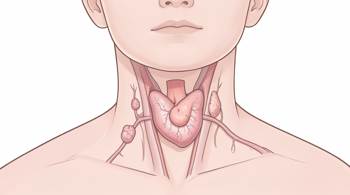
A lump in the front of the neck is the most recognized warning sign associated with thyroid cancer. The growth may be felt through the skin, noticed as swelling, or described as a tighter shirt collar. Thyroid cancer usually develops as a nodule within the gland rather than as uniform enlargement of the entire thyroid. A painless lump is a typical initial presentation, but its presence does not mean cancer is certain because thyroid nodules are common and almost all are benign. 1 3
- A new or growing nodule in the lower front of the neck.
- A firm, hard, or fixed-feeling mass.
- Neck fullness that becomes more noticeable over time.
- A lump accompanied by enlarged lymph nodes.
Voice changes and hoarseness
Persistent hoarseness or another unexplained voice change can occur when a thyroid tumor affects tissues or nerves near the voice box. Memorial Sloan Kettering lists voice changes among the principal symptoms, while clinical references describe hoarseness as a possible effect of pressure from a larger cancer. A temporary change during a respiratory infection has many possible explanations, but a voice problem that continues or progressively worsens should be discussed with a healthcare provider. 1 3
- Increasing hoarseness without an obvious cause.
- A sustained change in pitch, volume, or vocal strength.
- Voice symptoms occurring together with a neck lump.
Swallowing difficulty or throat pressure
Difficulty swallowing, called dysphagia, may develop when a thyroid growth presses on the esophagus or nearby tissues. Some people describe pressure, a sensation of something stuck in the throat, or collars feeling unusually tight. These symptoms can also arise from noncancerous thyroid nodules and other throat conditions, so they are not diagnostic by themselves. Their significance increases when swallowing changes persist or occur alongside a visible or palpable neck mass. 2 5
- Food or liquids becoming harder to swallow.
- A persistent pressure or lump sensation in the throat.
- Swallowing discomfort combined with neck swelling or hoarseness.
Breathing difficulty and persistent cough
A larger thyroid cancer can press on the trachea and make breathing difficult. Coughing may also occur when a tumor affects nearby structures, although a cough is not specific to thyroid cancer and is more often linked with respiratory or other medical conditions. A persistent cough without a clear cold or infection, particularly when combined with a neck lump, hoarseness, or breathing changes, is a symptom that merits medical evaluation rather than self-diagnosis. 3 4
- Breathlessness or a feeling of airway pressure.
- A cough that continues without an identified respiratory cause.
- Breathing or coughing symptoms occurring with progressive neck swelling.
Swollen lymph nodes and neck pain
Thyroid cancer may be associated with enlarged lymph nodes in the neck, particularly when disease has spread to nearby lymphatic tissue. Neck or throat pain is also reported, although pain is less typical than a painless lump. Pain can have many benign causes, including inflammation or bleeding into a noncancerous cyst. A new lymph-node swelling, persistent neck discomfort, or a combination of these findings with a thyroid nodule should be assessed in context by a healthcare professional. 2 5
- Firm or persistent swelling along the side of the neck.
- Neck or throat pain that does not resolve.
- Swelling or pain occurring with voice, swallowing, or breathing changes.
Why symptoms may be absent
Many thyroid cancers produce no symptoms in their early stages and are found during a neck examination or imaging performed for an unrelated condition. This explains why the absence of pain or visible swelling does not exclude thyroid cancer. Most tumors grow slowly, although some types can be aggressive. The overall clinical picture depends on the nodule’s size, growth pattern, location, and relationship to nearby lymph nodes and structures. 1 2 4
- Incidental findings may appear on ultrasound, CT, or MRI imaging.
- Thyroid function can remain normal even when a nodule requires investigation.
- Most nodules are not malignant, but suspicious features require further assessment.
Features that influence medical assessment
Doctors consider several characteristics when evaluating a thyroid nodule. A nodule is more concerning when it is solid, hard, rapidly growing, or associated with enlarged neck lymph nodes. A nonfunctioning, or “cold,” nodule is evaluated differently from a hormone-producing “hot” nodule, which is almost never cancerous according to the Merck Manual. A history of radiation treatment involving the head, neck, or chest during childhood and certain inherited conditions can also affect risk assessment. 3
- Physical examination of the thyroid and surrounding lymph nodes.
- Thyroid-function blood tests, commonly including TSH and T4.
- Ultrasound to characterize the nodule and nearby tissues.
- Fine-needle aspiration biopsy when imaging or examination is suspicious.
When to arrange an evaluation
Any new neck lump, enlarging thyroid nodule, persistent hoarseness, swallowing difficulty, unexplained neck swelling, or breathing problem should be discussed with a healthcare provider. Evaluation is important because the same symptoms can result from benign nodules, autoimmune thyroid disease, infection, cysts, or other throat and neck conditions. A clinician may combine examination, blood testing, ultrasound, and biopsy findings rather than relying on symptoms alone. 1 5
- Record when the change began and whether it is growing.
- Note related voice, swallowing, breathing, cough, pain, or lymph-node symptoms.
- Provide information about prior radiation exposure and relevant family history.
- Breathing difficulty or rapidly worsening airway symptoms require urgent medical attention.
Sources
- Memorial Sloan Kettering Cancer Center, “Thyroid Cancer: Symptoms, Causes, Risk Factors, and Nodule Biopsy”
- Memorial Health System, “Thyroid cancer”
- Merck Manual Consumer Version, “Thyroid Cancer”
- Penn State Health News, “The Medical Minute: The thyroid cancer symptoms you shouldn’t ignore”
- CommonSpirit Health, “Understanding Thyroid Cancer: Signs, Diagnosis, and Care”
Authored by 24Trendz team