Best knee pain relief solutions of 2026: Evidence, options, and safety considerations
What the 2026 evidence emphasizes
Current evidence does not identify one universal knee pain solution. Treatment depends on the cause, including osteoarthritis, injury, instability, inflammation, or recovery after surgery. For knee osteoarthritis, major clinical guidance consistently places therapeutic exercise among the first-line approaches, while medicines, braces, injections, and surgery are selected according to symptom severity and individual risk. 1 2 4
A 2026 summary of a major review of 217 trials involving more than 15,000 participants reported that aerobic activities such as walking, cycling, and swimming produced particularly strong improvements in pain, mobility, walking ability, and quality of life. Strength, aquatic, and neuromuscular exercise remain relevant, but aerobic activity was identified as a central component rather than a replacement for all other forms of rehabilitation. 19
Exercise and weight management
Structured exercise can improve pain and physical function even when movement initially feels uncomfortable. Programs may include strengthening, aerobic conditioning, aquatic exercise, and neuromuscular work. NICE recommends therapeutic exercise for osteoarthritis, while the American Academy of Orthopaedic Surgeons and Cochrane identify exercise as an evidence-supported method for improving symptoms and function. Consistency, gradual progression, and adaptation to ability are more important than choosing a single branded routine. 1 3 6
For adults with overweight or obesity and knee osteoarthritis, weight reduction can lessen pain and improve physical function. Guidance from the American College of Rheumatology and NICE supports combining weight management with exercise when appropriate, because the combination may provide more benefit than either approach alone. Eligibility is personal rather than numerical in this context, and weight-related care should account for mobility, medical conditions, nutrition, and sustainable activity. 2 3
Topical and oral pain medicines
Topical nonsteroidal anti-inflammatory drugs, particularly diclofenac formulations, are recommended for many adults with knee osteoarthritis because they can reduce pain while producing less whole-body exposure than oral NSAIDs. They still require label compliance and awareness of skin reactions, medication interactions, and contraindications. A topical product may also provide only localized relief and does not correct instability, cartilage loss, or an underlying injury. 2 10
Oral NSAIDs may provide short-term relief, but their risks include gastrointestinal irritation, kidney effects, elevated blood pressure, and cardiovascular complications. The FDA advises using the lowest effective dose for the shortest necessary duration. Acetaminophen generally provides less osteoarthritis pain relief than NSAIDs, and exceeding labeled doses can cause serious liver injury. Medication selection should therefore consider age, medical history, concurrent medicines, and clinician guidance. 7 10
Braces, cold therapy, heat, and electrical devices
Braces and assistive devices can help selected people with instability, malalignment, mobility limitations, or activity-related discomfort. A 2026 brace review described several categories, including compression sleeves, hinged braces, patella straps, and unloader braces. The reported leading examples included the Bauerfeind GenuTrain, Modvel Compression Knee Brace, and Bodyprox Patella Tendon Strap, but fit, intended use, comfort, and the underlying diagnosis matter more than a category label. 15
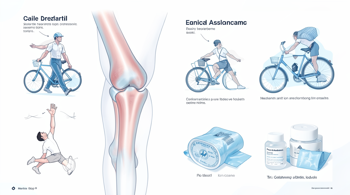
Cold wraps are commonly considered for swelling, sports injuries, and postsurgical recovery, while heat sleeves and vibration devices are used for stiffness and everyday comfort. TENS units provide drug-free electrical stimulation with adjustable modes, and red-light devices are marketed for targeted home use, although device quality and supporting evidence vary. Research summaries describe reusable gel wraps, heated massagers, TENS machines, and red-light pads as distinct technologies rather than interchangeable treatments. 16 17 18 21
Injections and surgical treatment
Intra-articular corticosteroid injections may provide short-term relief for knee osteoarthritis, especially during a painful flare, but benefits are temporary and repeated injections require a clinician’s risk assessment. Hyaluronic-acid injections are not routinely recommended by several major guidelines because average benefits are small or inconsistent compared with placebo. Injection decisions should account for diagnosis, symptom duration, previous treatment, and the possibility that another condition is causing the pain. 2 11
Total knee replacement is reserved for substantial, persistent pain and functional limitation when nonsurgical care has not provided adequate improvement. It is effective for appropriately selected patients but remains major surgery, with recovery demands, rehabilitation requirements, and potential complications. The American Association of Hip and Knee Surgeons describes replacement as an individualized option rather than a routine response to an imaging finding or a short episode of knee discomfort. 12
Safety, selection, and medical assessment
Product selection should begin with the symptom pattern and intended purpose. A compression sleeve is not equivalent to an unloader brace, an ice wrap is not equivalent to active cold-compression equipment, and a TENS device is not a substitute for rehabilitation. Reviews of recovery aids also identify practical limitations such as bulky sizing, difficult setup, cold intensity, battery dependence, and the need for correct exercise technique. These maintenance and usability issues can affect whether a device is used safely and consistently. 13 17
Urgent assessment is appropriate after severe injury, inability to bear weight, or other concerning symptoms. For persistent pain, swelling, instability, or declining mobility, clinical evaluation can distinguish osteoarthritis from ligament injury, infection, inflammatory disease, or another cause. Opioids are generally not preferred for chronic osteoarthritis because dependence risks and long-term harms usually outweigh limited benefits. Self-care can support treatment, but it should not delay assessment when function is deteriorating. 4 8 9
Sources
- American Academy of Orthopaedic Surgeons
- American College of Rheumatology
- National Institute for Health and Care Excellence
- National Institute of Arthritis and Musculoskeletal and Skin Diseases
- Centers for Disease Control and Prevention
- Cochrane
- U.S. Food and Drug Administration
- Mayo Clinic
- National Health Service
- American Academy of Family Physicians
- Arthritis Foundation
- American Association of Hip and Knee Surgeons
- Knee Workbook
- Punlite
- ModelRec
- IMS Orthopedics, TENS units review
- The Consumer’s Guide
- Cybernews
- ScienceDaily
- Knowridge
- IMS Orthopedics, heat therapy review
Authored by 24Trendz team