Early warning signs of colon cancer: A clinical guide to symptoms, screening, and evaluation
What early warning signs can indicate
Early colorectal cancer frequently produces no noticeable symptoms, so the absence of warning signs does not rule out disease. When symptoms do occur, they may be gradual, subtle, or mistaken for hemorrhoids, an infection, irritable bowel syndrome, inflammatory bowel disease, or other digestive problems. Cleveland Clinic identifies persistent belly pain and blood in or on stool among common symptoms, while Fred Hutch emphasizes that many cases remain silent until the disease is more advanced. 12
Symptoms alone cannot diagnose colon cancer. Their significance depends on duration, severity, medical history, and whether several changes occur together. Fred Hutch advises discussing unexplained weight loss, ongoing abdominal symptoms, persistent bowel changes, rectal bleeding, fatigue, or anemia with a primary care provider. These findings are often caused by noncancerous conditions, but a clinical assessment can help determine the appropriate testing. 2
Blood in the stool or rectal bleeding
Blood in or on the stool, blood on toilet paper, or bleeding from the rectum is a possible warning sign. The color can vary: bright red blood may reflect bleeding lower in the digestive tract, while very dark or black, tarry stool can indicate blood that has traveled farther through the digestive system. Washington University lists bright red blood, dark clots, and black stools among findings that warrant medical attention, although hemorrhoids and other conditions can also cause bleeding. 4
Bleeding may be visible or hidden and can occur intermittently, which makes it easy to minimize. UC San Diego Health notes that blood in the stool is commonly attributed to hemorrhoids, but consistent or unexplained bleeding should still be evaluated. A clinician may consider the pattern of bleeding, stool appearance, medication use, age, family history, and other symptoms when deciding whether laboratory testing, stool testing, colonoscopy, or another evaluation is appropriate. 3
Changes in bowel habits
A bowel pattern that changes and persists can include constipation, diarrhea, alternating constipation and diarrhea, increased or decreased frequency, narrower stools, or a sensation that the bowel has not emptied completely. Fred Hutch describes a change lasting more than a few days as a reason to contact a primary care provider, especially when the change is unusual for the individual. Stool shape by itself is not diagnostic, but a sustained change deserves attention. 2
A persistent urge to have a bowel movement, even after using the bathroom, is another reported symptom. Washington University includes incomplete emptying and altered stool shape among possible colorectal cancer signs. Similar symptoms can arise from infection, dietary changes, medication effects, hemorrhoids, inflammatory bowel disease, or functional bowel disorders. The important clinical features are persistence, progression, recurrence, and association with bleeding, pain, anemia, or unintentional weight loss. 4
Abdominal discomfort, bloating, or cramping
Colon cancer may be associated with ongoing abdominal pain, cramps, bloating, fullness, or discomfort that does not resolve. These symptoms can be difficult to interpret because gas, constipation, food intolerance, infection, and inflammatory conditions can produce similar sensations. Fred Hutch specifically identifies ongoing bloating, cramping, or abdominal pain as symptoms to report. The location and character of discomfort, along with changes in bowel function, can help guide a medical evaluation. 2
Persistent abdominal symptoms are more concerning when they are new, unexplained, worsening, or accompanied by blood in the stool or weight loss. MD Anderson reports that constipation, diarrhea, and abdominal pain may occur with colorectal cancer but can also reflect Crohn’s disease, irritable bowel syndrome, or a stomach virus. Symptoms lasting longer than two weeks, particularly with bloody stool, abdominal pain, or unintentional weight loss, merit discussion with a healthcare professional. 5
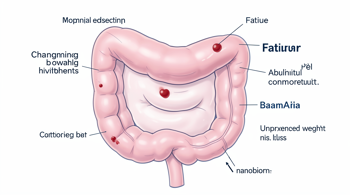
Fatigue, weakness, anemia, and weight loss
Unexplained fatigue or weakness can occur when slow blood loss contributes to anemia, including iron-deficiency anemia. Fred Hutch lists constant tiredness, weakness, and anemia without a known cause among symptoms associated with colon cancer. Anemia is not proof of cancer and may result from nutritional deficiency, menstrual blood loss, chronic disease, or other bleeding. Nevertheless, unexplained anemia requires evaluation of its cause rather than being treated as an isolated laboratory result. 2
Unintentional weight loss is another possible warning sign, particularly when it occurs with bowel changes, abdominal discomfort, fatigue, or reduced appetite. Cleveland Clinic and Washington University both identify unexplained weight loss among possible colorectal cancer symptoms. Weight change can also result from infection, metabolic disease, stress, medication effects, or other cancers. The relevant concern is weight loss without a deliberate change in diet or activity, especially when it is persistent or accompanied by other unexplained findings. 14
Why screening matters when symptoms are absent
Screening is intended for people who do not have symptoms and can identify colorectal cancer earlier or detect polyps before they become cancerous. Cleveland Clinic explains that many colorectal cancers begin as polyps in the inner lining of the colon or rectum and that colonoscopy can detect and remove precancerous growths. This preventive role means screening should not be postponed until symptoms appear, because early disease may be clinically silent. 1
For average-risk adults in the United States, the U.S. Preventive Services Task Force recommends routine colorectal cancer screening from ages 45 through 75. The American Academy of Family Physicians describes stool-based tests, including fecal immunochemical testing, and direct-visualization tests as screening options. People with a first-degree relative affected by colorectal cancer or polyps, inflammatory bowel disease, hereditary cancer syndromes, prior abdominal or pelvic radiation, or a personal history of polyps may need an earlier or more intensive plan. 8
How symptoms are evaluated
Medical evaluation generally begins with a history of symptom timing, stool changes, bleeding, abdominal discomfort, weight change, fatigue, medications, and personal or family history. A clinician may perform a physical examination and order blood or stool tests, then determine whether colonoscopy or another examination is appropriate. Johns Hopkins notes that screening tests can identify cancer and noncancerous causes of symptoms, while Cleveland Clinic describes colonoscopy as a way to detect both polyps and cancerous growths. 71
Symptoms that persist, recur, worsen, or appear alongside rectal bleeding, anemia, significant fatigue, or unintentional weight loss should be communicated to a healthcare professional. The presence of a symptom does not establish a cancer diagnosis, and many people with these complaints have another condition. Conversely, no symptoms does not guarantee that the colon is healthy. Screening eligibility and diagnostic testing are separate decisions, so a person with symptoms may require assessment regardless of age-based screening status. 35
Sources
- Cleveland Clinic, “Colon Cancer (Colorectal Cancer): Symptoms, Causes & Treatment”
- Fred Hutch, “Colon Cancer Symptoms and Signs”
- UC San Diego Health, “5 Warning Signs of Colorectal Cancer You Shouldn’t Ignore”
- Washington University in St. Louis, “Colorectal cancer: Know the signs”
- UT MD Anderson Cancer Center, “How I knew I had colorectal cancer: Six survivors share their symptoms”
- LCMC Health, “Reduce your risk: Colon cancer screening and early detection”
- Johns Hopkins Medicine, “Colon Cancer Screening: What You Need to Know”
- American Academy of Family Physicians, “Colorectal Cancer Screening and Prevention”
Authored by 24Trendz team