Symptoms of thyroid nodules and enlargement: Clinical signs and evaluation
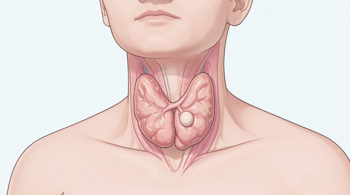
Symptoms of thyroid nodules and enlargement are often absent, but a visible lump, neck fullness, pressure, swallowing difficulty, breathing difficulty, cough, or hoarseness can occur when thyroid tissue becomes larger or affects nearby structures. Nodules are common, particularly with increasing age, and many are discovered during a physical examination or imaging performed for another reason. Most are benign, although symptoms and clinical findings help determine whether further assessment is appropriate. 1
When thyroid nodules cause no symptoms
Most thyroid nodules are asymptomatic. Palpation identifies nodules in approximately 5% of middle-aged and older patients, while ultrasound and autopsy studies suggest that nodules may be present in approximately 50% of older adults. This difference reflects the fact that many nodules are too small to feel and are identified incidentally on imaging of the head or neck. An absence of symptoms does not by itself establish whether a nodule is benign or malignant. 1
Simple nontoxic goiter is a noncancerous enlargement that may be diffuse or nodular. In this condition, thyroid hormone function is generally normal, and the main finding may be an obviously enlarged, nontender thyroid. Enlargement is reported more often around puberty, pregnancy, and menopause, although causes vary. Iodine deficiency remains the most common cause of goiter worldwide, while medication effects, autoimmune disease, and thyroid hormone production defects can also contribute. 2
Visible neck changes and local pressure
A thyroid nodule or goiter may appear as a lump or swelling at the front of the lower neck. The enlargement can become more noticeable when swallowing because the thyroid moves with the structures of the neck. Some people describe fullness, tightness, pressure, or discomfort rather than a distinct lump. The size and position of the enlargement matter, because a relatively small lesion in a confined location may produce symptoms while a larger one remains unnoticed. 3
Local compression can affect swallowing, breathing, and the sensation of space in the throat. Larger goiters or nodules may produce difficulty swallowing, a choking sensation, cough, or breathing discomfort, particularly when lying down. These effects do not prove cancer, since benign enlargement can also compress surrounding structures. However, compressive symptoms are clinically important and are associated with a higher risk that a nodule requires careful evaluation. 1
Voice, cough, and pain symptoms
Hoarseness and other voice changes can occur when thyroid enlargement affects nearby tissues involved in voice production. Persistent hoarseness is more concerning than a brief voice change associated with a minor illness, especially when it accompanies a growing neck mass. Cough or repeated throat-clearing may also result from pressure on the airway or throat. The presence, duration, and progression of these symptoms are relevant parts of a clinical history. 4
Thyroid nodules are usually painless, but pain or tenderness can occur. According to clinical guidance, pain may suggest thyroiditis or bleeding into a thyroid cyst. Sudden painful enlargement therefore has a different possible explanation from a slowly growing, painless lump. Pain alone does not determine whether a nodule is cancerous, but new pain, rapid swelling, or tenderness should be documented and assessed alongside examination findings and thyroid testing. 1
Symptoms caused by altered thyroid hormone levels
Some nodules produce excess thyroid hormone, while many do not. When hormone production is increased, symptoms can resemble hyperthyroidism, including palpitations, a rapid or irregular heartbeat, heat intolerance, sweating, nervousness, tremor, and unexplained weight loss. These symptoms reflect the effects of excess thyroid hormone rather than the physical size of the nodule. A person can therefore have significant hormone-related symptoms without substantial neck swelling. 1
Nodules that do not produce excess hormone commonly cause no systemic symptoms, and thyroid blood tests may remain normal. A goiter can also exist without either hyperthyroidism or hypothyroidism. Conversely, enlargement associated with thyroid inflammation or autoimmune disease may occur alongside broader thyroid dysfunction. Symptoms such as fatigue, weight change, or changes in temperature tolerance are not specific enough to identify a nodule, so laboratory testing is used to assess thyroid function. 5
Warning signs that warrant medical assessment
New or rapidly enlarging neck swelling, persistent hoarseness, trouble swallowing, or trouble breathing should receive prompt medical assessment. Difficulty breathing that worsens when lying down, a choking sensation, or rapidly increasing pressure may indicate meaningful airway or esophageal compression. These symptoms can occur with benign disease, but compressive symptoms and certain clinical features increase concern and should not be interpreted solely by appearance or by whether the mass is painful. 4
Clinical evaluation is particularly important when a nodule changes in size, develops new symptoms, or occurs with suspicious lymph nodes or relevant personal and family history. Rapid growth can have several explanations, including cyst bleeding, but it remains a reason for assessment. The absence of symptoms does not exclude malignancy, while symptoms alone cannot confirm it. Diagnosis depends on the combination of history, physical examination, blood tests, and imaging. 9
How clinicians evaluate symptoms and enlargement
Initial evaluation generally includes a personal and family history, physical examination, thyroid function testing, and ultrasound of the neck. TSH is central to the initial laboratory assessment, with other tests considered according to the clinical situation, including free T4, free T3, thyroid antibodies, thyroid receptor antibodies, and sometimes calcitonin. Ultrasound describes the nodule’s size, location, composition, margins, echogenicity, shape, and calcifications. 6
Fine-needle aspiration is not automatically required for every nodule. Guideline-based decisions consider ultrasound risk category, size, clinical factors, and laboratory findings. The European Thyroid Association summary lists biopsy thresholds based on EU-TIRADS classification: greater than 10 millimeters for EU-TIRADS 5, greater than 15 millimeters for EU-TIRADS 4, and greater than 20 millimeters for EU-TIRADS 3. Management may include surveillance, repeat sampling, molecular testing, ablation, radioactive iodine, or surgery, depending on findings. 6
What symptom patterns can mean
A painless, stable lump with normal thyroid function may represent a benign nodule or nontoxic goiter, but clinical assessment is still needed to characterize it. A pressure sensation, swallowing difficulty, cough, or breathing problem points toward a structural effect of enlargement. Palpitations, tremor, sweating, heat intolerance, and weight loss point instead toward possible hormone excess. These patterns can overlap, so symptoms should be considered together rather than used as a self-diagnosis. 2
Observation is one recognized management approach for selected low-risk or small nodules. Memorial Sloan Kettering describes ultrasound monitoring schedules that may occur every six months for two years for some small high-risk nodules, followed by annual studies, while lower-risk nodules may be observed annually for several years and then every other year. The appropriate schedule depends on ultrasound findings, cytology, size, and clinical context rather than symptoms alone. 7
Key points for interpreting symptoms
- Many nodules and uncomplicated goiters cause no symptoms.
- A visible lower-neck lump, fullness, or swelling can indicate thyroid enlargement.
- Swallowing difficulty, breathing difficulty, cough, choking, or hoarseness may reflect compression.
- Pain can occur with thyroiditis or bleeding into a cyst.
- Palpitations, tremor, sweating, heat intolerance, and weight loss may indicate excess hormone production.
- Symptoms cannot determine whether a nodule is benign or malignant without clinical evaluation.
Thyroid nodules and enlargement therefore require interpretation based on both symptoms and objective findings. Ultrasound and thyroid function tests help distinguish structural enlargement from hormone-related disease, while biopsy or continued surveillance is selected according to risk and size. Persistent or progressive compressive symptoms, rapid growth, or voice changes deserve particular attention because they may indicate a need for more detailed evaluation. 8
Sources
- Merck Manual Professional Edition, “Approach to the Patient With a Thyroid Nodule”
- Merck Manual Professional Edition, “Simple Nontoxic Goiter”
- Saint John’s Health Center, “Thyroid Nodule Symptoms, Diagnosis, and Treatment”
- Lake County ENT, “Goiter, Thyroid Enlargement”
- Park Avenue Endocrinology, “Thyroid Nodule Symptoms: Top Things to Know”
- Medscape, “Thyroid Nodules: ETA 2023 Guideline Summary”
- Memorial Sloan Kettering Cancer Center, “Thyroid Nodule Assessment Program, Monitoring, and Biopsy”
- UC Davis Health, “Thyroid Nodule Ablation: What You Need to Know”
- Clayman Thyroid Center, “Change in Thyroid Nodule: Why You Should Know”
Authored by 24Trendz team