How to recognize possible warning signs of a heart attack: Clinical guidance for identifying symptoms
Why symptom recognition matters
A heart attack, also called a myocardial infarction, occurs when blood flow through a coronary artery is suddenly reduced or blocked. Without enough oxygen-rich blood, part of the heart muscle can begin to die, making the condition a medical emergency in which the speed of evaluation and treatment can affect the amount of heart damage. 1
Symptoms are not identical for everyone. Some heart attacks begin suddenly with intense discomfort, while others develop gradually with mild symptoms that come and go. Mass General Brigham reports that nearly half of people who experience a heart attack do not recognize it at the time, which makes unfamiliar or subtle symptoms important to take seriously. 2
Chest discomfort and pressure
The most recognizable warning sign is discomfort in the center or left side of the chest. It may feel like pressure, squeezing, fullness, heaviness, aching, tightness, or pain rather than a sharp sensation. The discomfort can last several minutes, disappear, and return in waves, and a life-threatening heart attack may begin with only mild symptoms. 7
Chest symptoms can occur alone or alongside other signs, and the absence of dramatic pain does not rule out a heart attack. Cleveland Clinic describes a pattern in which symptoms wax and wane before becoming more serious, sometimes leading a person to mistake the sensation for indigestion or another less dangerous problem. 4
Pain in other parts of the body
Heart-related discomfort may extend beyond the chest. Possible locations include one or both arms, the shoulders, back, neck, jaw, or upper abdomen. The discomfort may be continuous or intermittent, and it may occur with chest pressure or instead of it. 2
Discomfort in the jaw, back, stomach, or arm can be difficult to connect with the heart because those sensations have many possible causes. MedlinePlus and other clinical references describe radiating discomfort as a recognized heart-attack symptom, so a new or unexplained combination of upper-body discomfort and breathing or stomach symptoms warrants emergency assessment. 3
Breathing, sweating, and stomach symptoms
Shortness of breath is a possible warning sign with or without chest discomfort. It can appear during ordinary activities or while resting. Other recognized symptoms include cold sweating, profuse sweating, nausea, vomiting, and a feeling of indigestion. These signs may accompany chest symptoms or appear as the main problem. 1
Nausea, abdominal pain, cramping, or indigestion-like discomfort may be particularly easy to dismiss. Mass General Brigham identifies nausea and abdominal symptoms among possible signs in women, while Cleveland Clinic notes that nausea and heavy sweating can occur even when chest discomfort is not prominent. 2
Less obvious changes to notice
Other possible warning signs include unusual fatigue, weakness, lightheadedness, dizziness, or feeling faint. A person may describe a sudden sense that something is not right, reduced ability to perform usual activities, or unexplained tiredness. These symptoms are not specific to heart attacks, but their new onset or combination with other warning signs should not be ignored. 4
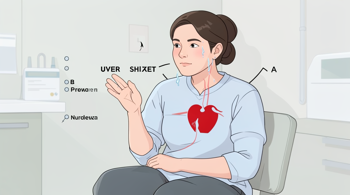
Heart attacks can present differently according to age, sex, and underlying medical conditions. Women, older adults, and people with diabetes may have less typical symptoms, including fatigue, nausea, shortness of breath, or indigestion-like discomfort with little or no chest pain. Symptom variation means that a person should not use the absence of a movie-style collapse or severe chest pain as reassurance. 6
What to do when a heart attack is possible
If symptoms suggest a heart attack, call 911 or the local emergency number and describe the symptoms clearly. Emergency medical teams can begin assessment and treatment while transporting the person, and driving independently can delay care or create danger if the person becomes worse. The person should rest and should not be left alone while help is being arranged. 1
After emergency services have been contacted, ask whether chewing and swallowing aspirin is appropriate. Mass General Brigham advises this only when the person is not allergic, while Merck Manual also describes aspirin as part of the initial response to suspected acute coronary syndrome. A person who has prescribed nitroglycerin for coronary artery disease should use it according to the cardiologist's instructions, not someone else's prescription. 5
When symptoms become cardiac arrest
A person who becomes unresponsive and is not breathing normally may be experiencing cardiac arrest rather than only warning symptoms. This is a separate, immediately life-threatening event requiring emergency services, cardiopulmonary resuscitation, and an automated external defibrillator if one is available. The distinction matters because a conscious person with possible heart-attack symptoms and an unresponsive person require different responses. 3
Medical professionals diagnose suspected heart attacks using tools such as an electrocardiogram and blood tests that measure substances released when heart muscle is injured. Symptoms alone cannot confirm or exclude a heart attack. Because discomfort may be mild, intermittent, or atypical, clinical evaluation is safer than attempting to determine the cause at home. 5
Risk context and symptom patterns
Heart attacks commonly result from a clot forming on plaque inside a coronary artery, although reduced blood flow can also occur through other mechanisms. Risk factors described in the research include smoking, high blood pressure, high cholesterol, diabetes, excess weight, physical inactivity, and an unhealthy diet. These factors increase concern but do not determine whether a particular episode is a heart attack. 1
Some early warning symptoms may appear hours, days, or weeks beforehand, including recurring chest discomfort, unusual fatigue, shortness of breath during usual activities, nausea, or a general sense of feeling unwell. Such symptoms can have noncardiac explanations, but recurring or worsening episodes should be discussed with a clinician, especially when multiple warning signs occur together. 4
Sources
- Cleveland Clinic, Heart Attack: Symptoms, Causes & Treatment
- Mass General Brigham, Heart Attack Warning Signs
- Harvard Health Publishing, Heart Attack: Myocardial Infarction
- Cleveland Clinic, What Are Early Warning Signs of a Heart Attack?
- Merck Manual Consumer Version, Acute Coronary Syndromes
- Cleveland Clinic, What Does a Heart Attack Feel Like?
- Heart Foundation Australia, Five Warning Signs of a Heart Attack
Authored by 24Trendz team