Warning signs of PCOS: A clinical guide to symptoms and evaluation
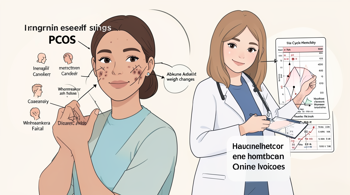
Warning signs of PCOS often include irregular periods, persistent acne, unwanted facial or body hair, scalp hair thinning, weight-related changes, and difficulty becoming pregnant. These features do not appear in every person, and any single symptom can have other explanations, so the significance usually lies in the overall pattern and clinical evaluation. 1
Menstrual changes are a central warning sign
Irregular, infrequent, or absent menstrual periods are among the most recognizable signs associated with PCOS. Ovulation may occur less often or unpredictably, leading to cycles that are widely spaced or missing altogether. Some people instead experience unusually heavy or prolonged bleeding when a period occurs. A change from previously regular cycles, particularly when it persists, is relevant information for a healthcare professional assessing possible ovulatory dysfunction. 2
Menstrual irregularity alone does not establish PCOS. Stress, pregnancy, thyroid disorders, changes in body weight, certain medications, and other reproductive or endocrine conditions can affect cycles. Clinical assessment generally considers menstrual history alongside androgen-related symptoms, examination findings, laboratory testing, and, when appropriate, pelvic imaging. The pattern may begin during adolescence or become more apparent later in adulthood. 3
Changes in hair, skin, and androgen activity
Higher androgen activity can produce coarse, dark hair on areas such as the chin, upper lip, chest, abdomen, or other parts of the body. This pattern is called hirsutism. PCOS may also be associated with persistent or deep acne, oily skin, and thinning hair at the scalp, including a widening part or a male-pattern distribution. These changes can develop gradually and vary substantially in severity. 4
Androgen-related signs may be visible even when an ultrasound does not show polycystic-appearing ovaries. Conversely, a scan showing multiple small follicles does not by itself prove that PCOS is present. The follicles are immature egg-containing structures rather than necessarily dangerous ovarian cysts, and the condition is defined by a broader hormonal and ovulatory pattern. Rapid, pronounced androgen-related changes require medical assessment because other causes must be excluded. 5
Weight and metabolic clues
Weight gain or difficulty managing weight is commonly reported in PCOS, although PCOS can occur in people of different body sizes. Insulin resistance is frequently associated with the condition and may contribute to higher insulin levels, altered ovulation, and increased androgen production. Weight changes centered around the abdomen, strong hunger or sugar cravings, and difficulty losing weight may be relevant when considered with cycle or androgen symptoms, but they are not diagnostic on their own. 6
Dark, thickened, velvety skin in body folds, especially around the neck, underarms, or groin, may be acanthosis nigricans. This finding can be associated with insulin resistance and is a reason to discuss metabolic health with a clinician. PCOS is also linked with higher risks of prediabetes, type 2 diabetes, abnormal cholesterol, high blood pressure, fatty liver disease, and sleep apnea. These associations support ongoing health monitoring after diagnosis. 2
Fertility and ovulation concerns
Difficulty becoming pregnant can be an early clue because irregular ovulation reduces the number of predictable opportunities for conception. PCOS is recognized as a major cause of ovulatory infertility, but infertility has many possible causes involving either partner. A fertility evaluation may therefore examine menstrual patterns, ovulation, hormone levels, reproductive anatomy, and other relevant factors rather than assigning the cause to PCOS from symptoms alone. 7
A person does not need to be trying to conceive to warrant assessment. Infrequent ovulation can affect menstrual health even when pregnancy is not an immediate goal, and untreated metabolic risks may continue independently of fertility plans. Medical discussions can be tailored to priorities such as cycle regulation, acne or hair management, metabolic screening, or future reproductive planning. Symptoms may change over time, so earlier records can help establish the pattern. 8
How clinicians evaluate possible PCOS
The widely used Rotterdam approach supports diagnosis when at least two of three features are present after other causes have been excluded: ovulatory dysfunction, clinical or laboratory evidence of androgen excess, and polycystic ovarian morphology on ultrasound. This means a person may have PCOS without visible polycystic-appearing ovaries, or without every commonly described symptom. Diagnosis is based on the complete clinical picture rather than a single blood test or scan. 5
Evaluation commonly includes a detailed history of cycle timing, bleeding, acne, hair growth, scalp hair changes, weight, medications, and pregnancy goals. A physical examination and blood tests may assess hormone levels and related health concerns, while ultrasound may be used when clinically appropriate. Other explanations for irregular periods or androgen-related symptoms must be considered, including conditions that can produce similar findings. 3
When a medical assessment is appropriate
Medical evaluation is appropriate when periods are persistently irregular, absent, unusually heavy, or changing without a clear explanation. Assessment is also warranted for new or worsening facial hair, significant acne, scalp hair loss, unexplained weight changes, darkened skin folds, or difficulty becoming pregnant. A cluster of symptoms is more suggestive than one isolated feature, but only a qualified healthcare professional can determine whether PCOS or another condition is responsible. 6
PCOS is a lifelong hormonal and metabolic condition that can affect reproductive health, skin, hair, weight, and longer-term metabolic risk. Its symptoms and severity vary, and not everyone with the condition has ovarian cysts or the same visible signs. Keeping a record of periods and symptom changes can provide useful context during evaluation, while diagnosis should be followed by individualized monitoring based on symptoms, health risks, and reproductive goals. 1
Sources
- Cedars-Sinai, Understanding Polyendocrine Metabolic Ovarian Syndrome
- MSD Manual Consumer Version, Polyendocrine Metabolic Ovarian Syndrome
- Acibadem Hospitals Group, PCOS Symptoms: Causes and When to Seek Care
- MNT, First Signs of PCOS: Early Symptoms Every Woman Should Know
- MSD Manual Professional Edition, Polyendocrine Metabolic Ovarian Syndrome
- Office on Women’s Health, Polycystic Ovary Syndrome
- NICHD, Polycystic Ovary Syndrome
- Mayo Clinic, PCOS Symptoms and Causes
Authored by 24Trendz team