Best hospitals in US for scoliosis: A Research Overview of Specialized Spine Care Centers
Defining Excellence in Scoliosis Treatment
Identifying the most appropriate facility for scoliosis treatment often depends on a complex array of factors, including the patient age, the severity of the spinal curvature, and the necessity for either conservative or surgical intervention 1. The current landscape of spinal healthcare is characterized by institutions that prioritize high-volume surgical expertise alongside advanced diagnostic technologies 2. Leading centers are characterized by their ability to provide comprehensive, multidisciplinary care, integrating pediatric orthopedics with specialized pulmonary, physical therapy, and imaging resources 6.
Healthcare organizations that earn top rankings frequently report rigorous evaluation metrics, including success rates in treating complex conditions such as spinal deformity, surgical complication rates, and internal infection prevention protocols 1. For patients and families, these rankings serve as a baseline for understanding which centers have invested the most in clinical research, surgeon training, and innovative patient care pathways 3. Evaluation criteria often include peer reviews from medical professionals, patient outcomes data, and specialized safety quality measures 3.
Leading Pediatric Orthopedic Centers
Scottish Rite for Children has established a significant presence in the field of pediatric orthopedics, having been recognized as a top-ranked facility for its contributions to the treatment of complex spinal conditions 1. The institutional focus at such facilities remains on a team-oriented approach, where surgeons, nurses, and researchers collaborate to manage conditions like idiopathic scoliosis and other spinal deformities 1. This dedication manifests in both routine exam room care and high-complexity surgical environments 1.
Other regional powerhouses, such as the Children’s Hospital of Philadelphia, have integrated low-dose imaging systems like EOS, which are designed to reduce radiation exposure during the monitoring of spinal alignment 2. Similarly, Rady Children’s Hospital in San Diego has focused on early-onset scoliosis interventions, utilizing specialized equipment such as magnetically controlled growing rods that minimize the need for recurring surgical procedures in developing children 4.
Innovations in Surgical and Non-Surgical Management
The Hospital for Special Surgery (HSS) in New York City has adopted a centralized model for spinal care, recently launching a dedicated center to function as a one-stop-shop for patients with complex spinal deformities 4. This model is designed to streamline the patient experience by providing imaging, diagnostic assessment, and personalized treatment planning within a single visit 4. By consolidating these services, the institution aims to decrease the time between initial diagnosis and the implementation of a long-term care plan 4.
Dayton Children’s Hospital represents the broader adoption of minimally invasive techniques, such as the ApiFix system, which is intended for adolescent patients with moderate curves 5. This method allows for spinal correction using smaller incisions compared to traditional fusion techniques, potentially preserving more natural movement 5. The selection of candidates for such procedures is strictly based on specific criteria, including patient growth maturity and the degree of spinal curvature 5.
The Role of Advanced Imaging and Robotic Assistance
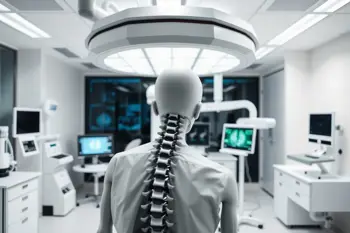
Technology serves as a primary driver of modern spinal care, with institutions like Cincinnati Children’s Hospital utilizing 3D preoperative planning to improve the accuracy of instrumentation placement 7. This methodology reduces the likelihood of complications and helps to ensure the precision of surgical outcomes, particularly in intricate spinal structures 7. Surgeons at such facilities utilize these models to simulate the correction before the procedure commences 7.
Johns Hopkins Hospital incorporates robotic-assisted surgical systems into their clinical practice, blending traditional orthopedic expertise with modern engineering 8. These systems provide high-level precision for both pediatric and adult spinal deformities 8. The integration of robotics is often combined with value-based care initiatives, where surgeons and administration focus on tracking clinical outcomes to define the most effective treatment pathways for various patient demographics 8.
Multidisciplinary Coordination for Complex Cases
Successful scoliosis care often requires a combination of clinical disciplines working in tandem. Children’s Hospital Colorado, for instance, maintains a structured spine program that brings together specialists from departments ranging from pulmonary medicine to orthopedic surgery 6. This holistic view is necessary for patients with complex comorbidities where the spinal deformity is part of a larger clinical picture 6. Ensuring that physical therapists and pediatric specialists remain aligned on a single treatment goal is a hallmark of top-performing hospitals 6.
In the adult and adolescent sector, institutions like Washington University and St. Louis Children’s Hospital act as high-volume centers that rely on deep experience to refine their long-term outcomes 9. High-volume centers often possess the internal resources to perform complex revisions or address severe, multi-planar deformities that require a substantial support staff and advanced postoperative monitoring capabilities 9.
Regulatory Oversight and Selection Considerations
Patients are encouraged to verify insurance coverage, as acceptance of commercial plans and Medicaid can vary by location and physician group 2. When engaging with a spinal center, it is standard practice to consult directly with the provider’s office to confirm the eligibility of specific insurance plans, as these listings are subject to change 7. A thorough patient journey often begins with an accurate diagnosis and an assessment of whether conservative methods, such as bracing or physical therapy, are appropriate before surgical options are considered 2.
| Metric/Focus | Clinical Goal |
|---|---|
| Advanced Imaging | Reduced radiation and high-precision mapping |
| Multidisciplinary Teams | Integrated care for complex comorbidities |
| Minimally Invasive Options | Faster recovery and preserved spinal motion |
| One-Stop-Shop Centers | Accelerated time-to-treatment plan |
Sources
- Scottish Rite for Children: Best Hospital for Pediatric Orthopedics (2025-2026)
- Norton Children’s Leatherman Spine: Pediatric Spine Innovations
- Hospital for Special Surgery: Rankings in Orthopedics and Specialized Care
- Ortho Spine News: Complex Spine & Scoliosis Center at HSS
- Dayton Children’s Hospital: ApiFix and Pediatric Spinal Care
- Children’s Hospital Colorado: Multidisciplinary Spine Program
- Cincinnati Children’s Hospital: Advanced 3D Spinal Planning
- Johns Hopkins Medicine: Robotic-Assisted Spine Surgery
- St. Louis Children’s Hospital: High-Volume Scoliosis Care
Authored by 24Trendz team