Thyroid Disease Warning Signs: A Clinical Guide to Symptoms and Evaluation
Thyroid disease warning signs are often subtle and may be mistaken for stress, aging or other health problems. About 20 million Americans have thyroid disease, and as many as 60 percent may not know they have a condition, making attention to persistent or changing symptoms clinically relevant.12
How the thyroid affects the body
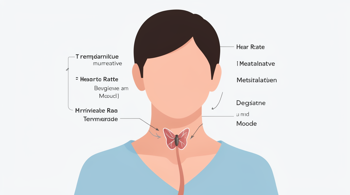
The thyroid is a small, butterfly-shaped gland in the lower central neck. It produces the hormones thyroxine, known as T4, and triiodothyronine, known as T3. These hormones influence metabolic rate, calorie use, heart and digestive function, body temperature, mood and the activity of many organs.2
Thyroid disease describes conditions in which the gland produces too much or too little hormone. Excess hormone causes hyperthyroidism, which speeds many body processes, while insufficient hormone causes hypothyroidism, which slows them. Both disorders have multiple possible causes, including autoimmune disease, family history, thyroid inflammation, surgery, radiation and certain medicines.16
Warning signs of an underactive thyroid
Hypothyroidism commonly develops gradually. Persistent fatigue, unexplained weight gain, unusual sensitivity to cold, constipation, dry skin, hair thinning, muscle aches, joint stiffness, low mood, concentration difficulty and a slower heart rate can occur. Symptoms may be mild at first, and older adults may show fewer classic signs, which can make the disorder harder to recognize.69
Changes involving reproductive health can also be relevant. Heavy, irregular or missed menstrual periods are reported symptoms, while slowed thinking or so-called brain fog may affect daily functioning. These findings are not specific to hypothyroidism, so symptom patterns alone cannot establish a diagnosis. Persistent combinations, especially fatigue with cold intolerance, constipation or weight change, warrant discussion with a clinician.79
Warning signs of an overactive thyroid
Hyperthyroidism may produce unexplained weight loss, sometimes despite increased appetite, along with heat intolerance, increased sweating, nervousness, anxiety, irritability, hand tremors, fatigue and difficulty sleeping. The accelerated metabolic state can also cause a rapid or irregular heartbeat and more frequent bowel movements.58
Some people notice palpitations, reduced tolerance for warm environments or subtle trembling before other symptoms become obvious. Hyperthyroidism is more common in women and in people older than 60, and family history can increase risk. Graves disease, multinodular goiter, an autonomous thyroid nodule and thyroiditis are among recognized causes, so the same symptom pattern can arise through different mechanisms.58
Neck, voice and eye changes
A thyroid nodule or enlarged thyroid, also called a goiter, may appear as swelling or a lump at the front of the neck. Many nodules are benign, but a new, enlarging or persistent mass should be assessed. Larger nodules can create pressure symptoms, including difficulty swallowing, breathing problems, coughing or voice changes such as hoarseness.1011
Eye symptoms are particularly associated with Graves disease. Possible findings include bulging eyes, irritation, redness, swelling, pressure or pain, double vision and sensitivity to light. A neck lump accompanied by persistent hoarseness, trouble swallowing, neck pain or swollen lymph nodes can also occur with thyroid cancer, although these signs do not prove that cancer is present.1211
Risk patterns and diagnostic evaluation
Autoimmune conditions are a major part of thyroid disease. Hashimoto disease occurs when the immune system attacks the thyroid and can gradually lead to hypothyroidism. It is most common among people assigned female at birth and often appears in middle age. A family history of thyroid or autoimmune disease can increase susceptibility, as can some other medical conditions.9
Because thyroid symptoms overlap with many other conditions, clinicians generally use blood testing rather than symptoms alone. Testing commonly evaluates thyroid-stimulating hormone, or TSH, and free thyroxine, or free T4. Results are interpreted alongside symptoms, medical history, medicines and physical findings. A neck lump or pressure symptom may require additional evaluation of the thyroid structure.6710
When symptoms require urgent attention
Most thyroid symptoms are not emergencies, but severe complications can occur when significant hormone excess or deficiency is untreated. Very high fever, marked agitation or confusion, chest pain, or a very rapid or irregular heartbeat in a person with hyperthyroidism may indicate thyroid storm, a medical emergency requiring urgent care.13
Severe confusion, extreme drowsiness, very low body temperature or slowed breathing in someone with untreated hypothyroidism can signal a life-threatening complication. New breathing difficulty, rapidly worsening neck swelling or inability to swallow also requires urgent medical evaluation. These warning signs should not be attributed to ordinary fatigue, aging or anxiety without assessment.610
Sources
- UChicago Medicine AdventHealth, “Thyroid Disease Warning Signs”
- NewYork-Presbyterian, “What Are the Signs and Symptoms of Thyroid Disease?”
- AARP, “Warning Signs of a Thyroid Disorder”
- National Geographic, “Why thyroid trouble is so often missed”
- National Institute of Diabetes and Digestive and Kidney Diseases, “Hyperthyroidism”
- Merck Manual Professional Edition, “Hypothyroidism”
- AccessGP, “Thyroid hormone balance”
- Merck Manual Professional Edition, “Hyperthyroidism”
- Penn Medicine, “Hashimoto’s Disease”
- American Thyroid Association, “Thyroid Nodules”
- Mayo Clinic, “Thyroid Cancer: Symptoms and Causes”
- Endocrine Society, “Graves’ Disease”
- Healthdirect, “Thyroid Storm”
Authored by 24Trendz team