Examining the factors behind 2026 assisted living costs: An Industry Analysis
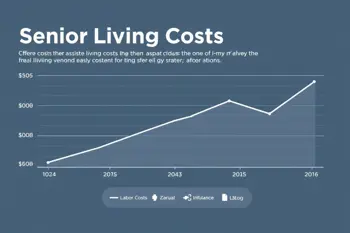
In 2026, the financial landscape of the senior living sector is undergoing significant adjustments as operators navigate a complex interplay of rising operational expenses and market demand. National median monthly costs for assisted living currently average approximately $5,419 to $6,313, representing a consistent annual growth trend 3, 8. This report examines the fundamental factors driving these costs, providing an objective overview of the variables that influence pricing structures for families and industry stakeholders.
The Primary Drivers of Operational Costs
Labor remains the most significant component of assisted living expenses, typically accounting for 50% to 70% of total operational outlays 9. Wage growth for direct care workers has surged by 22% since the pre-pandemic period, as facilities compete to attract qualified staff amidst chronic shortages 6. Furthermore, the integration of advanced technologies, including electronic health record systems and remote monitoring, has added 15% to 25% to facility technology budgets, further straining margins and impacting monthly fee structures 9.
Market Trends and Pricing Models
Operators are increasingly adopting sophisticated revenue management strategies to target net operating income growth rather than simple cost recovery 1. In the first quarter of 2026, year-over-year rate growth for assisted living units ranged from 6.8% to 8.5% 1, 2. A growing trend among developers is the shift toward an airline-style pricing model, where base rents cover standard housing and service packages, while ancillary fees for medication management, specialized care, and activity participation are billed as separate, tiered surcharges 13.
Geographic and Regional Cost Disparities
Regional variations in real estate and local labor markets create significant cost differences across the United States. While median monthly rates may hover near $4,000 in states like Alabama or Mississippi, costs in high-cost-of-living markets such as Washington, D.C., New Jersey, or California can reach or exceed $7,500 to $9,000 per month 3, 6. Geography serves as the primary lever for cost determination, as local property taxes, utility expenses, and regional wage floors dictate the baseline operational requirements for every facility 9.
Impact of Resident Acuity on Pricing
The profile of the average assisted living resident is changing, with 44% of residents now diagnosed with some form of Alzheimer’s or dementia 12. This shift toward higher resident acuity necessitates increased staffing ratios and specialized training, which inherently commands premium pricing. Memory care segments frequently exhibit a 35% cost premium over standard assisted living to account for these specific security, environmental, and clinical support requirements 6.
Regulatory and Public Funding Limitations
While 44 states now provide some form of Medicaid coverage for assisted living, the program often fails to bridge the affordability gap because it typically does not cover room and board costs 11. Combined federal and state Medicaid spending for these services is limited, resulting in a system where access exists in policy but remains difficult to implement in practice for many families 11. Consequently, the industry remains a predominantly private-pay sector, leaving families to bridge the widening gap between standard inflation and the rising costs of specialized elder care 11.
Financial Planning and Long-term Sustainability
The financial sustainability of private-pay assisted living is increasingly scrutinized through new time-based metrics that evaluate how long household assets can support the cumulative cost of care 14. With costs rising at rates consistently outpacing general inflation, families are encouraged to analyze the potential for continued annual fee increases of 3% to 5% 10. Effective financial planning involves recognizing that costs are not static and that early engagement with professional guidance regarding asset management and potential benefit programs is essential for long-term stability 17.
Sources
- LivingPath: Senior Living Rates 2026 National Pricing Trends
- Senior Housing News: Senior Living Operators Take More Moderate Approach to Rental Rates in 2026
- McKnight's Senior Living: Senior living operators challenged to balance increasing operating costs with affordability
- Senior Housing News: A Place for Mom Analysis: Senior Living Affordability No. 1 Concern
- Senior Housing News: Economics of Aging Shifting Faster Than Senior Living Operators
- AllyKin: 2026 Senior Care Cost Report
- NIC: Independent Living Rate Growth Moderates, While Assisted Living Accelerates
- SeniorLiving.org: How Much Does Assisted Living Cost in 2026?
- CarePriced: How Senior Living Costs Have Changed in 2026
- Investopedia: $5,400 a Month for Assisted Living: How Families Are Paying
- Senior Housing News: GAO: Medicaid, Medicare Spent at Least $12B on Assisted Living
- AARP: The Rise of Assisted Living, Its Aging Population, and What It Means
- SavingAdvice.com: Assisted Living Communities Are Increasing Ancillary Service Fees
- NIC: Senior Housing Affordability Calculator
Authored by 24Trendz team