Best diet for weight loss 2026: Evidence, trade-offs, and practical guidance
What the evidence says about the best diet
Dietitians increasingly describe the best diet for weight loss as an eating pattern that creates a calorie deficit while preserving nutrition, enjoyment, and long-term adherence. The available 2026 guidance does not identify one universally superior menu. Instead, it emphasizes nutrient-dense foods, flexibility, and a structure that can fit a person’s lifestyle, health needs, family routines, and food preferences. Weight loss requires an energy deficit, but diet quality influences satiety, energy, cardiometabolic health, and the likelihood of maintaining changes. 1
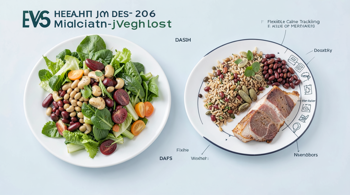
- Mediterranean-style eating emphasizes plants, whole grains, healthy fats, and moderate protein foods.
- DASH prioritizes nutrient-rich foods while limiting excess salt and added sugar.
- Flexible calorie-deficit plans permit a wider range of foods within an energy target.
1. Mediterranean diet: the leading sustainable pattern
The Mediterranean diet remains the most consistently recommended option for combining weight management with overall health. Its foundation includes vegetables, fruits, legumes, nuts, seeds, whole grains, vegetable oils, and other high-quality fats, with fish and other protein sources incorporated according to preference. Research summarized by dietitians indicates that this pattern can support healthy weight maintenance and broader well-being rather than relying on rapid restriction. A 2026 UNC-led DELISH study specifically examined a Mediterranean-style approach adapted for Southeastern populations and its effects on weight and cardiovascular risk. 1 6
- Useful staples include vegetables, beans, fruit, whole grains, nuts, seeds, and vegetable oils.
- Its flexibility may make adherence easier than highly restrictive plans.
- High-quality carbohydrates and fats are central rather than automatically excluded.
2. DASH, plant-based, and flexitarian alternatives
DASH, Flexitarian, Pescatarian, lacto-ovo vegetarian, Portfolio, MIND, Volumetrics, and TLC were identified among the leading diet patterns discussed for 2026. Their common features are whole or minimally processed foods, fiber, healthy fats, and limits on added sugar and salt. Plant-based patterns are also associated in the supplied research with lower body mass index and improved metabolic health, although weight loss still depends on total intake and adherence. A vegetarian or plant-focused diet can become energy-dense if portions of refined foods, oils, or calorie-rich snacks increase. 3 11
- Choose beans, vegetables, fruits, whole grains, nuts, and seeds as recurring foods.
- Use fish, eggs, dairy, or other suitable proteins according to the selected pattern.
- Monitor portions of calorie-dense foods even when the diet is plant-centered.
3. Lower-carbohydrate and ketogenic approaches
Lower-carbohydrate diets can produce weight loss when they reduce total energy intake, but their suitability depends on food preferences, medical context, and the ability to sustain the restrictions. A 2026 clinical trial reported by Scientific American compared a low-fat plant-focused diet, the Mediterranean diet, and keto in adults with obesity, finding that participants could lose weight on all three approaches. The report also described clearer health benefits from keto for some outcomes in that trial, while noting that keto is a very-low-carbohydrate, high-fat pattern with a different metabolic design. 5
- Lower-carbohydrate plans are not automatically lower calorie.
- Keto substantially limits carbohydrate-rich foods and may be difficult to maintain socially.
- Medical supervision is particularly important when a person has a disease or uses medication affected by dietary change.
4. Intermittent fasting versus continuous restriction
Intermittent fasting, including time-restricted schedules such as 16:8, remains a widely used way to organize eating rather than a distinct food-quality system. The supplied 2026 evidence review reports that intermittent fasting generally does not outperform standard calorie restriction for weight loss. Results are typically comparable, and the approach may help some people reduce intake by narrowing eating hours, while others may experience excessive hunger or compensate during the eating window. The central determinant remains whether the schedule supports a sustainable calorie deficit. 10
- Fasting is optional, not a requirement for weight loss.
- Eating windows should still contain adequate protein, fiber, and micronutrient-rich foods.
- People with relevant medical conditions should discuss fasting with a qualified clinician.
5. Protein, fiber, and the plate method
Nutrition guidance in the research emphasizes fiber-rich whole foods for satiety and adequate protein during a calorie deficit. The supplied 2026 dietitian review identifies protein intake of approximately 1.2 to 1.6 grams per kilogram of body weight as a practical target, alongside 25 to 38 grams of fiber daily, although individual requirements vary. The American Diabetes Association plate method offers a simple structure: prioritize non-starchy vegetables, include a lean protein, and add a portion of complex carbohydrate. 8 11
- Fill roughly half a meal’s visual plate with non-starchy vegetables.
- Include a protein source and a fiber-rich carbohydrate where appropriate.
- Use portion awareness rather than assuming that a particular food is unlimited.
6. Adherence, monitoring, and long-term maintenance
The strongest practical message in the 2026 evidence summaries is that adherence often matters more than the label attached to a diet. A systematic review of 84 studies involving 24,118 participants classified self-monitoring, calorie restriction, diet composition, physical activity, behavioral counseling, and pharmacotherapy as distinct intervention categories. Its reported 12-month pooled weight change for validated dietary self-monitoring was 6.4 kilograms, with high GRADE evidence, although the result should not be treated as a guaranteed individual outcome. Tracking food, portions, hunger, weight trends, or habits can reveal patterns that require adjustment. 2 7
- Choose a pattern that can be followed during ordinary work, travel, and social meals.
- Expect maintenance to require continued attention after initial weight loss.
- Avoid crash diets and extreme deprivation because sustainability and nutritional completeness remain key safety criteria.
How to evaluate personalized and digital approaches
Personalized nutrition, microbiome analysis, continuous glucose monitoring, and artificial-intelligence-supported tracking are growing areas of interest in 2026. However, the supplied research describes these tools as emerging methods for tailoring plans, not as proof that one individualized algorithm or biological test is superior for every person. One review highlighted validated dietary self-monitoring as an important behavioral factor, while another article described AI tools as increasingly capable of adapting meal guidance and tracking. Claims should therefore be assessed for peer-reviewed validation, accuracy, privacy, clinical oversight, and whether the method improves adherence without encouraging unnecessary restriction. 7 9
- Prefer transparent evidence over dramatic claims about metabolism or microbiome results.
- Check whether a tool has been clinically validated for the specific purpose advertised.
- Seek professional advice for pregnancy, eating-disorder history, diabetes, kidney disease, or medication-related concerns.
Sources
- Prevention, “10 Best Diets for Weight Loss in 2026, According to Dietitians”
- Nutrition Research Review, “Evidence-Based Weight-Loss Strategies: A 2026 Systematic Review of Intervention Categories”
- Solv Health, “Best Diets of 2026: What Actually Works”
- Nutrola, “What Is the Best Diet for Weight Loss? Every Major Diet Ranked by Evidence”
- Scientific American, “Is the Keto Diet Better Than the Mediterranean?”
- UNC Gillings School of Global Public Health, “Mediterranean-Style Diet Pattern Helps Weight Loss”
- Nutrition Research Review, “Physical Activity, Nutrition, and Weight Loss: The 2026 Evidence Hierarchy”
- HealthyProTricks, “Weight Loss Tips That Actually Work in 2026”
- Welling, “Best Diet Plans for 2026”
- Consensus Research Library, “Intermittent Fasting Does Not Outperform Standard Dieting”
- Journal of the Academy of Nutrition and Dietetics, plant-based diet research
Authored by 24Trendz team