Ways to manage heartburn at home: An evidence-based guide to relief and prevention
Ways to manage heartburn at home begin with recognizing the familiar burning discomfort that can occur after eating, in the evening, or while lying down. The following guidance covers household measures, nonprescription treatments, prevention strategies, and the symptoms that should not be managed without medical assessment.
Understand what heartburn means
Heartburn is usually caused by stomach acid moving upward into the esophagus, producing a burning sensation behind the breastbone and sometimes a bitter or acidic taste in the mouth. Symptoms may worsen after meals, when bending over, or when lying down. Occasional episodes are common, but frequent symptoms can indicate gastroesophageal reflux disease, commonly called GERD. 1
The distinction matters because home measures may control occasional discomfort without addressing an underlying condition. Cleveland Clinic describes GERD as reflux that becomes chronic, while temporary acid reflux can occur in people who do not have GERD. Persistent irritation may affect the esophagus over time, so symptom frequency, duration, and impact on daily activities are important details to monitor. 2
Adjust meals and eating habits
Smaller meals can reduce the pressure placed on the stomach compared with large meals. Eating more slowly and avoiding overfilling the stomach may also reduce the likelihood that stomach contents will move upward. Individual triggers differ, but commonly reported foods and drinks include spicy foods, citrus, chocolate, peppermint, caffeine, and high-fat items. A written record of meals and symptoms can help identify personal patterns rather than imposing unnecessary restrictions. 3
Meal timing is another practical consideration. Lying down soon after eating makes reflux more likely because gravity no longer helps keep stomach contents in place. NIDDK guidance identifies elevating the upper body during sleep and changing eating habits as lifestyle measures that may reduce symptoms. Avoiding food close to bedtime is particularly relevant for people whose heartburn mainly occurs at night. 4
Use positioning and clothing changes
Remaining upright after meals gives the stomach time to empty before horizontal positioning. Bending over or reclining immediately after eating can aggravate symptoms, so seated or standing activities may be more comfortable during that period. Loose-fitting clothing can also reduce abdominal pressure, whereas tight waistbands may contribute to discomfort in some people with reflux. These measures address mechanical pressure rather than neutralizing acid already present in the esophagus. 5
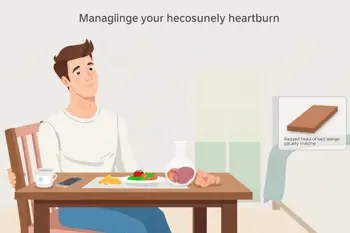
Nighttime symptoms may respond to raising the head and upper body rather than simply adding support under the head. NIDDK recommends an incline that raises the head of the bed by about 6 to 8 inches, using a foam wedge or an equivalent arrangement that elevates the upper torso. The aim is to use gravity during sleep, not merely to bend the neck. 4
Consider nonprescription medicines
Antacids neutralize stomach acid and can provide relief within minutes, making them the fastest option for occasional symptoms. Their effect may not last long, and they do not heal an esophagus damaged by repeated acid exposure. Ingredients vary, including calcium carbonate, magnesium hydroxide, and aluminum compounds. Magnesium-containing products may cause loose stools, while aluminum-containing products may contribute to constipation. 6
H2 blockers reduce the amount of acid produced by the stomach and generally last longer than antacids, although they do not act as quickly. Examples identified by Mayo Clinic include cimetidine and famotidine. Proton pump inhibitors, including esomeprazole, lansoprazole, and omeprazole, also reduce acid production and are used for longer-lasting control. Medication labels, interactions, health conditions, and duration limits should be reviewed with a pharmacist or healthcare professional. 1
Address longer-term contributing factors
Body weight can influence reflux because excess abdominal pressure may encourage stomach contents to move upward. NIDDK lists weight loss for people who are overweight or have obesity as a possible lifestyle recommendation. Smoking cessation is also identified as a measure that may reduce GERD symptoms. These changes are longer-term strategies and should be considered alongside personal medical circumstances rather than treated as instant remedies for an active episode. 4
Trigger avoidance should remain individualized. A food commonly associated with reflux may not affect every person, while a less frequently listed food may be a personal trigger. Very restrictive diets can be difficult to maintain and are not necessary when symptoms are controlled by more targeted adjustments. Monitoring meal size, timing, body position, and symptoms creates a clearer basis for deciding which habits are worth changing. 3
Know when home treatment is not enough
Medical evaluation is appropriate when heartburn occurs more than twice a week, persists despite nonprescription medicines, or interferes with normal routines. Difficulty swallowing, persistent nausea or vomiting, and weight loss caused by poor appetite or difficulty eating are additional warning signs. NIDDK also advises discussing antacid use with a doctor when these medicines are needed every day or for severe symptoms. 7
Chest discomfort should not automatically be assumed to be heartburn. Mayo Clinic advises seeking emergency help for severe chest pain or pressure, particularly when it occurs with difficulty breathing or pain spreading to the arm or jaw. A healthcare professional may use testing such as endoscopy, acid monitoring, imaging, or esophageal motility testing when GERD or another condition needs investigation. 7
Practical comparison of home approaches
| Approach | Main purpose | Important limitation |
|---|---|---|
| Smaller meals and trigger tracking | Reduce stomach pressure and identify personal patterns | Triggers vary between individuals |
| Staying upright after meals | Use gravity while digestion begins | Does not neutralize existing acid |
| Bed elevation | Reduce nighttime backflow | Requires proper upper-body elevation |
| Antacids | Rapidly neutralize acid | Relief may be brief and daily use needs medical guidance |
| H2 blockers or PPIs | Reduce acid production | Onset, duration, and suitability differ |
These approaches are complementary rather than interchangeable. Lifestyle measures focus on reducing reflux events, while medicines primarily reduce acidity or neutralize acid already present. If symptoms continue, recur frequently, or require regular medication, professional assessment is more appropriate than continually escalating home treatment. 1
Sources
- Mayo Clinic, Heartburn: Diagnosis & treatment
- Cleveland Clinic, Acid Reflux & GERD: Symptoms and Treatment
- Ohio State Health & Discovery, How to manage acid reflux
- National Institute of Diabetes and Digestive and Kidney Diseases, Treatment for GER & GERD
- Cleveland Clinic, Acid Reflux & GERD
- Harvard Health Publishing, What is the best way to manage occasional heartburn?
- Mayo Clinic, Heartburn: Symptoms & causes
Authored by 24Trendz team