Natural Remedies for Rosacea: Evidence, Safety, and Practical Symptom Management
Natural remedies for rosacea, including gentle skin care, trigger avoidance, cool compresses, and selected botanical ingredients, may help calm redness and irritation. They should be viewed as supportive symptom-management measures rather than a guaranteed cure, because rosacea is chronic and can resemble other skin disorders. 1
What Natural Remedies Can and Cannot Do
Rosacea is a chronic inflammatory facial disorder associated with persistent redness, flushing, visible blood vessels, bumps, and sometimes eye involvement. Its reported prevalence varies widely between populations, from less than 1% to 22%, and the National Rosacea Society estimates that more than 16 million Americans and as many as 415 million people worldwide may be affected. 2 Natural care may reduce irritation and the frequency of flares, but treatment generally controls symptoms rather than eliminating the underlying condition. 3
The term natural does not establish safety, effectiveness, or regulatory quality. Botanical products may contain fragrances, essential oils, concentrated extracts, or inconsistent ingredient levels. Complementary care can also delay diagnosis when redness, papules, pustules, thickened skin, or eye symptoms are attributed to an unconfirmed home remedy. Clinical assessment is important because rosacea may overlap with other dermatologic conditions and may require prescription treatment. 4
Build a Low-Irritation Skin-Care Routine
Dermatology guidance consistently places gentle cleansing, moisturization, and daily broad-spectrum sunscreen at the center of rosacea care. A mild, fragrance-free cleanser without harsh surfactants can reduce unnecessary barrier disruption, while a barrier-supporting moisturizer may lessen dryness, tightness, and stinging. Mineral sunscreen containing zinc oxide or titanium dioxide is often better tolerated by sensitive skin than some chemical formulations, although individual reactions still vary. 5
Rosacea-prone skin can react to products marketed as botanical or soothing if they contain irritants. Ingredients and habits commonly associated with worsening sensitivity include fragrance, essential oils, rubbing alcohol, menthol, camphor, abrasive scrubs, and strong exfoliating agents. Introducing one product at a time makes reactions easier to identify. A small-area patch test for at least 48 hours is a cautious screening step, but it cannot guarantee that facial use will be tolerated. 6
At-Home Measures for Temporary Comfort
A cool, damp compress may provide short-term comfort during flushing or burning. The compress should be cool rather than icy, because extreme cold and sudden temperature changes can further irritate reactive skin. Protection from direct sunlight, heat, wind, and rapid shifts between hot and cold environments is also relevant. These approaches address discomfort and exposure-related aggravation, not the chronic inflammatory process itself. 1
A symptom diary can help connect flares with personal triggers, products, weather, beverages, meals, stress, or exercise. Commonly reported triggers include sunlight, heat, hot drinks, spicy foods, alcohol, emotional stress, and irritating skin-care products, but patterns differ among individuals. Eliminating foods without a clear repeated association is generally unnecessary. A diary is most useful when it records timing, exposure, symptoms, and recovery rather than assuming that every flare has a dietary cause. 3
Botanical and Herbal Remedies
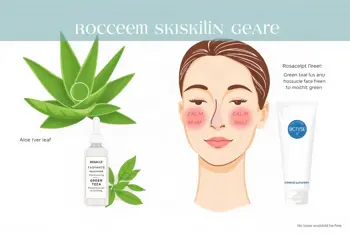
Aloe vera, green tea, and chamomile are often discussed because of their potential soothing, antioxidant, or anti-inflammatory properties. However, evidence for these ingredients in rosacea remains limited and variable, and topical preparations may cause irritation or allergic reactions. A review of traditional Anatolian herbs described possible anti-inflammatory, antioxidant, antimicrobial, and anti-erythematous effects, but the publication presented these ingredients as having research potential rather than as established cures. 7
Essential oils and concentrated botanical extracts deserve particular caution. Tea tree oil has been discussed in relation to Demodex mites, which may be elevated in some people with rosacea, but undiluted or poorly formulated oil can irritate facial skin. Homemade masks using kitchen ingredients can also cause burning, allergy, or barrier damage. Natural topical care should therefore prioritize transparent formulations, limited ingredients, patch testing, and discontinuation when stinging or redness increases. 9
Diet, Stress, and Daily Habits
Dietary and beverage triggers should be approached individually rather than through a universal rosacea diet. Hot drinks, spicy foods, and alcohol are frequently reported aggravators, while sunlight and heat may provoke flushing independently of food. Recording exposures can help distinguish a consistent pattern from coincidence. Regular sleep, stress-management practices, and physical activity may support general well-being, but exercise may need modification when overheating reliably triggers symptoms. 3
Heat management during activity can include choosing cooler settings, reducing exposure to sudden temperature changes, and using a cool compress afterward if flushing occurs. These measures do not replace treatment for persistent redness, inflammatory bumps, or ocular disease. The National Rosacea Society advises mild, non-abrasive products, moisturization, sunscreen, and avoidance of irritating ingredients as practical parts of ongoing skin care. 5
Supplements, Azelaic Acid, and Clinical Safety
Evidence for supplements and naturopathic remedies varies widely. Proposed options include omega-3 fatty acids, probiotics, zinc, and other plant-derived compounds, but study findings, formulations, doses, and rosacea subtypes differ. High-dose vitamins and supplements can interact with medicines or medical conditions, and natural products may have side effects. Consultation with a clinician or pharmacist is particularly important during pregnancy, chronic illness, medication use, or treatment for ocular symptoms. 9
Azelaic acid is a plant-derived compound with clinical evidence for inflammatory rosacea, although it is not risk-free and can initially cause stinging, dryness, or irritation. It should be used according to medical advice rather than treated as a universally suitable home remedy. Persistent redness, visible blood vessels, acne-like bumps, thickened skin, swollen eyelids, eye pain, light sensitivity, or vision changes warrant professional evaluation. Rosacea has no established cure, but medical and supportive care can control symptoms. 2
Sources
- Liv Hospital, Natural Rosacea Treatment: What Patients Should Know, https://int.livhospital.com/natural-rosacea-treatment-what-patients-should-know/
- National Rosacea Society, What Is Rosacea?, https://www.rosacea.org/
- NHS, Rosacea, https://www.nhs.uk/conditions/rosacea/
- Mayo Clinic, Rosacea: Diagnosis and Treatment, https://www.mayoclinic.org/diseases-conditions/rosacea/diagnosis-treatment/drc-20353820
- American Academy of Dermatology, Rosacea Skin Care, https://www.aad.org/public/diseases/rosacea/treatment/skin-care
- DermNet, Rosacea, https://dermnetnz.org/topics/rosacea
- Processes, Traditional Herbs in Anatolian Medicine for Rosacea, https://doi.org/10.3390/pr14030424
- U.S. Food and Drug Administration, Sunscreen: How to Help Protect Your Skin from the Sun, https://www.fda.gov/drugs/understanding-over-counter-medicines/sunscreen-how-help-protect-your-skin
- National Center for Complementary and Integrative Health, Using Dietary Supplements Wisely, https://www.nccih.nih.gov/health/using-dietary-supplements-wisely
Authored by 24Trendz team