How to manage lower back pain at home: A Clinical Guide to Evidence-Based Self-Care
Understanding the Mechanics of Lower Back Pain
The lumbar spine acts as a primary structural connector for the body, facilitating movement such as bending, twisting, and lifting while supporting significant body weight 3. Because this region is involved in nearly every physical action, it is highly susceptible to mechanical stress and injury 1. Most individuals will experience lower back pain at some point in their lives, with approximately four out of five Americans reporting episodes 2. While often debilitating, most cases of non-specific back pain are not life-threatening and tend to resolve independently over time 5.
Clinical evidence suggests that the primary causes of such discomfort are often muscle or tendon strains resulting from heavy lifting, improper posture, or sudden, awkward movements 3. In other instances, nerve impingement or structural issues, such as a bulging or degenerating disc, may be the source 3. Recognizing that the vast majority of cases involve mechanical strain rather than serious structural damage is a critical first step in establishing a self-care routine that prioritizes recovery through managed movement 4.
Prioritizing Active Recovery Over Passive Rest
Historical approaches to back pain often emphasized complete bed rest, but modern clinical guidance has largely shifted toward an active recovery model 8. Prolonged bed rest for more than a day or two can lead to muscle weakening and stiffness, which may ultimately slow the recovery process 8. Instead, healthcare professionals generally recommend continuing daily activities as much as possible, provided they remain within an individual's personal pain tolerance 9. This approach helps maintain core stability and prevents the spine from becoming guarded or overly restricted 9.
Physical activity serves as one of the few interventions scientifically proven to reduce the duration and severity of back pain 7. Walking, for example, is often encouraged as a low-impact method to keep the muscles surrounding the spine engaged 10. While intense exercise should be avoided during the acute phase of a flare-up, gentle movement ensures that the body remains flexible. Individuals are encouraged to listen to their symptoms and cease any specific exercise that results in a sharp increase in pain 10.
Temperature Therapy and Over-the-Counter Options
For immediate relief of short-term discomfort, many people utilize temperature-based therapies, such as the application of ice or heat to the lower back area 8. Cold therapy is typically recommended if the area feels inflamed or was recently injured, while heat can be effective for soothing muscle stiffness and promoting blood flow 9. These packs should always be wrapped in a protective cloth to prevent direct contact with the skin, which can cause thermal injury 10. Applying these for short intervals throughout the day can significantly help manage symptoms while the body heals 8.
Over-the-counter (OTC) medications, such as nonsteroidal anti-inflammatory drugs (NSAIDs) or acetaminophen, are commonly used for temporary pain relief 8. However, it is essential to recognize that these remedies are not universally safe for all populations 8. Individuals with underlying health issues-including kidney disease, stomach ulcers, heart conditions, or those currently taking blood thinners-must consult a medical professional before starting these medications 10. Furthermore, these options do not address the root cause of the injury; they are intended only to reduce inflammation and pain enough to allow for continued movement 8.
Stretching and Strengthening Routines
A structured approach to flexibility and core strengthening can be instrumental in both relieving existing pain and preventing future recurrences 6. Exercises such as the knee-to-chest stretch, lower back rotational stretches, and flexibility exercises that involve tightening abdominal muscles help build the structural support necessary to offload pressure from the spine 6. These routines, performed consistently, improve the resilience of the trunk and hip muscles, which are vital for maintaining proper posture and stability during daily activities 1.
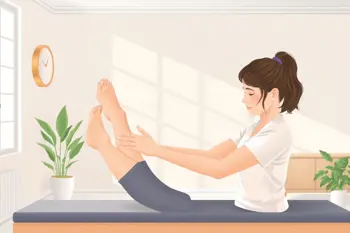
| Exercise Type | Goal | Implementation Note |
|---|---|---|
| Knee-to-chest | Release muscle tension | Hold for 5 seconds; repeat with each leg |
| Rotational stretch | Increase flexibility | Maintain shoulders on the floor; hold 5-10 seconds |
| Flexibility bridge | Strengthen core | Tighten abdomen; avoid over-arching the back |
While these exercises are generally safe, beginners are advised to start slowly, performing each stretch a few times and gradually increasing repetitions as discomfort fades 6. If an individual has a history of severe spinal injury, it is prudent to consult with a physical therapist to ensure that these movements are appropriate for their specific diagnosis 6.
Recognizing Clinical Warning Signs
Though most lower back pain is benign, certain symptoms, known as red flags, indicate the need for urgent or immediate medical evaluation 9. These warning signs include, but are not limited to, a sudden loss of bowel or bladder control, numbness in the groin or saddle area, progressive weakness in the legs, or pain stemming from a major trauma like a high-velocity fall or automobile accident 9. Additionally, the presence of systemic symptoms such as persistent fever, chills, or unexplained weight loss warrants prompt investigation by a clinician 9.
These symptoms represent less than 1% of all back pain cases but require professional diagnostic intervention to rule out serious neurological or systemic conditions 9. It is also advisable to seek professional medical attention if pain persists for several weeks without improvement, if it continues to recur frequently, or if it interferes significantly with the ability to perform basic daily activities 10. In such instances, a physician may recommend advanced diagnostics, such as an MRI or CT scan, to establish a precise diagnosis before formulating a long-term care plan 2.
The Role of Professional Consultation
When self-care strategies do not yield improvement, seeking a qualified health professional-such as a physiatrist, physical therapist, or internal medicine physician-is a necessary next step 2. Diagnostic procedures typically involve a thorough physical examination to assess nerve function and range of motion 2. Importantly, medical guidelines generally discourage the use of routine imaging, such as X-rays or MRIs, for new-onset back pain in the absence of red flags or persistent symptoms, as these tests rarely change the initial course of conservative, non-surgical treatment 10.
Long-term management plans for chronic or recurring issues often include a combination of multidisciplinary rehabilitation, mindfulness-based stress reduction, or specialized physical therapies like tai chi or yoga 10. By working with a professional, patients can develop a customized plan that targets specific postural or biomechanical weaknesses, ultimately improving long-term function and quality of life 2. Surgery remains a rarely used intervention, typically reserved for only the most severe, persistent cases where conservative efforts have failed to stabilize the patient's condition 5.
Sources
- Merck Manual Consumer Version: Quick Facts: Low Back Pain
- Harvard Health Publishing: Create a plan to relieve your back pain
- Cedars-Sinai: The Best Stretches and Exercises for Lower Back Pain
- Dartmouth Health: Tips to Relieve Your Lower Back Pain
- Harvard Health Publishing: Back Pain
- Mayo Clinic: Back exercises in 15 minutes a day
- National Center for Biotechnology Information: Why movement is important for back pain
- Acibadem Hospitals Group: Over-the-Counter Remedies for Lower Back Pain
- MEDISTIK: Back Pain Relief at Home: A Practical 2026 Guide
- Mindful Movement Physical Therapies: How to Treat Back Pain at Home
Authored by 24Trendz team