Herbal solutions for supporting digestion: A clinical overview of traditional and modern botanical approaches
The Evolution of Botanical Approaches to Digestive Health
The pursuit of digestive wellness has long incorporated botanical interventions, ranging from ancient medical texts to modern evidence-based clinical practice. Traditional systems, such as Traditional Chinese Medicine, view the digestive system as a complex mechanism responsible for transforming food into energy, where imbalances in organs like the spleen or stomach can manifest as fatigue, bloating, or irregular bowel habits 4. Modern research has begun to categorize these historical remedies by their physiological effects, focusing on how specific plant compounds interact with gastrointestinal processes such as motility, enzyme production, and mucosal protection 8.
Contemporary herbal formulations often combine these traditional botanical insights with modern manufacturing standards to ensure quality and potency. Standardization, which includes rigorous testing for identity, purity, and composition, is essential for identifying effective interventions for common issues like dyspepsia, flatulence, and abdominal fullness 3, 8. By moving toward scientifically validated blends, practitioners and individuals alike seek to address digestive discomforts through multi-mechanistic pathways that support the gut lining and restore internal equilibrium 8.
Common Herbal Ingredients and Their Physiological Roles
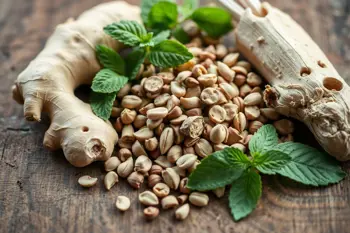
Herbal solutions for digestion often rely on specific botanical categories, including carminatives, bitters, and mucilaginous herbs. Carminative herbs, such as fennel and caraway, are widely utilized for their ability to expel gas and alleviate digestive spasms 8, 9. Bitters, including gentian root, function by stimulating the secretion of digestive juices like bile and saliva, which are fundamental to the efficient breakdown of ingested nutrients 8. These ingredients are frequently synthesized into complex formulas designed to offer symptomatic relief for occasional gastrointestinal stress 5.
| Herb | Primary Digestive Benefit |
|---|---|
| Ginger | Accelerates gastric emptying and reduces nausea 8 |
| Peppermint | Relaxes intestinal smooth muscle 8 |
| Slippery Elm | Forms a protective lining for the stomach and intestines 8 |
| Turmeric | Provides anti-inflammatory support for the digestive tract 8 |
| Liquorice | Soothes gastrointestinal membranes and irritation 1, 3 |
Mechanisms of Action in Polyherbal Formulations
Polyherbal formulations aim to provide comprehensive support by combining multiple botanicals that work synergistically. For example, formulations like those containing Iberis amara, chamomile, and peppermint are clinically observed to provide relief from bloating, cramps, and indigestion 2. These blends often utilize a variety of herbs to address diverse aspects of gut function simultaneously, rather than targeting a single symptom in isolation 4. The goal is to harmonize the stomach and intestines, facilitating improved nutrient absorption and systemic vitality 4, 8.
Research into these combinations frequently emphasizes the importance of individual constitution in determining effectiveness. In practice, herbalists and clinicians often account for the unique health background of an individual, adjusting the botanical profile to match specific patterns of digestive imbalance 4. Whether addressing acute issues like an upset stomach or supporting long-term gut health, these formulations are engineered to interact with the body's natural physiological processes, supporting normal stomach function and intestinal comfort 2, 5.
Addressing Intestinal Permeability and Lining Health
Maintaining the integrity of the digestive tract lining is a primary focus for many seeking to improve gut vitality. Certain herbs are selected specifically for their ability to support healthy intestinal permeability and nourish the gut mucosa 6. Proprietary extracts, such as those derived from astragalus and panax notoginseng, have been researched in clinical settings for their potential to uphold the structural integrity of the intestinal lining, which is critical for preventing food sensitivities and systemic inflammation 6.
Supporting the gut lining often requires a multifaceted approach involving both protective and soothing agents. Ingredients like liquorice root, particularly in its deglycyrrhizinated form (DGL), are frequently utilized for their ability to provide soothing relief without the side effects associated with high-dose liquorice consumption 3, 7. Such botanicals are often combined with nutrients like L-glutamine, which serves as a foundational component for mucosal repair, ensuring that the digestive system is not only functioning well but is also structurally resilient against environmental and dietary stressors 1.
Regulatory Oversight and Safety Considerations
While many herbal products are widely available, they are subject to regulatory standards that ensure safety and efficacy. Consumers are generally encouraged to review product labels for details on potency and purity testing, as these markers indicate that the product adheres to established quality guidelines 3. In many regions, the manufacturing of these supplements must comply with Good Manufacturing Practice (GMP) protocols, which verify that the microbial count and concentration of active constituents remain within safe, predictable limits 8.
Safety is a critical component of botanical support, as herbal interventions can interact with medications or existing health conditions. It is standard guidance for individuals, particularly those who are pregnant, nursing, or undergoing medical treatment, to consult with a qualified healthcare practitioner before incorporating new supplements into their daily regimen 6. Furthermore, these products are intended for digestive support rather than as a substitute for a balanced diet, and long-term wellness usually relies on integrating herbal support with lifestyle adjustments, including stress management and physical activity 1, 8.
Strategic Integration of Digestive Support
The effective use of herbal digestive support often involves strategic timing, such as administration before or during meals to optimize the body's response to food 2, 5. Depending on the formulation, the benefits may be either immediate, as seen with some carminative-rich liquids, or cumulative, as is common with adaptogenic or mucosal-nourishing capsules 5, 6. This dual approach allows users to manage both acute flare-ups and chronic digestive inefficiency through consistent, informed application of botanical knowledge 5.
Ultimately, the objective of utilizing herbal solutions is to foster a more resilient digestive system that can withstand the challenges of modern diets and stressful environments. By focusing on botanical traditions supported by contemporary phytochemical analysis, the potential for achieving improved gut health becomes more attainable. As research continues to evolve, the documentation of these ancient and modern practices provides a framework for understanding how nature-derived components contribute to the complex and vital function of the human digestive tract 4, 8.
Sources
- Holland & Barrett: Herbal Digestive and Enzyme Formula
- Pharmacy Online: Iberogast IBS + Digestive Relief
- Nature's Way: DGL Supplement Information
- G&G TCM: Herbal Medicine for Digestive Health
- WishGarden Herbs: Digestive Rescue GI Normalizer
- Gaia Herbs: Gut Revival Digestive Support
- Nature's Way: DGL Ultra Premium Extract
- IJPS Journal: Development and Standardization of a Therapeutic Polyherbal Powder
- ScienceDirect: Caraway Seed Digestive Properties
- Johns Hopkins Medicine: Turmeric Benefits
Authored by 24Trendz team