Gentle home measures for mild hip discomfort: Clinical perspectives on conservative management
Managing mild hip discomfort often begins with a conservative, non-surgical approach aimed at reducing inflammation, maintaining joint mobility, and addressing potential muscle imbalances 1. When experiencing discomfort in the groin, outer thigh, or buttock, individuals often look for self-care techniques to improve their daily comfort without immediate clinical intervention 2. Understanding the underlying source of pain-whether it originates from the joint itself or surrounding soft tissues like tendons and bursae-is the first step toward selecting appropriate home measures 2. Clinical observations suggest that mild cases, particularly those involving gluteal tendinopathy or minor muscle strain, may respond to structured home care 8, 9.
Activity Modification and Rest Strategies
The primary initial response to hip discomfort often involves modifying daily activities to prevent further irritation of the affected area 1. Resting the joint by avoiding high-impact activities, such as running or jumping, can reduce systemic inflammation and allow soft tissues time to recover 2. However, complete bed rest is generally discouraged in favor of continued, low-impact movement that supports the healing process 6. Avoiding specific movements that worsen symptoms, such as deep lunges or repetitive hill walking, is frequently recommended for individuals managing lateral hip pain 8.
Lifestyle adjustments can also play a role in managing chronic mild discomfort. For instance, sleeping on the side without support can put unnecessary pressure on the hip; placing a pillow between the knees helps keep the pelvis aligned and reduces strain on the hip abductor muscles during rest 6. Furthermore, for those who spend significant time sitting, postural changes and taking regular breaks are essential to avoid the tightening of hip flexor muscles that often contributes to the experience of a dull ache or stiffness 3.
Temperature Therapy for Symptom Relief
Applying temperature-based therapies remains a standard, non-invasive method for managing soft tissue discomfort around the hip. Applying an ice pack for 15 to 20 minutes several times a day can help reduce acute inflammation and provide a temporary numbing effect on localized pain 2. In contrast, heat therapy, such as a warm bath or the use of a heating pad, is often utilized to relax tight muscles and improve local circulation before attempting gentle stretching exercises 1, 2. These methods provide temporary relief and can be used to manage flare-ups as they occur throughout the day.
Movement and Strengthening Protocols
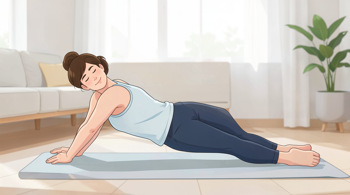
Maintaining joint mobility is considered essential for long-term hip health, even during periods of discomfort. Gentle, low-impact exercises, including swimming, water aerobics, or stationary cycling, allow for joint movement without putting excessive weight on the hip structure 3. Strengthening the muscles surrounding the hip, particularly the gluteus medius and minimus, provides better stability and reduces the mechanical load on the joint 7. Exercises such as bridge variations, leg lifts, or controlled external rotation can be initiated once post-flare-up discomfort has settled 5, 7.
When performing these movements, clinical guidance suggests maintaining a focus on proper form to avoid further strain. For example, in side-lying leg raises or clamshell exercises, it is important to prevent rotating the pelvis or spine, as this can compensate for weak hip muscles and potentially lead to secondary irritation 9. A general rule of thumb for home exercise programs is to monitor the intensity of the pain, ensuring that discomfort does not exceed a 3/10 scale, where 0 represents no pain and 10 represents maximum discomfort 9.
Role of Pharmacological and Weight Management
Over-the-counter nonsteroidal anti-inflammatory drugs (NSAIDs), such as ibuprofen or naproxen, are frequently utilized to manage the inflammation and pain associated with minor hip conditions 1, 2. While these medications can provide temporary relief, they are intended to support the individual in staying active rather than serving as a replacement for addressing the root cause of the discomfort 8. Long-term weight management is also a critical factor, as reducing excess body weight lowers the load-bearing pressure exerted on the hip joint during daily activities 5.
Identifying When to Seek Professional Consultation
While many mild cases of hip discomfort improve with self-care, there are specific indicators that warrant a formal clinical assessment. Medical attention is recommended if pain persists for more than a few weeks, if there is visible swelling, redness, or warmth around the joint, or if the discomfort significantly interferes with daily activities like walking or climbing stairs 1. Furthermore, individuals experiencing radiating pain, tingling, or difficulty bearing weight should consult a healthcare professional to rule out more serious underlying conditions, such as hip fractures or advanced joint degradation 1, 6.
Sources
- Orlando Orthopaedic Center, How to Relieve Hip Pain, https://www.orlandoortho.com/relieve-hip-pain/
- Global Clinic, Hip muscle pain relief: Ultimate 2025 Guide, https://globalclinic.com/hip-muscle-pain-relief/
- London Cartilage Clinic, Home Remedies and Care for Women with Left Hip Pain, https://londoncartilage.com/insights/home-remedies-and-care-for-women-with-left-hip-pain
- Alexander Orthopaedics, Hip Pain When Walking: 12 Common Causes, https://alexanderorthopaedics.com/blog/hip-pain-when-walking/
- Arthritis UK, Exercises for the hips, https://www.arthritis-uk.org/information-and-support/living-with-arthritis/health-and-wellbeing/exercising-with-arthritis/exercises-for-healthy-joints/exercises-for-the-hips/
- Hinge Health, Lower Back and Hip Pain: Causes, Relief, and Exercises, https://www.hingehealth.com/resources/articles/lower-back-hip-pain/
- Hull University Teaching Hospitals NHS Trust, Post-Hip Injection Physiotherapy Advice, https://www.hey.nhs.uk/patient-leaflet/post-hip-injection-physiotherapy-advice-home-exercises-guidance-while-waiting-for-physiotherapy/
- The Hip & Knee Physio, Can Gluteal Tendinopathy Heal Without Physio?, https://www.thehipandkneephysio.com.au/post/can-gluteal-tendinopathy-heal-without-physio
- CK Physio, Hip Bursitis & Gluteal Tendinopathy: A Physiotherapy Guide, https://ckphysio.co.uk/blog/gluteal-tendinopathy-hip-bursitis-physiotherapy-guide
- Rebuild Physio, Hip Osteoarthritis Exercises, https://www.rebuildphysio.co.uk/resources/hip-osteoarthritis-exercises
Authored by 24Trendz team