Symptoms of systemic lupus erythematosus: A Comprehensive Overview of Clinical Manifestations and Diagnostic Challenges
Systemic lupus erythematosus (SLE), commonly referred to as lupus, is a chronic autoimmune condition wherein the immune system inaccurately identifies healthy tissues as foreign threats, leading to widespread inflammation 1, 2. Because this inflammation can affect virtually any organ system, the clinical presentation of SLE is notoriously heterogeneous, varying significantly from one individual to another 4, 6. Understanding these symptoms is essential for recognizing the disease early, as the condition is characterized by cycles of flare-ups and periods of remission 1, 5.
Common Constitutional and Systemic Symptoms
Many individuals living with SLE report nonspecific systemic symptoms that often precede more localized organ involvement. Extreme fatigue is frequently identified as the most debilitating symptom, often failing to resolve even with adequate rest 1, 3. Unexplained fevers and unintentional weight loss are also common indicators of systemic inflammation 6, 8. These manifestations are frequently the first signs that cause individuals to seek clinical evaluation, although their nonspecific nature can initially complicate the diagnostic process 1, 3.
Dermatological Manifestations and Photosensitivity
Skin involvement serves as a hallmark of SLE for many patients. The most recognized sign is the malar rash, a butterfly-shaped eruption that extends across the bridge of the nose and both cheeks 1, 2. This rash is often highly sensitive to ultraviolet light, with many patients reporting that symptoms worsen significantly following sun exposure 1. Other cutaneous findings may include hair loss, oral ulcers, and swelling of blood vessels in the skin 8, 10. Because these symptoms can be subtle on darker skin tones, clinical observation often requires detailed dermatological examination 1.
Musculoskeletal Involvement and Joint Health
Joint pain, stiffness, and swelling are reported by a large majority of individuals diagnosed with systemic lupus erythematosus, with research indicating these symptoms often mimic the presentation of rheumatoid arthritis 1, 3. This pain can shift between different joints and may become chronic if inflammation is not adequately managed 1. The severity of musculoskeletal symptoms often correlates with the overall level of disease activity, and regular monitoring by healthcare providers is essential to mitigate long-term joint damage or structural impairment 4, 8.
Organ-Specific Complications and Vascular Health
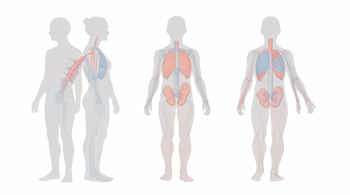
Beyond the skin and joints, SLE can cause severe inflammation in internal organs, necessitating careful medical surveillance. Renal involvement, known as lupus nephritis, represents a significant concern and may manifest through clinical signs of hypertension or changes in urinary output 4, 8. Cardiovascular and pulmonary inflammation, such as pleurisy (inflammation of the lung lining) or pericarditis (inflammation of the heart lining), can result in sharp chest pain 1, 6. Furthermore, Raynaud’s phenomenon-where fingers or toes turn white or blue when exposed to cold-is a recognized vascular response in many SLE cases 1.
Neurological and Hematological Findings
The nervous system can also be affected by the chronic inflammatory state associated with SLE. Many patients report symptoms of cognitive dysfunction, frequently described in clinical settings as lupus fog, which may include memory loss, confusion, and difficulty with concentration 1, 6. Hematological complications are also common laboratory findings; these can include anemia, leukopenia (a low white blood cell count), or thrombocytopenia (a low platelet count), all of which stem from the immune system’s systemic attack on healthy blood components 1, 4, 6.
Diagnostic Considerations and Medical Oversight
The diagnostic process for SLE relies on a synthesis of clinical symptoms, patient history, and serological testing, as there is currently no single diagnostic marker for the disease 4, 8. Because symptoms can range from mild mucocutaneous findings to life-threatening complications like neuropsychiatric disease or severe nephritis, clinical management is highly individualized 4, 7. Ongoing oversight is required to differentiate SLE from other autoimmune mimics and to adjust treatment strategies-which may involve corticosteroids or immunosuppressants-to maintain low disease activity and prevent permanent organ damage 4, 7.
Sources
- Mayo Clinic: Lupus Symptoms and Causes
- Cleveland Clinic: Lupus Overview
- NHS Inform: Lupus Clinical Information
- StatPearls: Systemic Lupus Erythematosus Overview
- UpToDate: Patient Education on SLE
- Osmosis: Clinical Sciences of SLE
- EBSCO Research Starters: SLE Definition and Symptoms
- U.S. Department of Health & Human Services: Women and Lupus
- Radiopaedia: Systemic Lupus Erythematosus Clinical Presentation
- Cure Arthritis: Signs and Symptoms of Lupus
Authored by 24Trendz team