Best natural treatments for scalp psoriasis: An analysis of supportive care and symptom management
Scalp psoriasis is a chronic, immune-mediated inflammatory condition characterized by rapid keratinocyte turnover, which results in the formation of thick, silvery-white plaques and intense discomfort 1. Representing a significant challenge for 45-56% of the psoriasis-affected population, the condition often presents with scales that are thicker and more adherent than those found in plaque psoriasis on other parts of the body 1. While conventional medical treatments such as topical corticosteroids, vitamin D analogues, and biologics remain the standard for controlling inflammation, there is growing interest in natural supportive care to manage symptoms between treatment courses and potentially reduce the frequency of flares 1.
Understanding the Mechanism of Scalp Psoriasis
The pathology of scalp psoriasis is rooted in an autoimmune response involving the IL-23/IL-17 cytokine axis, which triggers an overactive immune system and excessive inflammation 5. This leads to skin cells multiplying at an accelerated rate, failing to shed properly, and instead accumulating into visible, painful plaques that may extend beyond the hairline to the neck, ears, and forehead 3. Unlike seborrheic dermatitis, which manifests as oily, yellowish flakes, psoriasis plaques are distinctively thicker with well-defined edges and a characteristic silvery-white sheen 1.
Genetic and environmental factors play a critical role in the development and severity of the condition, with triggers including stress, infections, and physical trauma to the skin 3. Because this condition is autoimmune in nature, it is frequently described as a relapsing cycle that requires a comprehensive, long-term management strategy rather than a single curative intervention 5. Practitioners often emphasize that while home remedies can support scalp health, they do not replace necessary medical therapies for moderate-to-severe cases 2.
Topical Approaches for Scale Management
Managing the physical buildup of scale is a primary goal for many individuals seeking symptomatic relief. Natural oils, such as Batana oil, are often utilized for their high concentrations of oleic acid, linoleic acid, and vitamin E, which may help hydrate dry skin and soften hardened plaques 7. Similarly, coconut oil is frequently employed as a softening agent, applied to the scalp to loosen scales before washing, which can make the cleansing process less abrasive 11. When used properly, these methods assist in maintaining barrier integrity without the use of harsh chemical agents 5.
For cleansing, some individuals explore alternative options such as goat’s milk soap. This is often chosen because it is typically formulated without the harsh detergents, sulfates, or artificial perfumes found in conventional shampoos, which can further irritate a sensitive, psoriatic scalp 6. The healthy fats present in goat’s milk are theorized to cleanse the skin while retaining natural moisture, offering a gentle alternative for daily hair care routines 6.
Addressing Itch and Inflammation
Itching and burning are among the most reported symptoms, often significantly impacting the daily quality of life for those with scalp involvement 5. Aloe vera is one of the more clinically researched natural ingredients in this category, recognized for its cooling and hydrating properties that can help soothe inflamed, irritated skin 1. Furthermore, colloidal oatmeal is frequently utilized in masks or scalp treatments to provide a soothing barrier and temporary relief from the persistent, intense itching cycle 11.
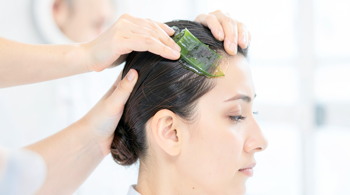
Another common, albeit cautious, remedy is the application of diluted apple cider vinegar. While it may help soothe itch, it must be used with significant care to avoid chemical burns on raw or compromised skin 11. Additionally, while tea tree oil is noted for its anti-inflammatory and antiseptic properties, it should be approached with caution as it can cause contact dermatitis or irritation if not properly diluted or if the user has a sensitivity to essential oils 2.
The Role of Systemic Support and Diet
Emerging research continues to highlight the relationship between systemic health and skin conditions, often referred to as the gut-scalp axis 10. Dietary interventions, such as increasing the intake of omega-3 fatty acids through fish oil or flaxseed, are frequently recommended to lower general systemic inflammation 11. Systematic reviews have also analyzed the effectiveness of dietary supplements-including curcumin from turmeric, probiotics, and selenium-as adjuncts to conventional therapies to modulate the immune response 4.
| Natural Ingredient | Commonly Cited Benefit | Important Consideration |
|---|---|---|
| Aloe Vera | Cooling and soothing for itch | Requires high-purity gel |
| Coconut Oil | Softens plaques for removal | Wash thoroughly to avoid buildup |
| Omega-3s | Reduces systemic inflammation | Requires consistent, long-term use |
| Apple Cider Vinegar | Helps relieve scalp itch | Must be diluted to prevent burns |
Safety, Limitations, and Professional Oversight
While natural treatments offer supportive benefits, they are not a substitute for clinical diagnostics and medical oversight. Because scalp psoriasis can be confused with other conditions like eczema or seborrheic dermatitis, a clinical examination-and potentially a biopsy-is often necessary to ensure an accurate diagnosis 3. Patients are encouraged to discuss any new topical or dietary additions with a dermatologist, particularly if they are already using prescribed medications like biologics or topical corticosteroids, to prevent potential contraindications or interference with professional treatment plans 7.
Continued reliance on ineffective home remedies in lieu of medical treatment may result in the progression of the condition. Professional dermatological care remains the standard for controlling inflammation and preventing long-term damage, including potential hair shedding or scarring 8. Consequently, the most effective approach for managing scalp psoriasis involves a combination of medically supervised therapies and lifestyle choices that minimize external triggers while providing targeted relief to the scalp surface 5.
Sources
- HOIA homespa: Scalp Psoriasis Natural Ingredients
- Joe’s French Italian: Best Home Remedies for Scalp Psoriasis
- Health.com: How To Identify and Manage Scalp Psoriasis
- Frontiers in Nutrition: Effectiveness and Safety of Dietary Supplements
- Kapyderm USA: Scalp Psoriasis Clinical Guide
- Herd & Hive: Using Goat’s Milk Soap for Scalp Psoriasis
- Batanaful: Can Batana Oil Help with Psoriasis
- Skinhorizon Clinic London: Scalp Psoriasis Diagnosis and Treatment
- International Journal of AYUSH Case Reports: Unani Therapeutic Regimen
- Journal of Pioneering Medical Sciences: The Gut-Scalp Axis
- General Health Research Compilation (Healthline, Mayo Clinic, NPF, Cleveland Clinic)
Authored by 24Trendz team